
Magnesium glycinate is magnesium bound to glycine. Labels can also call it bisglycinate or diglycinate. To compare products, read the amount of elemental magnesium per serving, then divide by the number of tablets or capsules in that serving.
That calculation is the starting point for comparing bottles. A front label can highlight the compound, the amount per serving, or a general claim such as “chelated.” The back label tells you which unit the number refers to and sometimes names a second magnesium source. The examples below show how to match the numbers to the question you are trying to answer, from how much one capsule contains to whether two supplements overlap.
Glycinate, Bisglycinate, and Chelated Magnesium
“Magnesium glycinate” on a supplement commonly refers to magnesium bisglycinate. In the bisglycinate compound, two glycinate groups are associated with one magnesium ion. That is what the “bis” in the name describes. The term can help you identify the source when one product says “glycinate” and another says “bisglycinate.” To check whether they use the same source, read the whole ingredient line. Other magnesium compounds may be listed alongside it.
“Chelated magnesium” is a broader description. Magnesium lysinate glycinate chelate names a source associated with two different amino acids, lysine and glycine. On a different label, “magnesium from bisglycinate and magnesium oxide” identifies two magnesium compounds. Both could be described broadly as products with a chelated ingredient, while the complete formulas differ. Keep the entire name when comparing notes from two labels.
| Wording on the label | What it identifies | Detail to look for next |
|---|---|---|
| Magnesium glycinate, bisglycinate, or diglycinate | The glycine-associated form of magnesium commonly used in supplements | Elemental magnesium per serving and any additional sources |
| Magnesium lysinate glycinate chelate | A source named for lysine and glycine | The exact source wording and amount per tablet |
| Chelated magnesium | A broader description of the ingredient form | Which chelate the product actually lists |
| Magnesium bisglycinate and magnesium oxide | Two different magnesium sources in the formula | A combined amount or a breakdown by source |
| Magnesium citrate and magnesium malate | Other compounds that can supply magnesium | Whether the product contains one source or several |
| Buffered magnesium glycinate | A front-label formulation description | The ingredient and source lines, including any additional forms |
Some products put the source in parentheses on the Magnesium line. Others spell it out in a separate sentence or list it in an ingredient declaration next to the panel. If the front says “chelate” and the panel gives a precise name, record the more specific wording. If the label does not identify the source clearly enough to answer your question, ask the manufacturer about the current formula and size. A brand may sell several strengths or change a formula over time.
Elemental Magnesium Is the Number to Compare
The Magnesium amount in a US Supplement Facts panel is the weight of elemental magnesium in one serving. A label might read “Magnesium 200 mg (from 2,000 mg magnesium bisglycinate).” The 200 mg is the part you would compare with another bottle’s Magnesium entry. The 2,000 mg describes the listed weight of the compound that supplies it. Adding these figures would count the magnesium twice.
Serving size is a separate piece of information. It can be one capsule, two tablets, or a measure of powder. Locate it before dividing any value. If a front label says “100 mg per tablet” and the panel says “200 mg per serving,” both figures can be accurate when the serving is two tablets. If a different bottle lists 120 mg per serving and a serving is one capsule, its unit count and its serving count happen to match.
Directions are worth reading independently from the serving-size line. They tell you how the label says to use the product, which might involve more than one serving over a day. For your own records, keep the amount per unit, the amount per serving, and the number of units or servings you actually used in separate columns. This matters when a pharmacist asks how much magnesium you get from several products. It also helps you reproduce the arithmetic if you replace one bottle with another.
A quick way to record a label.
Write down four entries before you switch to the next bottle. Note the stated source, the number of capsules or tablets in one serving, the amount of elemental magnesium per serving, and how many servings are in the package. For a powder, include the measure and serving weight if both appear. With these details you can answer most quantity questions later without relying on the large number printed on the front.
Worked Examples for Tablets, Capsules, and Powder
These are hypothetical examples. The amounts illustrate label arithmetic and can be compared on several different bases.
| Sample label | Elemental magnesium in one serving | What you can calculate |
|---|---|---|
| A: 60 tablets, 2 tablets per serving | 200 mg | 100 mg per tablet and 30 servings in the bottle |
| B: 90 capsules, 1 capsule per serving | 120 mg | 120 mg per capsule and 90 servings in the bottle |
| C: 120 g of powder, 1 level 4 g scoop per serving | 160 mg | 30 labeled servings and 4,800 mg of elemental magnesium in the container |
A supplies 200 mg per serving and B supplies 120 mg. Per tablet or capsule, A supplies 100 mg and B supplies 120 mg. The answer changes because the unit changed. For example, a reader who wants to compare what’s in one capsule or tablet should use the unit column. A reader estimating how many labeled servings fit in the bottle should divide the bottle’s count by its serving size.
The whole-bottle calculation answers another question. Multiply the per-serving amount by servings per container. A supplies 200 mg × 30 servings, or 6,000 mg per bottle. B supplies 120 mg × 90 servings, or 10,800 mg. This makes it possible to compare cost per 100 mg even if the prices, counts, and quantities per serving all differ.
| Price example | Bottle A | Bottle B |
|---|---|---|
| Hypothetical price | $18.00 | $27.00 |
| Total elemental magnesium | 6,000 mg | 10,800 mg |
| Cost per 100 mg | $18.00 ÷ 6,000 × 100 = $0.30 | $27.00 ÷ 10,800 × 100 = $0.25 |
In this example, B costs more at checkout and less per 100 mg. That price comparison is useful if your priority is the quantity of magnesium and you would use the package as intended. Also check whether the bottle size is convenient, whether you prefer that dosage form, and whether the formula includes ingredients you want to avoid. If you include shipping or a discount, use the same definition of price for both products.
Powders need a little more attention to the measuring instructions. In example C, 120 g describes the net weight of the powder. Each labeled serving is a level 4 g scoop. The 160 mg is the elemental magnesium supplied by that serving. Those are three different numbers. A kitchen spoon may hold a different amount from the included scoop. If there is no scoop or you cannot identify the serving measure, check the manufacturer’s instructions before using a different one. The calculation applies to the stated 4 g serving.
How to Read a Blend or a Buffered Formula
Suppose a panel reads “Magnesium 180 mg (as magnesium bisglycinate and magnesium oxide).” You can confirm that a serving contains 180 mg of elemental magnesium and that the two sources are listed. To find how much each source contributes, you need an amount for each. The order in which the source names appear does not tell you how to divide the 180 mg. The compounds contain different proportions of magnesium by weight, so guessing from ingredient order can produce a misleading figure.
A label can be more specific. For instance, a line showing 135 mg of magnesium, with 55 mg from citrate and 80 mg from malate, tells you both the total and the contribution of each source. First verify that all three numbers refer to the same serving. If the direction says a serving is two capsules, the 135 mg still describes the serving. The source-specific numbers also apply to that serving unless the label says otherwise.
If a package says “buffered,” start with the same check. Look for the actual magnesium sources and see whether the panel lists them jointly or separately. The front description alone leaves the exact blend unknown. Other ingredients can also include substances used in manufacturing or coating a tablet. For comparing dietary magnesium amounts, use the Magnesium entry and its stated sources. Ask the manufacturer for a breakdown when a particular source is important to your decision.
Three Magnesium Labels Worth Comparing
The first two show how a glycinate tablet and capsule differ. The third shows how a product can name two other forms on one magnesium line. The amounts are label facts for comparison.
| Product | When to compare it |
|---|---|
 NOW Foods Magnesium Glycinate (180 tablets) | Two tablets per labeled serving. Useful when comparing tablet packs. |
 Thorne Magnesium Glycinate (90 capsules) | One capsule per labeled serving. |
 Thorne Magnesium CitraMate (90 capsules) | A blend that lists how much magnesium comes from each form. |
NOW Foods Magnesium Glycinate (180 tablets)
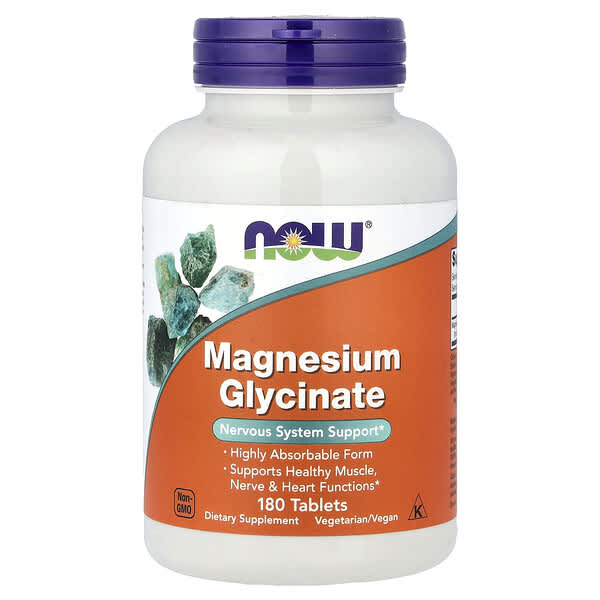
NOW uses magnesium bisglycinate. Each tablet contains 100 mg of elemental magnesium, and the label counts two tablets as one serving. The bottle contains 90 servings. Divide the checkout price by 90 to get the price per serving. The ingredient list also names citric acid separately.
- The label also states the weight of the magnesium bisglycinate compound. Read that number separately from the elemental amount.
- The bottle has 180 tablets. Choose either cost per tablet or cost per serving before comparing prices.
View NOW Foods Magnesium Glycinate details and price
Thorne Magnesium Glycinate (90 capsules)
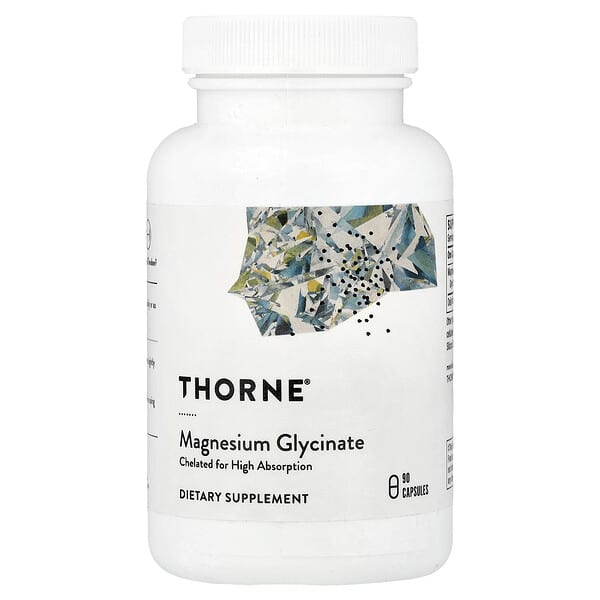
Thorne uses one capsule per serving, with 120 mg of elemental magnesium. If you prefer a product with a one-capsule serving, compare this with NOW, which lists two tablets per serving. For a per-piece comparison, use 120 mg for Thorne and 100 mg for NOW.
- The listed source is magnesium glycinate.
- Compare the label with the NOW Foods tablets on a per-unit or a per-serving basis. The two measures are different for the tablets.
View Thorne Magnesium Glycinate details and price
Thorne Magnesium CitraMate (90 capsules)

CitraMate combines two forms of magnesium. Each capsule contains 135 mg of elemental magnesium: 55 mg from citrate and 80 mg from malate. If you specifically want magnesium glycinate, look at the other two products in this guide.
- One capsule lists 135 mg of elemental magnesium.
- Check whether the package gives an individual amount for each form if that breakdown matters to your comparison.
The magnesium supplement buying guide uses the same label checks across tablets, capsules, powders, and blends. The side-by-side comparison of two 100 mg magnesium tablets shows how to compare products with the same elemental dose per tablet and different named sources.
Three Common Decisions at the Store
You already use a multivitamin or electrolyte powder.
Take photos of each panel before buying another magnesium product. Suppose the multivitamin lists 50 mg per serving, the electrolyte powder lists 60 mg, and the single-ingredient bottle lists 120 mg. If someone used one serving of each, the amounts on those labels would add up to 230 mg. If they used two servings of the powder, the second serving would add another 60 mg. This calculation accounts for the products in the example. Bring any magnesium-containing medicines into the conversation too, since their labels and directions may be different.
You want fewer tablets or a different format.
Start with magnesium per physical unit, then check the suggested use. A serving with two small tablets and a serving with one larger capsule can give the same amount. Consider whether you would find that size and format easy to use. For chewables or gummies, compare the ingredient list for sweeteners or sugar alcohols if that matters to you. For capsules, check the shell material when you follow a dietary restriction. Avoid assuming a tablet can be split or a capsule opened. Ask a pharmacist or check the manufacturer’s directions for the specific product.
You are comparing glycinate with citrate.
Put both products on the same elemental magnesium basis first. Then check whether the comparison is between two supplements. Some magnesium citrate products are saline laxative medicines with Drug Facts labels and their own directions. That is a different use and label category. If you are comparing supplements, consider serving size, other ingredients, and your previous experience with different products. See the glycinate versus citrate comparison for how human absorption studies and digestive side effects fit into that choice.
What the Absorption and Sleep Studies Measured
An absorption study is only as specific as its comparison. One human study compared magnesium citrate and magnesium oxide and found higher urinary magnesium after citrate. Another small study compared diglycinate and oxide in people who had undergone an ileal resection. Their populations and comparators were different. A headline about citrate versus oxide cannot answer which of two glycinate and citrate supplements a shopper would absorb better. A label claim about absorption means more when it points to a study of the relevant formulation and amount.
Sleep is a separate outcome. In a four-week randomized trial, generally healthy adults who reported poor sleep took magnesium bisglycinate or placebo. The average score on a self-reported insomnia scale fell by 3.9 points in the magnesium group and 2.3 points in the placebo group, a difference of 1.6 points. The researchers described the effect size as small. The study was short, used a questionnaire, and included no citrate arm. These details matter if the question is whether one form performs better than another, or whether changing products would solve a particular sleep problem.
If persistent trouble sleeping is what brought you to magnesium, note when it started, how often it occurs, and what it does to your daytime functioning. That information can help a clinician evaluate what may be contributing. In the store, concentrate on the information the packaging can answer, such as the compound, elemental amount, serving size, and other ingredients. Those checks apply whether you are considering a new supplement or replacing an existing one.
Check Overlapping Products, Medicines, and Kidney Function
The US National Institutes of Health lists an adult upper intake level of 350 mg per day for magnesium from supplements and medications. It excludes magnesium naturally present in food. The level is used when assessing risk from higher supplemental intake. The percent Daily Value on a US label serves a different purpose. It shows the share of a nutrition labeling reference value supplied by one serving. To compare your supplemental intake with the upper level, add up the listed amounts in milligrams. If you already take several products, add up the elemental amount of magnesium from each before using the number to discuss your situation with a pharmacist or clinician. The directions on different products may use different serving sizes.
Higher supplemental magnesium amounts may cause diarrhea, nausea, or abdominal cramping. People with impaired kidney function may be less able to remove excess magnesium. Some tetracycline and quinolone antibiotics and oral bisphosphonates can interact with magnesium. If you take one of these medicines or you have kidney disease, take the exact label and a list of medicines to a pharmacist or clinician before adding a supplement. A product name does not give them the elemental amount or all the other ingredients they may want to check.
A useful list includes the full product name, each dose shown on the label, what you use in practice, and any changes you are considering. Include chewables, powders, multivitamins, and products you take only occasionally. For a medicine, preserve its directions and ask about any spacing or interaction instead of changing its schedule yourself. The same list can also help you identify what changed if digestive symptoms start around the time you switch products.
Frequently Asked Questions
Are magnesium glycinate and magnesium bisglycinate the same on a label?
“Glycinate” is commonly used as a shorter name for magnesium bisglycinate. A full label can clarify whether that is the only source or one component of a blend. If you want to compare it with a lysinate glycinate chelate, copy the exact wording from both panels and compare their elemental amounts on the same basis.
Why does the front say 2,000 mg and the panel say 200 mg?
Those figures may describe the compound and the elemental magnesium, respectively. Read the words next to each number. If the Supplement Facts panel says Magnesium 200 mg from 2,000 mg bisglycinate, the 200 mg is the value to compare with another Magnesium entry. Check the serving size before deciding how much that is per unit.
Is a 60-capsule bottle always a 60-day supply?
Look at capsules per serving and the product directions. If it has two capsules per serving, it holds 30 servings. The number of days depends on the number of servings used each day. This is useful when comparing package price or deciding if a larger bottle is practical.
Does a higher elemental amount mean better absorption?
The elemental amount tells you how much magnesium the product specifies for a serving. Absorption depends on the formulation and the circumstances of use. To compare two products, first match the amount per unit you care about. Then look for research with the right formulations and comparable amounts if the question is about absorption.
Should I take magnesium glycinate at bedtime?
Read the directions for the product you have. A time chosen for a study applies to that study’s design. If you use medicines that may interact with magnesium or need help deciding whether to add it, ask a pharmacist about the product and your specific schedule.
How can I tell whether a blend contains more glycinate than oxide?
Look for a breakdown that gives the elemental amount from each source. A list that only names the two compounds and gives a magnesium total leaves the split unknown. If that distinction matters for your purchase, ask whether the manufacturer provides a source-specific amount for the formula.