
Ascorbic acid, sodium ascorbate and calcium ascorbate differ in form and associated minerals. Buffered generally describes a lower-acidity formulation; prolonged release describes delivery design. A more elaborate name alone does not establish better results for ordinary supplementation.
Common Vitamin C Sources on Oral Supplement Labels
| Source | What it is | What to check next |
|---|---|---|
| Ascorbic acid | The acid form of vitamin C | Vitamin C per tablet or serving, and any separate release description |
| Sodium ascorbate | A sodium salt of ascorbic acid | Vitamin C and sodium per serving, plus the capsule or scoop size |
| Calcium ascorbate | A calcium salt of ascorbic acid | Vitamin C per serving, whether calcium is quantified, and other ingredients |
Manufacturers often use “buffered” for formulas made with mineral ascorbates. Read the nutrient line to find the exact salt. If you are tracking a mineral, look for its own line as well. A calcium or sodium value gives you a number you can put beside other products. A product that names a calcium-containing source without a separate calcium amount leaves that quantity unspecified on the panel.
For comparisons, one gram is 1,000 mg and one milligram is 1,000 micrograms. A powder may list the weight of an entire scoop in grams and the vitamin C in that scoop in milligrams. Simply changing units does not make these the same quantity. The vitamin D2 and D3 label guide gives an example of how another nutrient uses different units. Its IU conversion is specific to vitamin D.
Buffered and prolonged release address different questions
Buffered formulations change the vitamin C source and acidity, commonly using sodium or calcium ascorbate. Prolonged release describes how a tablet delivers its contents. The terms are not interchangeable, and a prolonged-release label does not mean the vitamin C is a mineral ascorbate. The prolonged-release 21st Century example here still uses ascorbic acid.
- Trying a lower-acidity option after discomfort with an ordinary tablet: mineral ascorbates are a reasonable formulation comparison, but amount and other ingredients also affect the buying decision. Switching to buffered vitamin C does not guarantee freedom from diarrhea.
- Avoiding a solid dose: powder addresses the swallowing format directly. It need not also be prolonged release. The trade-off is measurement, mixing and storage rather than a tablet taken from a bottle.
- Wanting fewer daily administrations: the ordinary tablet, prolonged-release tablet and CGN capsule already have once-daily directions. Prolonged release is not uniquely responsible for that convenience; Solgar’s directions specify twice daily.
Choose a change of form because it resolves a real constraint, such as swallowing, an ingredient exclusion or a suitable amount. A more complex name by itself is not an upgrade. Distinguishing these separate decisions also prevents paying for a release feature when the actual problem is the strength or physical format.
Which formulation fits the practical requirement?
| Requirement | Option to compare | Limitation |
|---|---|---|
| Ordinary tablet without special design | Ascorbic acid | High intake can still upset the stomach |
| Trying a lower-acidity formula | Sodium or calcium ascorbate | No guaranteed tolerance; track the mineral separately |
| Avoiding tablets | Mixable powder | Scoops and strengths are not interchangeable |
| A specific prolonged-release preference | The labeled model | Do not crush independently or assume superior effects |
NIH vitamin C guidance describes comparable bioavailability of ordinary supplemental and naturally occurring ascorbic acid. Individual plasma or cellular markers do not establish better overall health outcomes from more complex formulas.
Does a higher blood or cell concentration prove a better result?
A 2008 double-blind crossover trial enrolled 15 healthy men aged 18–39. It compared 1,000 mg preparations of ordinary vitamin C, two calcium-ascorbate formulations with metabolites, and placebo. Each phase lasted 24 hours, separated by a seven-day washout. The vitamin C preparations did not significantly differ in plasma concentrations, while the metabolite formulations produced higher leukocyte concentrations at 24 hours. Study abstract
That was a short-term concentration measurement, not a comparison of cold frequency, recovery time or long-term disease outcomes. The authors called for a larger investigation to determine clinical relevance. It cannot establish that the 500 mg Solgar capsules below work better for everyone, or translate a cellular concentration difference into a percentage increase in immunity.
Ordinary ascorbic acid remains a defensible option for general supplementation. A preference for Ester-C or another buffered form can reflect format, ingredients or tolerance considerations without making the more elaborate source necessary. In particular, a study of a vitamin C formulation does not automatically validate every added botanical ingredient in a retail blend.
Compare Buffered Capsules, Powder, and a Calcium Ascorbate Formula
| Example | Serving | Vitamin C per serving | What else the label quantifies |
|---|---|---|---|
| California Gold Nutrition Buffered Gold C capsules | 1 capsule | 750 mg from sodium ascorbate | 95 mg sodium |
| California Gold Nutrition Buffered Gold C powder | 1 scoop, approximately 1.2 g | 1,000 mg from sodium ascorbate | 135 mg sodium |
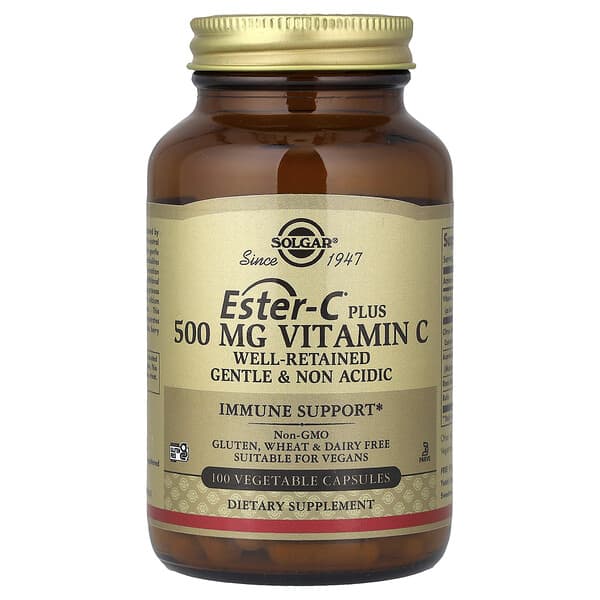
| Solgar Ester-C Plus | 1 vegetable capsule | 500 mg from calcium ascorbate | 25 mg citrus bioflavonoid complex, with no separate calcium amount |
The two sodium ascorbate examples have the same type of vitamin C source. One full powder serving has 250 mg more vitamin C and 40 mg more sodium than one capsule. If you want to compare sodium on the same vitamin C basis, divide sodium by vitamin C and multiply by 100. That gives about 12.7 mg sodium per 100 mg vitamin C for the capsule, and 13.5 mg for the powder. This is a label comparison. It leaves how much you actually use as a separate check.
Solgar’s 500 mg is the amount of vitamin C supplied by calcium ascorbate. The calcium quantity is not separately declared, so it cannot be used to meet a known calcium requirement without additional quantified information.
You can compare more package types in the vitamin C supplement buying guide. If you also use a combination supplement, the multivitamin label guide shows how to look up nutrients separately instead of estimating how much the formula supplies from the front.
Five vitamin C options: formulation, amount and practical trade-offs
This article contains affiliate links. ToBeHealthy may earn a commission from purchases through them. Comparisons are based on product information and research, without hands-on testing.
| Product | Amount and form per serving | Practical distinction |
|---|---|---|
 21st Century Vitamin C 500 mg (110 tablets) | 500 mg ascorbic acid; 1 tablet | Standard tablet; 30 mg separate calcium; once daily |
 21st Century Prolonged Release Vitamin C 500 mg (110 tablets) | 500 mg ascorbic acid; 1 tablet | Prolonged release; 40 mg separate calcium; once daily |
 California Gold Nutrition Buffered Vitamin C (60 capsules) | 750 mg vitamin C; 1 capsule | Sodium ascorbate; 95 mg sodium; once daily |
 California Gold Nutrition Buffered Vitamin C Powder (238 g) | 1,000 mg vitamin C; about 1.2 g powder | Sodium ascorbate; 135 mg sodium; measure and mix |
 Solgar Ester-C Plus (100 vegetable capsules) | 500 mg vitamin C; 1 capsule | Calcium-ascorbate blend; calcium unquantified; twice daily |
21st Century Vitamin C 500 mg (110 tablets)
The standard 21st Century tablet supplies 500 mg vitamin C as ascorbic acid, plus 30 mg calcium from calcium carbonate. The 110-tablet bottle has adult directions for one tablet daily with a meal. It fits a standard ascorbic-acid tablet preference without a specific prolonged-release requirement, matching the other 21st Century bottle’s vitamin C amount and tablet count.
- Dietary preferences: the label identifies it as vegan, gluten-free and non-GMO, without added sugar or artificial flavors.
- Formula distinction: the separate 30 mg calcium does not turn its ascorbic acid into calcium ascorbate, or make it a complete calcium supplement.
- Limitation: 500 mg is already above the ordinary adult daily intake reference. The tablet strength does not establish that everyone has a shortfall of that size.
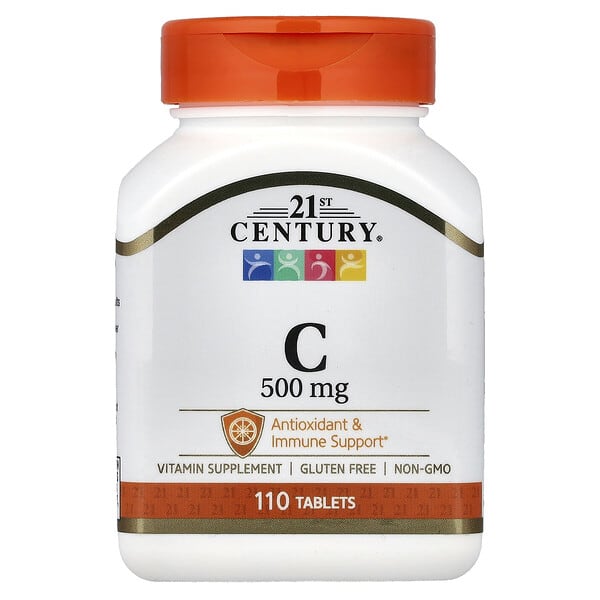
View 21st Century Vitamin C 500 mg details and price
21st Century Prolonged Release Vitamin C 500 mg (110 tablets)
The prolonged-release 21st Century version also provides 500 mg vitamin C as ascorbic acid in a 110-tablet bottle, with 40 mg separate calcium. Adult directions specify one tablet daily with a meal. Its distinction is the release design, rather than more vitamin C in a tablet.
The two versions differ by 10 mg calcium, not by vitamin C strength. Prolonged release changes delivery without increasing the nutrient amount in a tablet. Someone who needs to crush tablets to swallow them should ask a pharmacist or choose an appropriate alternative format rather than independently altering a prolonged-release tablet’s structure.
It is also labeled vegan, gluten-free and non-GMO. A reader already satisfied with an ordinary tablet does not have an evidence-based obligation to switch solely because this version says prolonged release.
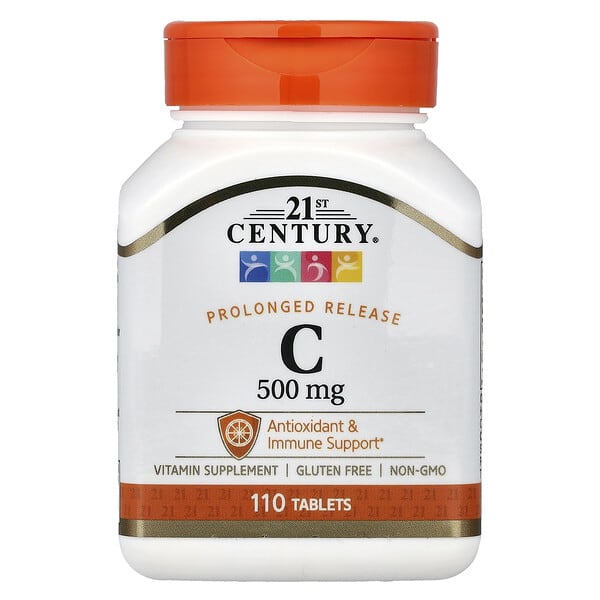
View 21st Century Prolonged Release Vitamin C 500 mg details and price
California Gold Nutrition Buffered Vitamin C (60 capsules)
Buffered Gold C capsules use sodium ascorbate, supplying 750 mg vitamin C and 95 mg sodium per capsule. The 60-capsule bottle provides 60 servings. Directions specify one daily, with or without food. Compared with the powder, a premeasured capsule is easier to carry and needs no scoop or drink preparation.
The vegetable shell uses modified cellulose, with a rice-extract blend containing rice bran extract, rice hulls, gum arabic and sunflower oil. This is an option for a reader who wants sodium ascorbate and accepts those capsule ingredients.
“Non-acidic” does not mean sodium-free or guarantee freedom from digestive discomfort. Include the actual 95 mg sodium contribution when limiting sodium. The capsule format also does not solve a difficulty swallowing capsules of any kind.
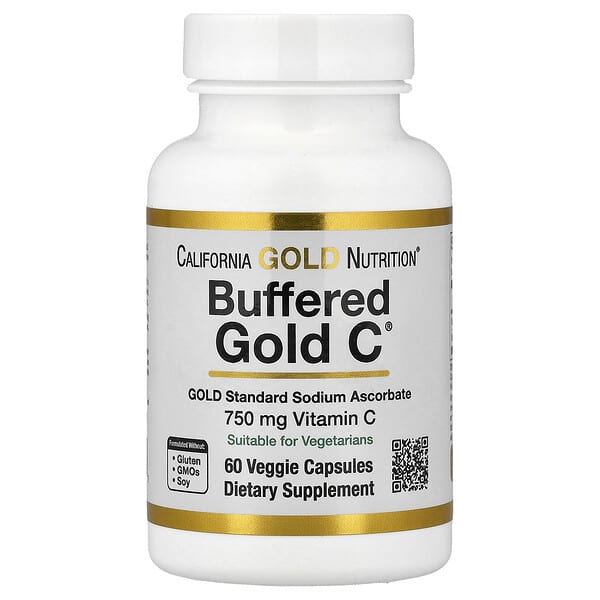
View California Gold Nutrition Buffered Vitamin C details and price
California Gold Nutrition Buffered Vitamin C Powder (238 g)
One approximately 1.2 g scoop of Buffered Gold C powder supplies 1,000 mg vitamin C and 135 mg sodium. The 238 g container lists about 198 servings, with directions for one scoop daily mixed into water or another drink. It suits avoiding tablets and capsules when measuring and mixing at home are practical. Its sodium-ascorbate source matches the capsule, but a full serving supplies 250 mg more vitamin C.
No capsule shell or other added ingredients are listed. It is labeled suitable for vegans. The entire 1.2 g scoop is not 1.2 g vitamin C; use the separate 1,000 mg vitamin C entry rather than the powder’s total weight.
The manufacturer notes that scoop weight varies with technique. Another product’s scoop or a household spoon is not automatically equivalent. A full scoop may also be a poor fit for a smaller intended supplement amount; choose a clearly suitable strength or ask a pharmacist about measurement. Protect the powder from heat, light and moisture as directed.
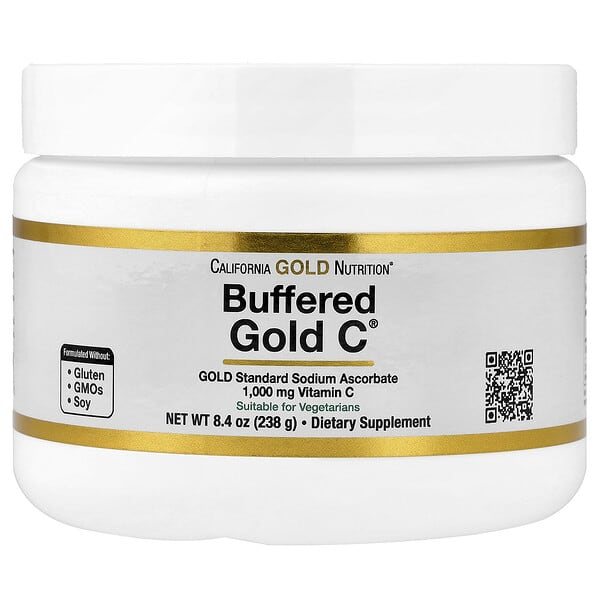
View California Gold Nutrition Buffered Vitamin C Powder details and price
Solgar Ester-C Plus (100 vegetable capsules)
Solgar Ester-C Plus provides 500 mg vitamin C from calcium ascorbate per capsule, with 25 mg citrus bioflavonoids, 10 mg each acerola extract and rose hips, and 5 mg rutin. Compared with a simple formula, it is relevant to a specific Ester-C blend preference that accepts additional plant ingredients.
Vegan and kosher-parve labeling support those dietary requirements. Adult directions specify one capsule twice daily, preferably with meals. At that schedule, 100 capsules provide 50 days, not 100.
The panel does not quantify calcium itself, so 500 mg vitamin C cannot be counted as 500 mg calcium. Acerola extract, rose hips and bioflavonoids are not equal weights of pure vitamin C either; do not add every ingredient’s milligrams to the vitamin C amount. Brand descriptions of gentleness and cellular retention do not guarantee fewer colds.
View Solgar Ester-C Plus details and price
Two buffered-formula pitfalls
Solgar’s 500 mg is vitamin C rather than calcium. Unquantified calcium cannot replace a calcium supplement. CGN capsules and powder supply 95 mg and 135 mg sodium respectively; include actual daily sodium when restricting it regardless of taste.
Solgar uses one capsule per serving but directions for twice daily. Other products also have their own schedules. Servings compare packages and are not necessarily days of supply.
Comparing price on the same vitamin C basis
The ordinary and prolonged-release 21st Century bottles each contain 110 tablets at 500 mg, totaling 55,000 mg vitamin C per bottle. Their cost per tablet can therefore be compared directly. CGN capsules contain 60 times 750 mg, totaling 45,000 mg. A larger per-capsule number does not necessarily mean more vitamin C across the bottle.
For a common comparison unit, divide bottle price by total vitamin C milligrams and multiply by 500. That gives the cost per 500 mg. It is not an instruction to open a capsule, arbitrarily halve a scoop, or take 500 mg every day. It simply allows differently sized packages to be compared using the same nutrient quantity. Actual price, shipping and any genuine discount still need checking at checkout.
Powder avoids a capsule shell but needs preparation. Prolonged-release tablets have a delivery design without established superior health outcomes. Solgar adds plant ingredients rather than simply supplying more vitamin C. Retain those trade-offs when comparing cost; the lowest price per gram cannot decide every recommendation.
Amount matters to tolerance
The adult upper reference of 2,000 mg/day listed by NIH includes food and supplements and is not a target. Excess can cause diarrhea, nausea or cramps. Iron overload, kidney disease or cancer treatment requires healthcare-team review before supplementation rather than independent high-dose treatment.
The regular and prolonged-release 110-tablet bottles both supply 500 mg per unit; CGN capsules have 750 mg. Compare equal ingredient amounts alongside formulation and convenience rather than choosing solely by price per gram.
How much do adults need each day?
NIH lists adult daily vitamin C references of 90 mg for men, 75 mg for women, 85 mg during pregnancy and 120 mg during lactation; people who smoke need another 35 mg. These refer to intake including food, not an instruction to add a 500 or 1,000 mg tablet every day. A formulation name does not change that distinction.
Food, a multivitamin and a separate vitamin C product can all contribute. Account for overlapping sources before adding another bottle. Remaining below the 2,000 mg adult upper limit does not by itself establish an extra benefit from a larger amount. In particular, choosing buffered or prolonged release does not remove the need to consider the combined intake.
References
- NIH ODS — Vitamin C health professional fact sheet
- NIH ODS — Vitamin C consumer fact sheet
- Moyad et al., 2008 — PMID 18836692