
There is no universal best time to take magnesium, and bedtime is not mandatory. Use a regular meal when the label specifies food. If medicines need separation, their exact instructions matter more than morning versus evening.
Morning, evening, empty stomach or with food?
| Situation | Practical timing priority |
|---|---|
| Label says with food | Choose a regular meal rather than moving it to an empty stomach at bedtime |
| Powder needs mixing | Use a place with a measure and adequate water; dilute as directed before drinking |
| Diarrhea or nausea | Review total intake and seek advice rather than simply moving it later and increasing the amount |
| Prescription medicines or treatment for low magnesium | Follow a medicine-specific plan instead of a general supplement timetable |
NHS Specialist Pharmacy Service advises meals and divided doses when treating diagnosed low magnesium in adults. This treatment guidance does not establish one dose or splitting routine for all retail products. Guidance
Medicines that may need separation
Magnesium can reduce absorption of certain medicines. NIH ODS gives these examples:
- Certain tetracycline and quinolone antibiotics: generally take the antibiotic at least two hours before magnesium or four to six hours afterward. Order changes the interval.
- Certain oral bisphosphonates: separate from magnesium by at least two hours and follow that medicine’s fasting and plain-water instructions.
This is not a complete interaction list. Have a pharmacist check the exact drug and formulation rather than moving a prescription to fit a supplement.
Fit meal instructions to the actual routine
When a product requires food, identify a meal at which its directions can be followed rather than moving it to a long-empty stomach to match the idea of bedtime magnesium. For someone working days, that may be breakfast or dinner. For a shift worker, it depends on when meals actually happen. Another person’s evening clock time is not automatically a workable instruction for a different schedule. (Source)
A familiar meal can help with remembering whether a product was taken. That practical advantage does not establish superior absorption at that hour. Where workdays and days off differ, record the actual time and check whether medicine intervals or treatment instructions need to remain consistent. The arrangement does not require adding another meal simply to create a supplement occasion.
Both NOW products here specify food. Life Extension’s capsule directions allow intake together or divided. Identify the exact product and received version instead of carrying one bottle’s directions into another. Powder also requires an appropriate measure and the specified drink volume at the chosen occasion. A meal convenient for tablets may not have the equipment needed to prepare the powder correctly.
For treatment of diagnosed low magnesium, follow the clinical team’s amount and review schedule. Guidance mentioning meals and divided intake belongs to a particular care context. It does not mean every shopper should independently increase a retail supplement to the same frequency. A suitable routine must satisfy the actual label or treatment plan before the choice of morning or evening becomes a useful preference.
A two-hour interval cannot be reversed without checking
The antibiotic example above depends on order: certain antibiotics are taken at least two hours before magnesium or four to six hours after it. Those are different directions. They cannot be shortened into a rule that any two-hour gap works regardless of which product comes first.
For an illustration of the arithmetic only, magnesium at eight in the morning followed by an antibiotic at ten creates a two-hour gap. It is not the antibiotic two hours before magnesium, and it does not reach the four-to-six-hour interval after magnesium. This is not a timetable to adopt. The actual medicine’s label and a pharmacist’s review still determine the applicable arrangement.
With several prescription doses, bring the complete medicine schedule: names, formulations, amounts and intended times, alongside magnesium and other mineral products. A description limited to medicine in the morning and magnesium at night can omit other administration requirements. Exact information lets the pharmacist review the combination without having to infer which drug or preparation was meant.
If no suitable place is apparent, ask whether the supplement is needed and how it should be arranged. Do not independently delay, miss or move a prescription to another meal to fit it. Oral osteoporosis medicines can also have fasting and plain-water requirements, which one interval number does not fully describe. The practical task is a medicine-specific schedule that preserves those instructions, not finding a universal magnesium hour and adjusting every prescription around it.
Meal and mixing directions on three products
Tablets travel conveniently with a meal; powder avoids tablets when mixing a drink is practical. Life Extension provides 100 mg per capsule, NOW tablets 200 mg per two tablets, and NOW powder 300 mg per level teaspoon. Counts and spoonfuls are not interchangeable.
This article contains affiliate links. ToBeHealthy may earn a commission from purchases through them. Comparisons are based on product information and research, without hands-on testing.
| Product | Label per serving | Formula features and practical considerations |
|---|---|---|
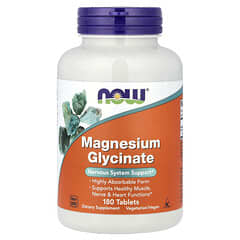 NOW Foods Magnesium Glycinate Tablets, 180 tablets | Two tablets per serving, with food | Albion™ bisglycinate; 100 mg per tablet; take with food. |
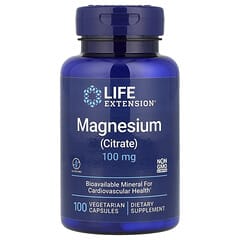 Life Extension Magnesium Citrate, 100 vegetarian capsules | One capsule per serving, label permits divided intake | 100 mg elemental magnesium as citrate per vegetarian capsule; together or divided as labeled. |
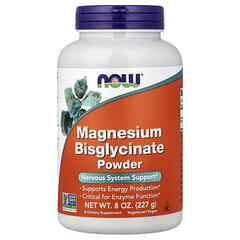 NOW Foods Magnesium Bisglycinate Powder, 227 g | One level teaspoon, dilute and take with food | Albion™ bisglycinate powder; 300 mg per level teaspoon; dilute and take with food. |
NOW Foods Magnesium Glycinate Tablets, 180 tablets
NOW Foods Magnesium Glycinate tablets use Albion™ magnesium bisglycinate, supplying 100 mg elemental magnesium per tablet and 200 mg per two-tablet serving. The 180-tablet bottle has 90 labeled servings, a portable format for shoppers who prefer counting tablets to measuring powder. It carries vegan, kosher and halal labeling.
The 2,000 mg figure is the magnesium-bisglycinate raw-material weight per two tablets; elemental magnesium is 200 mg. Directions are two tablets once or twice daily with food, so other magnesium-containing products need to be considered before deciding on a routine.
View NOW Foods Magnesium Glycinate Tablets, 180 tablets details and price
Life Extension Magnesium Citrate, 100 vegetarian capsules
Life Extension Magnesium Citrate provides 100 mg elemental magnesium per vegetarian capsule, with one capsule making a facts-panel serving. Other ingredients are vegetable cellulose and vegetable stearate, and it carries gluten-free and Non-GMO LE Certified labeling. It offers a smaller unit for shoppers who prefer capsules.
Directions allow one capsule one to three times daily, taken together or in divided doses, or as advised by a healthcare professional. Compared with NOW’s 200 mg two-tablet serving, the single-capsule figure is straightforward to log. The magnesium forms differ, and gastrointestinal tolerance still depends on the individual. (Manufacturer directions)
View Life Extension Magnesium Citrate, 100 vegetarian capsules details and price
NOW Foods Magnesium Bisglycinate Powder, 227 g
NOW Foods Magnesium Bisglycinate Powder uses Albion™ material, providing 300 mg elemental magnesium per level teaspoon, about 3 g. The 227 g container has about 76 servings, with citric acid as the only other ingredient. It offers a bisglycinate format for people who dislike tablets.
- Each level teaspoon must be diluted in at least 6 fl oz, about 177 mL, water or juice and taken with food.
- Do not swallow the powder dry.
- The tradeoff is measuring and mixing instead of swallowing tablets.
- This powder’s 300 mg serving also differs from the 200 mg two-tablet serving, so check quantities when switching.
View NOW Foods Magnesium Bisglycinate Powder, 227 g details and price
Does dividing the dose reduce the daily total?
No. Two 100 mg tablets still supply 200 mg whether taken together or divided under an agreed plan. NOW tablet directions allow two tablets once or twice daily, totaling 200–400 mg. NOW powder directions allow one level teaspoon once or twice daily, totaling 300–600 mg.
The adult upper limit from supplements and medicines is 350 mg daily, excluding naturally occurring food magnesium. Some labeled frequencies above exceed it, so the highest package frequency is not a target for everyone. Diagnosed low magnesium may require a separate treatment dose and monitoring.
Does bedtime use mean better sleep?
Convenience and effectiveness are separate. Evidence does not establish that every magnesium formula works better at bedtime than at other times. Persistent insomnia requires attention to sleep habits and other causes rather than continually changing the hour or amount.
Seek advice before use with impaired kidney function, pregnancy, breastfeeding, medicines or an existing condition. Follow the label or treatment plan after a missed dose; do not automatically double it.
Powder changes both preparation and the amount per serving
NOW bisglycinate powder defines a serving as one level teaspoon, approximately 3 g of powder, supplying 300 mg elemental magnesium. Two NOW glycinate tablets supply 200 mg. Carrying over the same assumed occasion merely because both names include glycinate therefore changes the amount consumed. The ingredient name alone does not make their serving sizes interchangeable.
Each level teaspoon of this powder must first be diluted in at least 6 fl oz, approximately 177 mL, of water or juice and taken with food. A level and a heaped spoon are different quantities. Ordinary cutlery should not be treated as a specified measure solely by appearance. Ask the manufacturer or a pharmacist how to measure it when the instruction is unclear.
Dilution is a preparation requirement, not a way of making the 300 mg amount smaller. Drinking the entire mixture made from the original serving supplies that same total even if more water is added. Conversely, concentrating it into a small mouthful does not meet the specified minimum drink volume. Do not swallow it dry. The measured powder and the liquid requirement both belong to following the product’s directions.
Someone using supplements away from home without a measure and suitable drink can compare tablets or capsules instead of omitting the preparation. When changing format, check elemental magnesium per serving, frequency and other sources again. That establishes whether the change concerns convenience alone or also changes the daily total. A format that is practical at home need not be forced into an occasion where its directions cannot be followed.
Dividing a total is different from adding another dose
Distributing an agreed daily amount across several occasions differs from taking an additional serving on top of the existing amount. As an arithmetic illustration with 100 mg capsules, two capsules total 200 mg, including when an agreed plan divides them between two occasions. Adding another two capsules to the original pair instead creates 400 mg. That is an increase, not a division of the same total.
A label can specify both units per serving and occasions per day. One Life Extension capsule is a 100 mg serving; two NOW tablets form a 200 mg serving; one level teaspoon of the powder is a 300 mg serving. Record the amount at each occasion and the number actually taken when reviewing the daily total. Similar words such as once or one serving can conceal different quantities across preparations.
Include other sources such as multivitamins, combined mineral products and certain heartburn or laxative medicines. Show the full packaging to a pharmacist rather than adding front-label ingredient weights or relying on the word magnesium alone. Naturally occurring food magnesium also belongs to a different source scope from the 350 mg supplemental-and-medicinal limit discussed above. A useful record keeps those categories identifiable.
Treatment for a diagnosed problem can require an individual amount and monitoring plan. A general reader should not infer a suitable total from the highest package frequency, a professional treatment guide or someone else’s divided routine. Establish what is actually being taken before assessing where it fits in the day. Changing the time without recognizing an increased total leaves the most relevant quantity unexplained.
If changing the hour does not resolve diarrhea
Record the complete product, elemental magnesium amount, actual tablet count or powder quantity, whether food was taken and when symptoms began. If format, frequency and time all changed together, morning or evening alone does not describe what happened. The actual quantities and sequence allow the change to be reviewed rather than attributing everything to the clock.
Oral magnesium can cause diarrhea, nausea and abdominal discomfort. Diarrhea does not show better absorption or relaxation, and persistent diarrhea can contribute to electrolyte loss. Someone receiving treatment for low magnesium should contact the clinical team about the response rather than simply move it to bedtime and continue an unchanged arrangement. Follow the product warning and appropriate advice about changes.
NHS Specialist Pharmacy Service guidance considers meals, divided administration and tolerance within treatment of diagnosed adult low magnesium. It is not a treatment dose or monitoring timetable for every retail user to adopt independently. A different product described online as gentler also does not establish that continuing symptoms can be ignored. Tolerance is part of the actual experience to report, alongside the reason magnesium was started.
For a sleep-related goal, distinguish easier remembering from sleeping better. Describe sleep onset, awakenings and next-day function to the appropriate healthcare professional instead of treating bedtime itself as evidence of benefit. Severe discomfort or a significant new symptom needs timely assessment according to the situation, without waiting for another change of hour. A convenient routine should remain compatible with directions, medicines and an acceptable response; convenience cannot answer all of those questions by itself.
Related reading and sources
- magnesium supplement buying guide
- High-Magnesium Foods Compared by Serving
- Magnesium Benefits for Muscles, Nerves and Energy