
Fish oil supplies EPA and DHA, but ordinary supplements are not established as a way to prevent heart attacks or strokes for every adult. Prescription omega-3 for elevated triglycerides differs in formulation, amount and intended patients. Distinguish adding a dietary source from treating a blood result or cardiovascular risk.
Turn “taking fish oil” into a specific question
For someone who rarely eats fish, the question is whether EPA and DHA sources fit the diet and whether suitable foods can be included. An elevated triglyceride result raises a different question about the cause, other risks and an appropriate management plan. Both discussions may involve omega-3, but they do not automatically lead to the same product or amount.
If already taking lipid-lowering medication, bring the medicine list, blood results and proposed supplement label to the review. An otherwise healthy adult seeking a more varied diet can begin with the fish actually eaten, portions and frequency rather than choosing the most concentrated capsule first.
An absence of a noticeable feeling does not prove ineffectiveness, while feeling more energetic does not establish reduced cardiovascular risk. A blood-result goal needs the agreed monitoring; a dietary goal needs a review of meals. Neither is assessed reliably by how a capsule seems to feel after a few days.
Are the omega-3s in walnuts and flaxseed the same as fish oil?
Walnuts and flaxseed mainly supply alpha-linolenic acid, or ALA, while fish-oil comparisons commonly focus on EPA and DHA. ALA is an omega-3, but it is not another name for EPA or DHA. The body can convert ALA into EPA and then DHA, but conversion is limited. Milligrams of dietary ALA therefore cannot simply be counted as the same amount of EPA plus DHA.
Nuts, seeds and fish can each have a place in a diet; this distinction does not make plant foods nutritionally worthless. The useful comparison returns to the original purpose. Adding a plant source of unsaturated fats and obtaining a specified EPA-and-DHA amount are different questions, even when both involve products labeled omega-3.
If fish is excluded and algae oil is being considered, check whether the formula supplies DHA, EPA or both. “Plant-based omega-3” alone does not identify those ingredients. This does not establish that everyone avoiding fish needs an additional supplement either. Clarify the dietary goal and any existing healthcare plan before comparing the relevant ingredients. A source comparison can guide a purchase, but it cannot turn evidence for a prescription formulation into evidence for any product sharing the omega-3 name.
A fish meal and an oil capsule
Salmon or sardines provide protein as well as fats and other nutrients. If they replace another dish, the change affects the composition of the meal. A fish oil product mainly supplies oil. The label may show 1,000 mg of fish oil and list smaller amounts of EPA and DHA underneath. To compare those fatty acids across packages, check both lines and how many capsules make up the serving.
A blood marker and a cardiovascular event
A triglyceride level is measured in a blood sample. A heart attack or stroke is a clinical event that a trial can record over time. A study can detect a change in a blood marker without establishing a change in events. When you read a headline about fish oil and heart health, look for the outcome that was actually measured. Next, check which formulation was tested and whether the participants resemble the people the claim is aimed at.
What the trials actually compared
VITAL enrolled adults without prior cardiovascular disease or cancer at entry and tested a marine omega-3 supplement against placebo. The combined main cardiovascular outcome included heart attack, stroke and death from cardiovascular causes. The study did not find a statistically significant reduction in that combined outcome. The heart-attack result considered on its own was lower in the omega-3 group. That secondary finding has a narrower meaning than a claim that the supplement prevented cardiovascular disease across the board.
REDUCE-IT addressed a different question. It tested a purified prescription EPA product, icosapent ethyl, in people taking statins who had elevated triglycerides and either established cardiovascular disease or diabetes with additional risk factors. It found fewer events in the trial’s main combined outcome. The study did not test a supermarket capsule or ask whether people could stop taking a statin. If a headline quotes the result, look for the drug name, the participants’ risk profile and their existing treatment before trying to apply it to another product.
STRENGTH tested a high-dose formulation containing both EPA and DHA in another group of high-risk patients. The study found no significant difference in the main combined cardiovascular outcome compared with corn oil. The trials vary in their formulations, comparison oils, populations and designs. They do not allow a simple head-to-head conclusion that one fatty acid always works while the other does not.
| Evidence | What was tested | Main cardiovascular result |
|---|---|---|
| VITAL | Marine omega-3 versus placebo in a prevention trial | No statistically significant reduction in the primary combined outcome |
| REDUCE-IT | Prescription icosapent ethyl versus placebo in selected high-risk statin users | Fewer events in the primary combined outcome |
| STRENGTH | High-dose EPA and DHA formulation versus corn oil in high-risk adults | No statistically significant difference in the primary combined outcome |
Read VITAL, REDUCE-IT and STRENGTH directly. A triglyceride change differs from a clinical event, and prescription-EPA findings cannot establish effects for the retail products below.
A reported 25% reduction is not 25 fewer people out of 100
In the original REDUCE-IT report, the primary composite occurred in 17.2% of the prescription group and 22.0% of the comparison group over a median 4.9 years: a 4.8-percentage-point difference. The commonly reported 25% is a relative reduction, not 25 fewer events per 100 people.
The composite also included coronary revascularization and unstable angina, not heart attacks alone. These figures describe this high-risk, statin-treated trial and prescription EPA. They do not predict an individual healthy shopper’s result from retail fish oil.
Separate fish oil, total omega-3 and EPA plus DHA
For Nordic ProOmega below, two softgels provide 1,280 mg total omega-3, including 650 mg EPA and 450 mg DHA. EPA plus DHA therefore totals 1,100 mg; the remaining 180 mg is not extra EPA or DHA. NOW Mini Gels provide 1,000 mg fish oil and 600 mg EPA plus DHA per two softgels.
These are supplied amounts, not milligrams absorbed by the body. Fish-oil weight, total omega-3 and EPA plus DHA answer three different label questions. The largest number on the front is not automatically the relevant active-ingredient comparison.
Keep the serving unit attached to every figure. Nordic’s 1,100 mg is for two softgels, while NOW Ultra’s 750 mg is for one. Comparing only those front-label figures can misrepresent the amount per capsule. Use the full serving with its capsule count, or consistently divide each label to a per-capsule basis.
Practical differences between three formulas
- Smaller softgels: NOW Mini Gels supply 300 mg EPA plus DHA each, with two per serving; the trade-off is more units.
- More per softgel: NOW Ultra supplies 750 mg, with enteric coating and odor control; size and individual tolerance still matter.
- rTG form, lemon flavor and sustainability certification: Nordic ProOmega supplies 1,100 mg per two. The form alone does not establish superior health outcomes.
This article contains affiliate links. ToBeHealthy may earn a commission from purchases through them. Comparisons are based on product information and research, without hands-on testing.
| Product | Label per serving | Formula features and practical considerations |
|---|---|---|
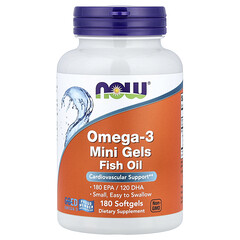 NOW Foods Omega-3 Mini Gels, 180 softgels | 600 mg EPA + DHA per two softgels | Smaller softgels; 600 mg EPA+DHA per two; bovine gelatin and halal labeling. |
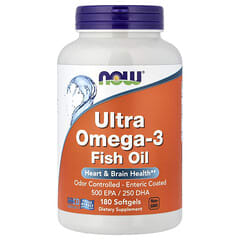 NOW Foods Ultra Omega-3, 180 softgels | 750 mg EPA + DHA per softgel | Enteric-coated and odor-controlled; 750 mg EPA+DHA per softgel; with food. |
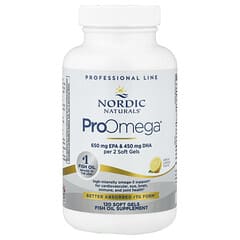 Nordic Naturals ProOmega Lemon, 120 softgels | 1,100 mg EPA + DHA per two softgels | Lemon-flavored rTG oil; 1,100 mg EPA+DHA per two; sustainability certification. |
NOW Foods Omega-3 Mini Gels, 180 softgels
NOW Foods Omega-3 Mini Gels use smaller softgels, with 180 mg EPA and 120 mg DHA each, or 600 mg EPA plus DHA per two-softgel serving. They give shoppers a smaller-capsule option if taking two is acceptable compared with one higher-strength softgel.
The oil is molecularly distilled, the manufacturer describes contaminant testing, and the product carries halal labeling. Bovine gelatin forms the capsule, and the oil comes from anchovies and sardines. It is unsuitable for vegans or people with fish allergy. The 1,000 mg fish-oil weight per two capsules is separate from their EPA and DHA amount.
View NOW Foods Omega-3 Mini Gels, 180 softgels details and price
NOW Foods Ultra Omega-3, 180 softgels
NOW Foods Ultra Omega-3 supplies 500 mg EPA and 250 mg DHA per softgel, or 750 mg combined, a higher amount per unit than the mini gels. Enteric coating and an odor-controlled design are concrete features for shoppers concerned about fishy aftertaste, although tolerance varies.
- The manufacturer states that the oil is molecularly distilled and tested for contaminants.
- The capsule contains bovine gelatin and carries halal labeling.
- Directions are one softgel once or twice daily with food.
- If capsule size is the concern, confirm dimensions rather than assuming a one-capsule serving is easier to swallow.
View NOW Foods Ultra Omega-3, 180 softgels details and price
Nordic Naturals ProOmega Lemon, 120 softgels
Nordic Naturals ProOmega uses re-esterified triglyceride (rTG) fish oil. Two softgels provide 650 mg EPA and 450 mg DHA, totaling 1,100 mg, within 1,280 mg total omega-3. Lemon flavor, the rTG form and Friend of the Sea sustainability certification are specific features to compare.
The 120-count bottle contains 60 two-softgel servings, with routine adult directions taken with food. It contains fish oil, gelatin and natural flavor, so it is unsuitable for vegans or people with fish allergy. Follow the healthcare check for anticoagulant use. The rTG form alone does not guarantee a better personal health outcome.
View Nordic Naturals ProOmega Lemon, 120 softgels details and price
rTG, a coating and lemon flavor solve different buying questions
rTG describes the oil’s chemical form. Enteric coating describes a capsule design, while lemon flavor concerns taste. These are separate comparison dimensions. Someone concerned about aftertaste can compare odor-control and coating features; someone seeking a particular oil form can check the rTG declaration. Difficulty swallowing still requires attention to the individual capsule.
A design feature can be useful without establishing the best health outcome. The practical limitations differ too: smaller softgels may involve more units, a concentrated formula need not be physically smaller, and flavoring does not remove a fish allergen. Choosing a format that can be used as directed and establishing a medical benefit are separate decisions.
There is no documented hands-on tolerance test behind this comparison. A label can establish the presence of a coating or flavor, but cannot tell an individual reader whether they will experience reflux or find the softgel easy to swallow.
A cheaper bottle does not establish an equivalent formulation
NOW Mini Gels have 180 units and 90 two-softgel servings. NOW Ultra has 180 one-softgel servings, while Nordic’s 120 units make 60 two-softgel servings. Each serving supplies a different EPA and DHA amount. These counts describe packages, not equal treatment courses.
Divide the actual checkout price by the labeled servings to compare purchasing units, then consider the relevant EPA and DHA amounts. An unsuitable format or regimen is not better value merely because its ratio is lower. Use the same delivery market and purchase conditions, with any delivery costs considered separately.
Do not increase retail capsules to reproduce a prescription trial’s gram amount. Matching oil quantity does not make the formulation, patient population or monitoring equivalent. A price calculation can support an appropriate purchase after the intended use is settled; it cannot establish that the supplement is needed or prescribe its use.
For other concentration and format comparisons, see the fish oil buying guide.
Fish meals or supplements?
A cooked fish meal supplies protein and other nutrients alongside fats. Canned fish can work without cooking, with attention to sodium, oil and seasoning. Supplements are compared by EPA, DHA and practical unit count. Non-fish options are covered in the fish versus algae oil comparison; EPA and DHA vary by formula.
Side effects and higher-dose risks
Fishy taste, heartburn, nausea and gastrointestinal discomfort can occur. Flavor and coating cannot guarantee no reflux. NIH ODS also summarizes a small increase in atrial fibrillation in high-risk populations taking 4 g daily over years.
Anticoagulants, existing rhythm problems or a proposed high dose warrant a review of the treatment plan. Do not substitute retail capsules for prescription omega-3 or statins.