
Zinc side effects include nausea, vomiting, stomach upset, headache and reduced appetite. Sustained high intake can also interfere with copper absorption, so absence of stomach pain does not establish safety. Suspected accidental overdose needs immediate advice without waiting for a complete total.
Suspected accidental excess does not require proof of poisoning
If a child may have mistaken lozenges for sweets, or an adult may have taken several servings at once, seek immediate local medical or poison advice. MedlinePlus poisoning guidance identifies the product, strength, time, possible amount and person’s age as useful information, but says not to delay help while collecting it. Bring the container if possible.
Do not induce vomiting or improvise treatment from an online remedy. Breathing difficulty, collapse or inability to wake the person requires emergency help, rather than more label calculations.
Immediate discomfort versus sustained excess
| Situation | Concern | Priority |
|---|---|---|
| Nausea or stomach upset after use | Amount, directions and other causes can matter | Check elemental amount and overlaps; seek advice for persistent or significant symptoms |
| High daily amounts for weeks | 50 mg or more can impair copper absorption and affect immune function | Review reason, amount and duration; do not add copper to compensate yourself |
| Possible accidental excess | The daily limit cannot determine poisoning urgency | Seek help, keep the package and do not induce vomiting |
NIH ODS gives a 40 mg adult upper limit from food and supplements together. It is not an acute-poisoning threshold or proof that every smaller supplement amount is useful. Medical treatment uses a separately supervised plan.
The daily limit cannot classify a single ingestion as safe
For the adult references and intake calculation, see daily zinc intake guide.
The 40 mg upper limit is a general adult reference for excess-intake risk, not a boundary where 39 mg is guaranteed safe and 41 mg guarantees poisoning. A one-day total, repeated use, age, health circumstances and symptoms are separate pieces of information. Children cannot use the adult figure.
Someone receiving a specific medical treatment should not alter it solely after reading an upper limit. Equally, the fact that a 50 mg product is sold does not establish its suitability for everyday long-term use. The label and the general limit need to be reviewed together in context.
Children and adolescents do not use the adult 40 mg limit
The same US National Academies framework sets age-specific upper limits for usual total intake from all sources.
| Age | Daily zinc upper limit |
|---|---|
| 1–3 years | 7 mg |
| 4–8 years | 12 mg |
| 9–13 years | 23 mg |
| 14–18 years | 34 mg |
| 19 years or older | 40 mg |
A 15 mg lozenge, for example, exceeds the 12 mg limit for ages four through eight. That comparison does not classify the severity of a single accidental ingestion or establish that the adult product is appropriate for a child. For an ingestion concern, seek advice as described above rather than waiting for symptoms or trying to offset it with food.
These are risk references, not supplemental doses for children. General adult daily intake references are 11 mg for men and 8 mg for women, serving a different purpose from the 40 mg upper limit. Treatment of a particular condition uses a clinical plan; dividing an adult product into halves or quarters does not establish an appropriate pediatric regimen.
Nausea is not explained by the zinc form alone
Record when discomfort occurred, the amount actually used, whether food directions were followed and which other products were taken. This helps a clinician assess a possible relationship. Symptoms appearing after a supplement still do not exclude another medicine, infection or digestive problem.
For a multi-ingredient product, not every symptom can automatically be assigned to zinc. Sentry also contains iron, while Seeking Health’s lozenge contains xylitol. The whole formulation and use pattern may need review. Do not repeatedly take a product to deliberately reproduce significant symptoms as an informal test.
There are two separate questions: whether extra zinc is needed and whether the current preparation is tolerated. Another brand may supply the same elemental amount, while a lozenge may introduce different ingredients. Persistent discomfort calls for both questions to be considered, rather than repeated shopping changes with no review of the underlying need.
Why prolonged excess can affect copper
Too much zinc can interfere with intestinal copper absorption. This is not a simple subtraction between two label amounts. The NIH copper fact sheet identifies high zinc intake as a deficiency risk; copper deficiency can involve anemia and neurological problems. Absence of nausea therefore does not establish that a high amount is suitable indefinitely.
Report the amount and duration of sustained high-strength use so the clinician can decide whether assessment is needed. Do not respond to fatigue by adding iron or use an online zinc-to-copper ratio to self-treat. Another mineral does not replace review of the original regimen.
What about an eye formula containing 80 mg zinc?
The National Eye Institute’s AREDS2 information lists 80 mg zinc and 2 mg copper alongside other specified ingredients for selected people with age-related macular degeneration. This is a complete, condition-specific formulation with a research basis, not routine extra zinc for every adult.
If an eye-care team has recommended it, ask that team about the plan rather than independently stopping because this article gives a 40 mg general limit. Conversely, the existence of AREDS2 does not establish a benefit from taking 50 or 80 mg daily without the relevant indication.
Its inclusion of copper also does not mean an arbitrary zinc tablet plus a copper tablet reproduces the research. Include the eye formula, multivitamin and lozenges together in an overlap review so the clinician sees the full arrangement.
Medicine spacing
- Certain tetracycline and quinolone antibiotics: generally take the antibiotic at least two hours before zinc or four to six hours after it.
- Penicillamine: separate by at least one hour.
Have a pharmacist check the actual drug, formulation and dispensing instructions rather than moving prescription times yourself.
Two hours before is not the same direction as four to six hours after
For the antibiotic groups described above, NIH guidance means the antibiotic at least two hours before zinc, or four to six hours after zinc. It should not be shortened to two hours on either side. Taking zinc first and the antibiotic two hours later does not satisfy the latter interval.
This explains the direction, not a timetable for an individual medicine. Multiple daily antibiotic doses, meal instructions and other medicines can affect the arrangement. Have a pharmacist review the exact name and dispensing label, including whether a nonessential supplement should be paused or how it can fit. Do not miss or delay a prescription dose to accommodate a zinc tablet.
Cold lozenges involve a side-effect trade-off too
The 2024 Cochrane review found a probable increase in nonserious adverse events when zinc was used to treat colds, including unpleasant taste and digestive discomfort. Trial preparations and regimens cannot be transferred directly to the 15 mg nutrition lozenge below or used to justify extra servings.
An unpleasant taste is not evidence that a product is working. Mouth irritation or nausea should be reviewed according to the symptoms and product warnings, rather than endured to finish a bottle. Cold-treatment research and routine long-term nutrition supplementation are different questions.
Three easily overlapping sources
A multivitamin already supplies zinc; lozenges have fixed amounts too; a 50 mg tablet exceeds the general limit alone. These label examples help identify exposure; they are not recommendations for treating side effects.
This article contains affiliate links. ToBeHealthy may earn a commission from purchases through them. Comparisons are based on product information and research, without hands-on testing.
| Product | Label per serving | Formula features and practical considerations |
|---|---|---|
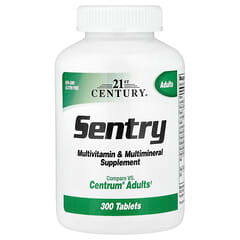 21st Century Sentry Adults Multivitamin, 300 tablets | 11 mg zinc per tablet | Multivitamin; 11 mg zinc and 18 mg iron; contains gelatin; one tablet with a meal. |
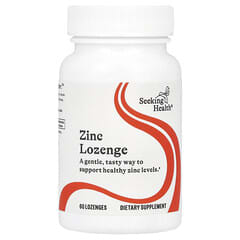 Seeking Health Zinc Lozenge, 60 lozenges | 15 mg zinc per lozenge | 15 mg Albion® bisglycinate lozenge; xylitol and monk-fruit sweetening. |
 Solgar Zinc, 100 tablets | 50 mg zinc per tablet, above adult UL | 50 mg gluconate zinc; vegan and gluten-free; above the general adult daily upper limit. |
21st Century Sentry Adults Multivitamin, 300 tablets
Each Sentry tablet already contributes 11 mg zinc alongside 18 mg iron, 25 mcg vitamin D3 and other nutrients. Include it in an overlap review even when it was bought for broad nutrition rather than specifically for zinc.
Its adult directions use one tablet with a meal. Gelatin and coloring appear in the ingredients, making this unsuitable for a vegan preference. If discomfort occurs, bring the full formula rather than assuming the zinc amount identifies the cause.
View 21st Century Sentry Adults Multivitamin, 300 tablets details and price
Seeking Health Zinc Lozenge, 60 lozenges
Seeking Health supplies 15 mg elemental zinc as Albion® bisglycinate in each of its 60 lozenges. Xylitol, monk fruit and natural flavor provide the taste. The format avoids swallowing a whole tablet, while xylitol is relevant for someone who poorly tolerates sugar alcohols.
Directions are one lozenge daily with food as needed: bite a few times, allow it to dissolve slowly, then swallow. This is a measured zinc supplement, not a mint to take repeatedly or increase independently during a cold.
View Seeking Health Zinc Lozenge, 60 lozenges details and price
Solgar Zinc, 100 tablets
Solgar’s gluconate tablet supplies 50 mg elemental zinc. The 100-count bottle carries vegan, certified gluten-free and kosher labeling and excludes dairy, soy, sugar, artificial flavor and color. These details help assess dietary preferences but do not remove the need to review its higher amount.
One tablet exceeds the general adult 40 mg daily upper limit, so its purpose and duration need professional confirmation. Prior use of the brand’s 22 mg version does not make this the same specification. Do not independently split tablets or create a different schedule to substitute for an agreed regimen.
View Solgar Zinc, 100 tablets details and price
Lozenges and a multivitamin on the same day
One Sentry tablet at 11 mg plus one Seeking Health lozenge at 15 mg gives 26 mg from supplements. Two lozenges would make 41 mg before food. This explains exposure, not a recommended increase: Seeking Health directions are one lozenge daily with food as needed or as professionally directed.
Spacing products apart does not reduce the daily total
For food contributions to that total, see High-Zinc Foods: Seafood, Meat and Legumes.
Moving the multivitamin to breakfast and a lozenge to lunch changes timing, not the amount consumed. Two 15 mg lozenges plus an 11 mg multivitamin still total 41 mg from supplements. Separate hours do not create separate 40 mg allowances.
The reverse also matters: calculating a total below the upper limit does not resolve medicine interactions. Intake accounting asks how much is consumed across the day. Medicine spacing asks whether particular products can be taken together. Both need checking where relevant, and neither calculation should be treated as proof that an additional supplement is necessary.
Will switching the zinc form solve nausea?
Another form can still supply as much or more elemental zinc. Check the amount, meal directions and overlapping products before relying on a brand change. Recurrent symptoms, impaired eating or pronounced vomiting warrants assessment rather than adding another mineral to offset symptoms.
Excessive zinc-containing denture adhesive has also caused harm; frequent users can review the product with dental professionals. Collapse, breathing difficulty or inability to wake someone requires emergency help.
What to bring to a pharmacist review
| Information | A useful record |
|---|---|
| Exact product | Photos of the front, nutrient panel and full ingredients, rather than the brand alone |
| Elemental amount and servings | Amount per unit and the number actually used that day |
| Duration | Start date, regularity and any recent increase |
| Symptoms and timing | Onset, duration, effect on eating and accompanying symptoms |
| Other sources | Multivitamins, lozenges, prescriptions and frequently used zinc-containing products |
A brief record supports communication; it is not a self-diagnosis report. If the concern is an accidental ingestion or emergency, seek help first and let the healthcare team request any further details. Do not postpone contact to reconstruct a perfect list.
Bring the current package even when a previous bottle had the same name. Strengths and formulas can differ between versions. If another person organized the tablets, check the original labeled container rather than relying solely on the appearance of an unmarked pill.