
Daily zinc references for adults aged 19 and older are 11 mg for men and 8 mg for women, with 11 mg during adult pregnancy and 12 mg while breastfeeding. Count food and supplements together. The 40 mg upper limit addresses excess risk; it is not an intake target.
Daily zinc intake by life stage
| Adult group | Daily zinc intake reference |
|---|---|
| Men | 11 mg |
| Women | 8 mg |
| Pregnancy | 11 mg |
| Breastfeeding | 12 mg |
The table uses the dietary reference values reported by the NIH Office of Dietary Supplements. Authorities in other places may use a different framework. These numbers describe how much zinc you consume, not how many milligrams your body absorbs. If a healthcare professional has recommended a specific plan, use those instructions.
The source is NIH ODS. People under 19 have age-specific values rather than this adult table.
Reference intake, supplement serving and upper limit are different numbers
The adult reference helps plan total dietary intake. It does not instruct everyone to add a separate 8 or 11 mg tablet each day. If food already supplies an adequate amount, the reference is not an additional supplement requirement. Whether supplementation is needed depends on the overall diet, health circumstances and any professional assessment.
A supplement serving is a manufacturer’s labeling unit. It may be one tablet, two capsules or a specified number of lozenges. Multiply that amount by the servings actually taken. The upper limit is used to assess excessive intake; subtracting 11 from 40 does not establish that every adult man should add 29 mg.
Zinc in breakfast foods, lunch, dinner and a multivitamin all contributes to the same total. Food is not outside the calculation. Nor do standalone tablets, combination products and lozenges become separate allowances because they are marketed for different purposes. Keep one list of sources rather than a separate mental budget for each bottle.
Turn the nutrition label into the amount actually consumed
For a food listed per 100 g, adjust for the amount eaten. If a hypothetical label declares 4 mg zinc per 100 g, a 30 g portion contributes 4 × 30 ÷ 100 = 1.2 mg. That is a calculation example, not a specification for a particular cereal. Use the label on the food actually purchased, including the stated dry or prepared basis.
For a supplement declaring 15 mg per two capsules, both capsules together provide 15 mg, not 15 mg each. One capsule would mathematically account for 7.5 mg, but this is not permission to change directions or a prescribed regimen. Calculating intake and deciding an appropriate regimen are separate tasks.
Daily Value percentages are also not absorption rates. Solgar’s 22 mg is labeled 200% DV because it is compared with a labeling reference. It does not mean twice as much is absorbed or that everyone should aim for 200%. Elemental milligrams provide the more useful common unit when adding food and supplement sources together.
Does the 40 mg limit include food?
Yes. Count multivitamins, standalone zinc and lozenges too. Sustained high intake can interfere with copper absorption; 50 mg or more daily over weeks can do so. A smaller amount is not automatically necessary or appropriate.
Common overlaps
| Example | Supplement subtotal | Meaning |
|---|---|---|
| 11 mg multivitamin plus 22 mg zinc tablet | 33 mg | Food is still uncounted; review the need for both |
| One 50 mg zinc tablet | 50 mg | Exceeds the general adult upper limit by itself |
| Several zinc lozenges on one day | Add the actual count | Lozenges remain supplements with measurable amounts |
A worked example of overlapping products
Suppose food contributes an estimated 10 mg on one day and a multivitamin adds 11 mg. The combined amount is 21 mg. Adding a 22 mg standalone tablet makes 43 mg, above the 40 mg adult upper limit used here. Looking only at the two supplement labels would show 33 mg and miss the contribution from food.
The 10 mg food estimate in this example is hypothetical, not a claim about your diet. Use the foods and portions actually eaten. Also, being below the upper limit at 21 mg does not establish a need for the multivitamin. The calculation identifies an overlap; it cannot diagnose a deficiency or select treatment.
If ordinary dietary planning suggests an intake gap, review food sources rather than buying a high-strength tablet to catch up. A low-intake day is not a reason to use a large compensating dose. Likewise, deliberately avoiding zinc-containing food the day after excess intake does not turn repeated high-dose supplementation into a sound long-term plan.
For symptoms, accidental ingestion or repeated use of a high-strength product, provide the amount and timing to a healthcare professional. Do not try to resolve a potentially significant exposure solely by averaging it across a week.
Elemental zinc and compound names describe different things
Zinc glycinate and zinc gluconate supply the same mineral, zinc, joined to different components. Elemental zinc states how much zinc is supplied. For NOW’s label, count the 50 mg elemental amount rather than adding the 403 mg gluconate compound weight to the daily total.
Two products each declaring 10 mg elemental zinc supply the same ingested zinc amount. That does not establish identical absorption or digestive tolerance. Intake accounting and formulation comparison answer different questions; there is no need to invent an absorbed-dose conversion for each compound.
Multivitamin versus standalone zinc
Sentry also supplies iron and other nutrients; Solgar is a 22 mg chelated-zinc standalone product; NOW supplies 50 mg per tablet and warns against pregnancy, breastfeeding and long-term use. The same tablet count does not make them interchangeable.
This article contains affiliate links. ToBeHealthy may earn a commission from purchases through them. Comparisons are based on product information and research, without hands-on testing.
| Product | Label per serving | Formula features and practical considerations |
|---|---|---|
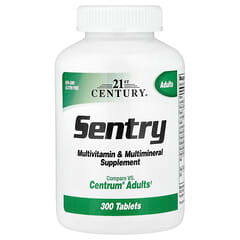 21st Century Sentry Adults Multivitamin, 300 tablets | Multivitamin: 11 mg zinc per tablet | Multivitamin; 11 mg zinc and 18 mg iron; contains gelatin; one tablet with a meal. |
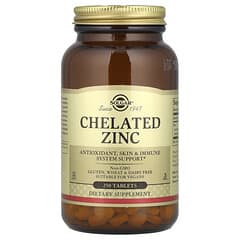 Solgar Chelated Zinc, 250 tablets | Chelated zinc: 22 mg per tablet | Chelated zinc glycinate; 22 mg per tablet; vegan, without added vitamins. |
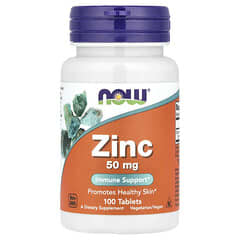 NOW Foods Zinc, 100 tablets | Zinc gluconate: 50 mg per tablet, above the adult UL | High-strength 50 mg gluconate zinc; not for long-term use or pregnancy/breastfeeding. |
21st Century Sentry Adults Multivitamin, 300 tablets
21st Century Sentry is a once-daily multivitamin and mineral formula with 11 mg zinc, 18 mg iron and 25 mcg vitamin D3 per tablet alongside other nutrients. It is relevant when comparing broad adult formulas, with zinc as one component rather than the purpose of a standalone zinc product.
The 300-tablet bottle is labeled gluten-free and non-GMO, but its other ingredients include gelatin and coloring, so it is not a vegan choice. Directions use any meal. Include its existing zinc, iron and vitamin D amounts before adding separate supplements.
View 21st Century Sentry Adults Multivitamin, 300 tablets details and price
Solgar Chelated Zinc, 250 tablets
Solgar Chelated Zinc uses an Albion-licensed zinc glycinate material, providing 22 mg elemental zinc per tablet without added multivitamins. The 250-tablet pack is labeled vegan and free of gluten, dairy, soy, sugar and artificial colors.
Adult directions are one tablet daily, preferably with a meal. A 22 mg tablet exceeds the general adult daily reference intake, so consider food and other zinc-containing products rather than assuming a standalone supplement is needed.
View Solgar Chelated Zinc, 250 tablets details and price
NOW Foods Zinc, 100 tablets
NOW Foods Zinc supplies 50 mg elemental zinc as gluconate per tablet, with vegan, kosher and halal labeling. Compared with an 11 mg zinc multivitamin, it is a distinctly higher-strength single ingredient for a professionally confirmed need.
- One tablet exceeds the general adult upper limit of 40 mg zinc daily.
- The package says it is not intended for long-term use and should not be used during pregnancy or breastfeeding.
- The 403 mg figure is zinc-gluconate raw-material weight; elemental zinc is 50 mg.
View NOW Foods Zinc, 100 tablets details and price
For other formulation and format choices, see the zinc buying guide.
Each label answers a different buying question
- Already considering a broad multivitamin: Sentry combines zinc with other nutrients, including 18 mg iron. Its zinc amount alone is not enough reason to choose it if the rest of the formula is unsuitable.
- Only supplementing a confirmed zinc shortfall: Solgar avoids an added vitamin package, but its 22 mg still needs to be considered alongside food and other supplements. It is not a standard daily shortfall for every adult.
- Following a specific higher-strength plan: NOW’s 50 mg specification needs an agreed duration and follow-up. It is not a routine way to make the adult reference intake more complete.
Dietary labels such as vegan or gluten-free answer ingredient-preference questions. They do not determine an appropriate zinc amount. Bottle counts of 100, 250 or 300 likewise describe the purchase, not how many consecutive days someone should supplement.
Mostly plant-based diets
Legumes, seeds, nuts and whole grains contain zinc, while phytates can reduce absorption. Use several sources across meals without subtracting an invented fixed percentage. A dietitian can assess a restrictive pattern or suspected malabsorption.
For example, 85 g roasted bottom sirloin, 28 g roasted pumpkin seeds and half a cup of cooked lentils supply about 7.3 mg from reference values, before other foods. This illustrates contribution rather than a complete menu or diagnostic test.
Break the 7.3 mg food example into its parts
| Food and portion | Reference zinc amount |
|---|---|
| Roasted bottom sirloin, 85 g | 3.8 mg |
| Roasted pumpkin seeds, 28 g | 2.2 mg |
| Cooked lentils, half a cup | 1.3 mg |
| Combined contribution | 7.3 mg |
These foods could be spread across meals and snacks; the example is not a requirement to eat all three together. The subtotal is 0.7 mg below the adult female reference and 3.7 mg below the adult male reference. Other foods remain uncounted, so neither difference directly determines a tablet strength to buy.
A substitution needs its own food value. Replacing the beef with a different protein food does not preserve the 3.8 mg figure automatically. The seed portion is 28 g rather than a whole packet, and the lentil portion refers to cooked lentils. Retaining the food description and portion makes the calculation useful; remembering only the final subtotal does not.
The example demonstrates contributions from meals, not a complete daily menu. Energy, protein and other nutrients still need consideration when planning food. A zinc subtotal should not become the only reason to choose or exclude a meal.
Keep a food record without pretending it is exact
Food-reference values are estimates, and zinc content varies with the food, cut and preparation. Recording a meaningful portion is more useful than writing “some meat” or “a few nuts.” However, displaying several decimal places does not make a dietary estimate a measurement of what was absorbed.
A record spanning representative weekdays and a weekend can help a dietitian see the pattern. Include fortified foods and supplements as well as meals. A single day with less meat does not establish deficiency, and a day with a high-zinc food does not prove long-term adequacy. The record is a practical assessment aid, not a diagnostic result.
For a mostly plant-based pattern, identify where beans, nuts, seeds and whole grains actually appear across meals. Consider overall intake and absorption with appropriate advice rather than subtracting a fixed percentage from every food. Replacing all protein foods with one vegetable dish and relying on a high-strength tablet leaves a broader dietary question unanswered. An actual menu is more useful to bring for review than a self-selected absorption formula.
An appropriate total does not settle medicine timing
A suitable daily amount does not mean zinc can be taken with every medicine. NIH consumer guidance identifies interactions with certain quinolone and tetracycline antibiotics and with penicillamine. Give the pharmacist the exact medicine, zinc product, daily amount and existing schedule so the relevant interval can be checked.
“With a meal” is not an instruction to take a supplement alongside every prescription. Do not stop a medicine to accommodate it. A clinician-directed deficiency or disease-treatment regimen also has a different purpose from an ordinary nutrition reference and requires the agreed monitoring.
Adults sharing meals do not necessarily use the same reference amount. An estimated 8 mg from food corresponds to the adult female reference in this table but is below the 11 mg male reference. That difference does not directly select a tablet strength: consider whether the recorded diet is representative and whether pregnancy, breastfeeding or another clinical circumstance changes the assessment.