
Hyaluronic acid binds water as a humectant; sodium hyaluronate is its sodium salt. A serum adds a humectant step, while a moisturizer combines hydration with emollient ingredients. “Acid” in this name does not make it an exfoliant like glycolic acid.
Hyaluronic acid, sodium hyaluronate, and other names
| Ingredient name | What the name tells you | What it leaves open |
|---|---|---|
| Hyaluronic Acid | The formula contains hyaluronic acid. | The molecular weight, concentration, and performance of the whole formula. |
| Sodium Hyaluronate | The formula contains the sodium salt of hyaluronic acid. | The molecular-weight range. A salt name alone does not imply smaller molecules. |
| Hydrolyzed Hyaluronic Acid | The material was processed by hydrolysis. | The exact molecular-weight range and how it compares with another product. |
| Sodium Hyaluronate Crosspolymer | The formula contains a crosslinked form. | The texture and how long the finished product will feel moisturizing. |
Check the exact name on the ingredient list. One serum may list hyaluronic acid and sodium hyaluronate separately. Another may say “several forms of hyaluronic acid” on the front. The names can help you identify what the blend includes. They do not tell you the amount of each form, the feel of the formula, or whether the product duplicates a moisturizer you already use.
The same caution applies to percentages. A label might give one number for a blend, while another product discloses the amount of a specific ingredient. If you want to compare the two, first find what each number refers to. An ingredient’s place in the list does not let you work backward to its exact percentage. When a product combines hyaluronic acid with glycerin or emollients, the formula may still be useful to compare as a whole even when individual percentages are undisclosed. The Korean serum guide shows examples of how ingredient combinations vary across serums.
Humectants, emollients and water-loss control do different jobs
Hyaluronic acid binds water; it is not the whole of a moisturizing formula. Glycerin is another humectant, so listing both is not automatically pointless duplication. Their amounts and the finished formula still matter. Counting more humectants cannot rank the final products.
Emollients help soften and smooth the surface; squalane in a lotion is an example. Occlusive ingredients help reduce evaporative water loss, with petrolatum and mineral oil among the familiar examples. A moisturizer can combine these roles without requiring a separate bottle for each function. How moisturizing ingredients work
That distinction helps explain why persistent tightness after cleansing does not automatically call for a lower-molecular-weight serum. If the existing serum mainly supplies humectants, a more suitable cream base may address the practical gap. If the current lotion already keeps the skin comfortable, an additional HA serum may offer little reason to add a step. A moisturizer does not become inadequate simply because its formula lacks hyaluronic acid.
An oily forehead and dry cheeks can use different amounts. A uniformly thin application may leave the dry areas uncomfortable; an equally thick application everywhere may be unnecessary. Continuing cracks or recurring inflammation call for attention to cleansing, irritants and the underlying skin problem rather than an unlimited increase in humectant layers.
Does molecular weight select the product?
A 60-day trial in 76 women compared 0.1% HA creams of different molecular weights with vehicle. Hydration and elasticity improved; wrinkle depth also changed in the 50 and 130 kDa groups. These creams do not rank every low-weight serum or establish that smaller is always better.
Sodium hyaluronate alone cannot identify the exact molecular-weight range. Do not infer undisclosed numbers from ingredient order; compare format, emollients, fragrance and the complete base.
This article contains affiliate links. ToBeHealthy may earn a commission from purchases through them. Comparisons are based on product information and research, without hands-on testing.
| Product | Formula and role | Practical trade-off |
|---|---|---|
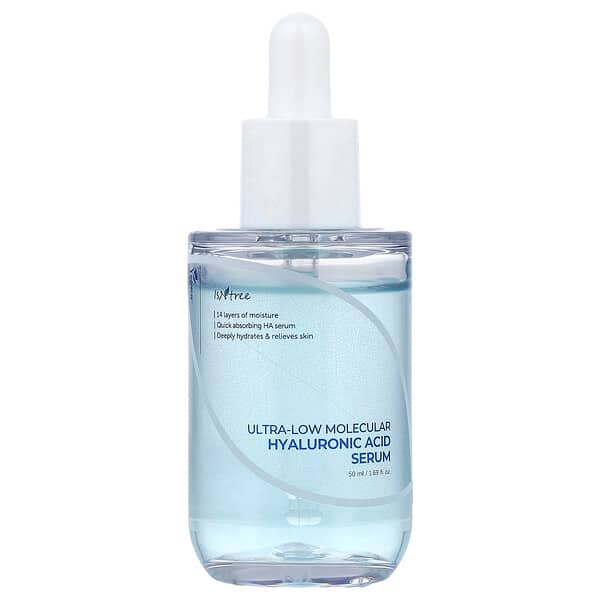
 Isntree Hyaluronic Acid Serum (50 mL) | Sea water, glycerin, multiple HA forms; 50 mL serum | An extra humectant step; HK currently out of stock |
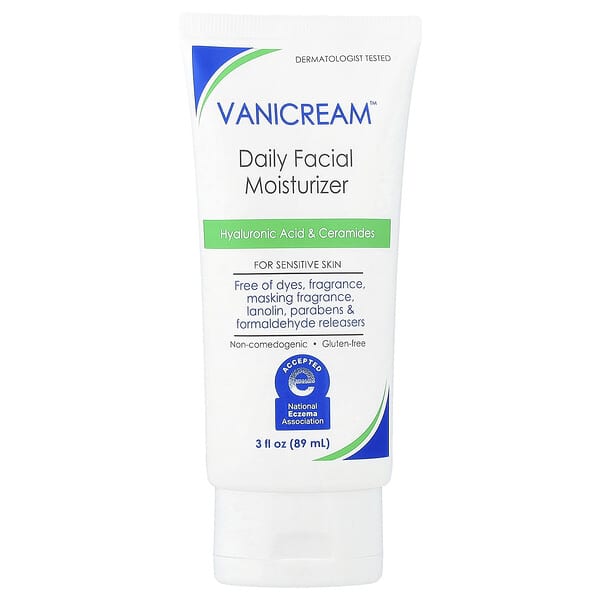
 Vanicream Daily Facial Moisturizer (89 mL) | Squalane, glycerin, five ceramides; 89 mL lotion | Fragrance-free, one moisturizing step; no SPF |
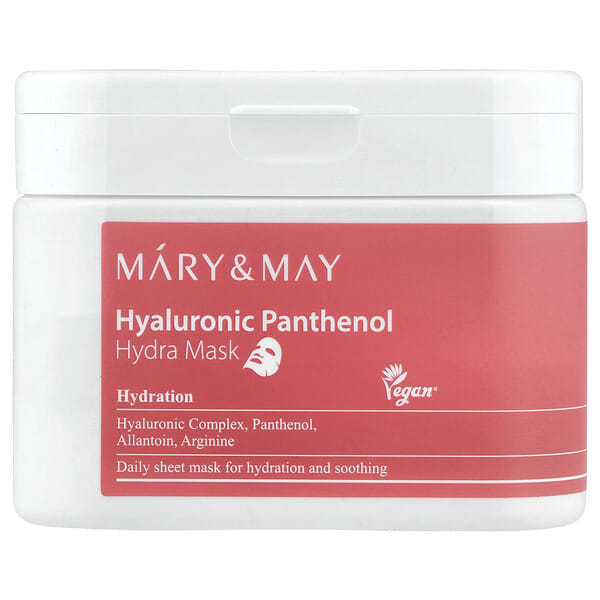
 Mary&May Hyaluronic Panthenol Sheet Masks (30 sheets) | Panthenol, glycerin, hydroxyethyl urea, HA; 30 sheets | Ten to twenty minutes; fragrance; close lid after use |
Isntree Hyaluronic Acid Serum (50 mL)
Isntree Ultra-Low Molecular serum is a vegan-labeled 50 mL formula with a sea-water and water base, glycerin, betaine, panthenol, allantoin and beta-glucan. Its HA-related names include hydrolyzed hyaluronic acid, sodium hyaluronate, a crosspolymer and an acetylated form.
It is a comparison for someone who already has a cream and wants a separate humectant serum. Multiple HA names identify a formulation combination; they do not prove that each ingredient reaches a different skin layer or delivers fourteen times more hydration. The “ultra-low molecular” product name also does not disclose the exact molecular weight of every HA ingredient in the bottle.
- Directions: apply two or three drops from the palm to the face and pat gently. Avoid wounds, direct sunlight and access by children.
- Availability limitation: the Hong Kong page checked for this review shows out of stock without a restock date. It remains a formula reference, not a confirmed immediately purchasable choice. A replacement SKU or reformulated version needs its own verification.
- Need for a cream: continued tightness makes the whole moisturizing base worth comparing rather than assuming more serum drops must solve it.
View Isntree Hyaluronic Acid Serum specifications and regional availability
Vanicream Daily Facial Moisturizer (89 mL)
Vanicream Daily Facial Moisturizer combines squalane, glycerin and hyaluronic acid with five ceramides in an 89 mL facial lotion. It brings humectant and emollient ingredients into one step, rather than requiring an additional serum or mask session.
The label excludes fragrance, masking fragrance and lanolin. Its five ceramides are EOP, NG, NP, AS and AP. Those distinctions are directly relevant to fragrance avoidance or a preference for one daily moisturizing step. They are more useful for that decision than counting HA names. Fragrance-free does not guarantee that no user can react, and the number of ceramides is not a score for demonstrated barrier repair by the finished product.
Apply as needed during the day or evening and store at room temperature. It has no SPF and no retinol. Listing ceramides does not turn a cosmetic moisturizer into a replacement for eczema treatment. There is no reason to abandon an existing comfortable moisturizer solely to change brands.
View Vanicream Daily Facial Moisturizer details and price
Mary&May Hyaluronic Panthenol Sheet Masks (30 sheets)
Mary&May Hyaluronic Panthenol masks come in a 30-sheet pack labeled 400 g, for a ten-to-twenty-minute application. Glycerin, hydroxyethyl urea, panthenol, allantoin, arginine and several HA forms appear in the vegan-labeled formula.
Application time, packaging and fragrance distinguish this option from the serum and lotion. Fragrance is listed, so a known fragrance allergy or a strict fragrance exclusion makes a fragrance-free moisturizer a more direct alternative. A brand’s sensitive-skin positioning cannot cancel that ingredient difference or establish universal tolerability.
Follow the directions after cleansing and conditioning: remove after ten to twenty minutes, pat the remaining essence and close the lid tightly after use. Do not wear it overnight. Avoid the eye area, wounds and direct sunlight. Thirty sheets do not make daily masking a necessary hydration standard. Stop for itching, burning or abnormal redness or swelling, and obtain appropriate medical advice.
View Mary&May Hyaluronic Panthenol Sheet Masks details and price
The participants were women aged thirty to sixty with wrinkles around the eyes; the other eye area received the vehicle cream. This tested specified creams at a specified site, not a competition among retail serums. None of the three products below was tested. The study concentration of 0.1% is not interchangeable with a marketing count of multiple HA forms.
Molecular weight and concentration describe different things. The unit kDa describes molecular size, while a percentage describes the proportion of an ingredient or raw material in a formula. A lower kDa value does not mean the bottle contains a greater amount of HA.
For arithmetic illustration only, a finished formula containing one percent of a premix that itself contains one percent HA would receive 0.01 percent HA from that premix, not one percent. This is not the formula data of any product here. It explains why a percentage must identify whether it refers to the finished product, a blend or a particular ingredient. When that information is undisclosed, inventing a precise concentration from the front-label wording would make the comparison less reliable.
Decide what the format adds before adding another step
The difference is more than bottle size. A leave-on serum adds a separate step, a lotion can combine humectants and emollients, and a sheet mask needs application time, removal and packaging disposal. Someone trying to shorten the morning routine can assess whether the existing lotion is sufficient rather than treating all three formats as essentials.
- An existing comfortable cream, with an extra hydration layer wanted: a serum is easy to add or remove independently. It still adds a step and needs to layer acceptably with the sunscreen being used.
- One moisturizing product after cleansing: a lotion or cream is a more direct comparison. A toner, serum and mask are not prerequisites for a complete moisturizing step.
- Time available for a ten-to-twenty-minute application: a sheet mask provides another format. The same ingredient appearing in a mask does not prove superiority over a leave-on lotion.
- Known fragrance allergy: the Mary&May formula below contains fragrance. A fragrance-free lotion better meets that exclusion; adding more HA cannot cancel an allergen.
Masks can supplement care but cannot replace treatment for eczema or acne. The American Academy of Dermatology also cautions that excessive application time or frequency can cause irritation. Remove and wash off a mask that itches, burns or stings rather than waiting for the timer. Mask benefits and limitations
Application amounts, timing and a workable daily routine
There is no universal drop count for hydration. The Isntree serum specifies two or three drops, while the mask specifies ten to twenty minutes. Neither instruction should be transferred to every HA product, and lotion amounts are not measured in serum drops. Follow the actual application area and directions rather than adding several layers in pursuit of faster results.
Applying moisturizer while skin is still damp after washing is a familiar recommendation for dry-skin care. It does not mean every HA serum requires a preparatory mist to work. Follow any product-specific instructions; skin becoming dry before application is not a reason to abandon moisturizing altogether. Everyday care for dry skin
For example, a comfortable morning lotion and sunscreen routine need not acquire a serum step just because one is used at night. Persistent evening dryness may call for comparison with a cream rather than continually increasing serum drops. When an optional new layer makes makeup or sunscreen pill, simplify the optional layers instead of reducing sunscreen below its directed amount.
None of these three products is a sunscreen. The HA name, ceramides in a lotion and time spent wearing a mask do not establish an SPF. Daytime sun protection remains a separate job, and adding HA does not make an existing sunscreen water resistant.
Pilling versus skin flaking
Rolls appearing only while rubbing layers may improve with fewer optional serum layers and less rubbing. Keep sufficient sunscreen. Existing cracks, redness, itching or stinging are skin symptoms; stop a suspected new product and seek appropriate advice.
Follow the actual directions rather than requiring damp skin universally. Topical hydration, oral supplements and injected fillers have separate purposes and evidence.
Compare usable costs rather than treating all pack sizes alike
For a 50 mL serum or 89 mL lotion, divide the amount actually paid by the bottle volume and multiply by ten to obtain a cost per 10 mL. Their application amounts and roles differ, so that number cannot by itself identify better value. For the 30-sheet mask pack, divide the paid price by thirty for a per-sheet cost. The 400 g pack weight is not an interchangeable active-ingredient dose to compare with a serum.
Daily use, occasional use and application to selected areas consume a bottle at different rates. Without a consistent amount, a promise that a bottle lasts exactly three months is unjustified. This comparison does not rank temporary discounts or prices from different destinations. Actual checkout prices, shipping and availability need to be considered for the purchase region.
Continued discomfort is not automatically a shortage of HA
Persistent stinging, rash, swelling or cracks cannot be explained simply by choosing the wrong HA name. Stop a suspected new formula and seek care for persistent or significant symptoms. For a known fragrance or ingredient allergy, an actual formulation exclusion is more useful than the words low molecular weight or multiple forms.
A small-area trial offers an initial tolerance clue. It is not medical patch testing and cannot guarantee no later reaction. Do not disregard product restrictions around wounds, eyes or inflamed skin to test its hydration. Recurrent contact-allergy concerns or an underlying skin condition need clinical assessment rather than another cosmetic experiment.
Related reading
References
- Pavicic et al., 2011 — different molecular-weight HA creams
- DermNet — Emollients and moisturisers
- AAD — Facial masks
- AAD — Dry skin care