
On a sunscreen label, SPF 50 measures protection against sunburn, which is mainly caused by UVB. PA++++ is a UVA protection grade. Look for Broad Spectrum on U.S. labels for UVA and UVB coverage. Check the water-resistance claim separately to see how long the labeled protection is tested to hold while swimming or sweating.
Read the four pieces of label information separately
| Label | What it refers to | What it does not tell you by itself |
|---|---|---|
| SPF 30, SPF 50, or SPF 50+ | How the finished formula performed in a sunburn-related test. | A specific time you can stay outdoors or the label’s UVA grade. |
| PA+, PA++, PA+++, or PA++++ | An ordered grading system for UVA protection. | The SPF, water resistance, or an exact underlying measurement from the grade alone. |
| Broad Spectrum | A U.S. label statement identifying tested coverage across UVA and UVB. | A specific PA grade or a swimming duration. |
| Water Resistant, 40 or 80 minutes | A U.S. label statement related to swimming or sweating under specified conditions. | A guarantee that the layer remains in place after you towel off. |
A label can have a high SPF without telling you the information in the other columns. Start with the printed claims and then turn the package over for directions. A seller’s description may combine claims from several products. The package for the exact size and market version is what you will apply. Korean, Taiwanese, and U.S. packaging can use different wording, even for tubes that look similar from the front. The comparison of two Korean sunscreen versions shows why the full name and market matter.
PA++++ is the highest grade in the four-grade system shown here. It does not provide an exact measurement that lets you order every product in the grade. The U.S. Broad Spectrum statement uses a separate test, so there is no fixed conversion from that claim to a PA grade. In the European market, other UVA markings can appear under a different approach. The European Commission’s recommendation includes a UVA protection factor of at least one third of the SPF and a critical wavelength requirement. These are separate regional methods for describing the product, and they do not supply a shortcut to translate across packages.
Work through two example packages
A tube labeled SPF 50+ and PA++++
This tube identifies a sunburn-related rating and a UVA grade. Imagine you cannot find a water-resistance statement on the piece of packaging you have. If you want to use it during a workday, read the application and reapplication directions, and think about whether you can cover exposed skin as instructed. If you are selecting it for a long pool session, you need an additional check. The numbers on the front do not tell you how it will hold up while swimming. A different sunscreen with an explicit water-resistance statement can make the choice simpler.
If the information seems incomplete, check the carton and tube before relying on the product name from an online listing. A listing may show an outer box and a tube with different amounts of text. It may also show a previous version or a product intended for a different market. Look for the matching name, size, and complete directions. If you cannot confirm a claim that matters to your activity, leave it as unconfirmed until the manufacturer can clarify it.
A tube labeled Broad Spectrum SPF 50 and water resistant for 80 minutes
This tube has a separate protection statement for UVA and UVB plus a water-resistance label. Check the Drug Facts directions for how long before exposure to apply it and when it should be reapplied after swimming or sweating. If you towel off before the stated time, follow the directions for that event. An 80-minute water-resistance statement is about performance during the specified swimming or sweating test. It does not describe whether a towel leaves a full layer on your skin.
For a day near the water, the second package gives useful information about that activity. For a regular commute, you may care just as much about whether the formula is comfortable in the amount you need and easy to reapply. You can use the same set of questions for any sunscreen on the shelf. The Korean sunscreen guide compares formats and exact regional labels if you want additional examples.
Why the ratings do not work as a timer
SPF relates to a dose of ultraviolet radiation in a test. Time spent in the sun is only one part of exposure. Light can be more intense around midday or in some locations, and exposed areas can change with what you wear. The amount of sunscreen on your skin, whether it was applied evenly, and whether you have wiped or sweated some off also matter. Multiplying a number of minutes by the label SPF cannot predict how long you will personally avoid a sunburn.
PA does not set a clock either. It describes a product’s UVA grade within its labeling system. Imagine that you put on a PA++++ sunscreen in the morning, then remove a jacket and expose your arms during lunch. The PA printed on the bottle does not describe coverage on skin you did not apply it to. That is a reason to pay attention to the exposed areas, package directions, and your actual plans. You can use shade and clothing to cover areas in addition to applying sunscreen.
For outdoor exposure, dermatologists typically recommend reapplying sunscreen about every two hours, and after swimming or sweating according to the directions. A U.S. water-resistant product may give 40- or 80-minute instructions. Adjust your planning around the activity and the package rather than converting a water-resistance duration into a whole-day wear claim. One product’s directions also may call for reapplying immediately after towel drying. Read the wording instead of assuming the same directions apply to a different tube.
Three Labels That Put SPF, PA and Water Resistance in Context
Compare UVA wording separately from the water-resistance duration. Choose which details to check according to your plans.
| Product | When to compare it |
|---|---|
 AXIS-Y Physical Sunscreen Version 3 (50 mL) | A pack that displays both SPF 50+ and PA++++. |
 Blue Lizard Sheer Face Mineral SPF 50 (50 mL) | An option labeled water resistant for 80 minutes. |
 Eucerin Fragrance-Free Face Sunscreen SPF 50 (75 mL) | A daily facial option labeled broad spectrum and fragrance-free. |
AXIS-Y Physical Sunscreen Version 3 (50 mL)

This 50 mL version shows SPF 50+ and PA++++ on the same pack. It is useful if you want to check both ratings directly on the label. If you need a sunscreen for swimming or exercise, look for a separate water-resistance statement.
- The package lists SPF 50+ and PA++++, and the ingredient list includes zinc oxide.
- The PA marks describe a UVA rating. Check for an explicit water-resistance statement when planning to swim.
View AXIS-Y Physical Sunscreen Version 3 details and price
Blue Lizard Sheer Face Mineral SPF 50 (50 mL)

If you plan to swim or sweat outside, check this label for both SPF 50 and its 80-minute water-resistance rating. The SPF and the water-resistance time are different figures. Follow the package for when to reapply.
- The pack lists Broad Spectrum SPF 50 and 80-minute water resistance. It gives 10% zinc oxide in Drug Facts.
- The directions say to shake well and reapply immediately after towel drying.
View Blue Lizard Sheer Face Mineral SPF 50 details and price
Eucerin Fragrance-Free Face Sunscreen SPF 50 (75 mL)
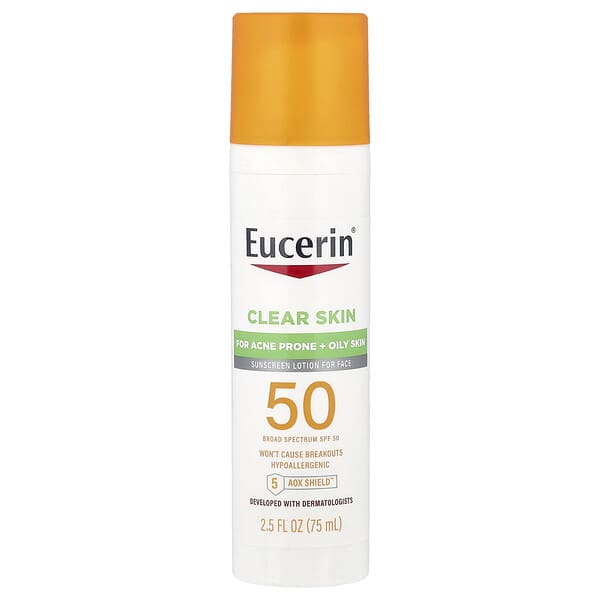
If you want a fragrance-free face sunscreen for daily use, check this 75 mL tube for Broad Spectrum SPF 50. For swimming or activities that make you sweat, the label directs you to use a water-resistant sunscreen.
- Its label lists Broad Spectrum SPF 50 and uses organic UV filters.
- The directions say to use a water-resistant sunscreen when swimming or sweating. Check that requirement separately.
View Eucerin Fragrance-Free Face Sunscreen SPF 50 details and price
Use the directions to plan reapplication
| Situation | Prepare before leaving | Check again during the activity |
|---|---|---|
| Regular commute and then time outdoors at lunch | Apply your usual sunscreen as directed and bring a format you can use again. | How much time passed, which areas are exposed, and whether any coverage was rubbed off. |
| Running or cycling outdoors | Check whether the package has a water-resistance claim and bring sunscreen if you will be outside longer. | Sweat, wiping, and opportunities to reapply. |
| Pool or beach day | Choose a product with water resistance, read the swimming directions, and pack clothing or shade. | Reapply after swimming, sweating, or drying off according to the label. |
Think about where the sunscreen will be when you need it. For a noon walk, a tube in your desk or bag may make it easier to reapply. For a pool outing, keep it with the towel and read when to reapply before you leave. If a hat or shirt covers an area, you can use that protection consistently and check which areas become exposed when you remove it. For someone who wipes sweat frequently, design the routine to include enough time and product to reapply as directed.
People sometimes compare sunscreens based on whether they are mineral, chemical, or a hybrid. The filter list is useful when you want to know the kind of formula or screen for an ingredient. It does not tell you the PA, SPF, and water-resistance claims on the finished product. Those still belong on the checklist for each package. For the distinction among filter types, see the mineral vs chemical sunscreen comparison.
Check the actual package when a product comes in multiple versions
First match the full name and exact size. Then check the front for SPF and the numerical or wording-based UVA label it uses. Write down any separate water-resistance claim. Finally, read the directions for how much to apply, where it can be used, and when to apply and reapply it. For products listed online, confirm that the photo of the back panel is for the same exact size and version. If you can read only a marketing headline, look for the manufacturer’s more detailed label or ask the retailer to confirm.
Save those details if the product works well for you. It can help if an online shop shows two bottles with almost the same name or a brand updates its packaging. You may find that what you appreciated was the application method, the label’s suitability for swimming, or the finish under makeup. Your shortlist can focus on those features rather than on the logo or the highest number you saw. If a new package lacks the claim you bought the product for, verify the claim again before relying on it.
The directions also matter for how much product to bring. A small face tube may be enough for the uses you planned, but a day of covering exposed arms and legs requires more product and opportunities to reapply. Think about the skin you expect to expose and whether you will be able to get to the bottle between activities. A high SPF printed on a tube that stays in the hotel room cannot help on the beach.
Put the directions into a realistic timetable
Suppose you plan to leave at 9 a.m., spend one hour near a pool before swimming, and take a break after drying off. Before you go, find the directions for applying sunscreen ahead of exposure, and make sure someone can apply it to areas you cannot easily reach. At the pool, follow the product’s directions during swimming and after you towel dry. If the label says to reapply immediately after drying, that direction applies even if the printed swimming duration is longer than your time in the water. Continue to follow the outdoor reapplication directions for the rest of the visit.
For a different example, imagine you wear a long-sleeved shirt in the morning and switch to a short-sleeved top after lunch. Think about the exposed skin that had been covered before. Compare what the package tells you to do with where you applied the sunscreen in the morning. A label that seems reassuring cannot account for areas you did not cover. Keep a list of the usual areas you miss, such as the ears, back of the neck, or backs of the hands, and check which ones are exposed each time you change what you are wearing.
A third case is an afternoon outdoors where you do not expect to swim. You may still sweat, wipe your face, or spend part of the day in direct sun. Read the label before leaving and bring enough for the places you plan to cover. Hats and protective clothing can help with areas such as the head and shoulders. Shade can be part of your plan when you take a break. These choices can be more useful than assuming the largest SPF on the shelf will compensate for a rushed or uneven application.
Compare the amount you can actually use
A sunscreen with a pleasant finish can still fall short in practice if you tend to use a tiny amount to avoid leaving a visible layer. Read the directions first. Dermatologists suggest that most adults may need roughly an ounce to cover exposed skin on the body, with more or less depending on what is exposed and individual body size. That is a practical guide for body coverage, not a fixed dose for the face alone. Smaller packages may be convenient when you need to reapply on the face. They can also run out faster if several people use them over large areas.
Consider a parent packing for a day at the beach with several people. First decide which skin will be covered by clothing, and then check which remaining areas need sunscreen. Read which product is suitable for whom, particularly when packaging includes age instructions. Keep enough of the chosen sunscreen accessible for repeat use. Try reading the instructions before you get to the water, where labels may be hard to read or a product might be left in a bag with other gear. A product that stays within reach is easier to use when the directions call for it.
When your usual routine changes, separate label needs from application needs. You may already own a sunscreen with a relevant SPF and UVA statement. An explicitly water-resistant option could still make sense for a new activity, and a larger container could help when you cover more total skin. For a regular morning with no water exposure, you may simply need a way to remember your existing product. Reviewing that choice occasionally is a clearer way to use ratings than replacing every formula with whichever one gives the highest number.
SPF and PA FAQs
Is SPF 50 better than SPF 30 if both say Broad Spectrum?
A higher SPF indicates greater protection against sunburn under test conditions. Both Broad Spectrum labels indicate UVA as well as UVB coverage in the U.S. system. Also consider application, wear, and water resistance for the planned activity. Follow the directions wherever you use it.
Does PA++++ mean I can skip reapplication?
PA is a UVA grade and says nothing about whether the applied layer has been wiped off. Use the product as directed, reapply outdoors, and pay attention to swimming, sweating, or towel drying.
Is UPF the same as SPF?
UPF is a protection rating you may see on fabric or clothing. SPF is a rating for sunscreen applied to skin. Use each for the relevant surface. A shirt covers the area it is designed to cover, while sunscreen directions apply to skin left exposed.
Can I combine SPF 30 and SPF 50 to get SPF 80?
SPF values are results for individual finished products. Adding or mixing products does not add their ratings together. Choose sunscreen for the coverage you need and apply or reapply it as directed.
Does a sunscreen with no PA mark automatically lack UVA coverage?
Check which labeling system appears on the package. A U.S. Broad Spectrum statement indicates coverage against UVA as well as UVB under its applicable test. A package that gives only an SPF number does not give you the same information. Keep the absence of a claim distinct from an identified grade.