
Start with the ingredient line. Ubiquinone is the oxidised form of coenzyme Q10, and ubiquinol is the reduced form. Two bottles can each say 100 mg on the front and contain different forms. They can also differ in capsule material, oil and allergens. These are differences you can check before buying. Claims about absorption require evidence on the specific formulations.
This article contains affiliate links. ToBeHealthy may earn a commission if you buy through them.
What the two forms tell you about absorption
If a label says only “CoQ10” on the front, look in the supplement facts panel for the full ingredient name. Ubiquinone and ubiquinol are both forms of coenzyme Q10. Equal weights tell you how much of each form is in the capsules. There is no universal multiplier you can use to convert between products based only on the form. How the ingredient is dispersed and what else the formulation contains may affect how much reaches the bloodstream.
In a crossover study of 14 people, the two best absorbed formulations among those tested included one containing ubiquinone and one containing ubiquinol. A crossover design allows the same volunteers to try different preparations at different visits. The result shows why the form alone is insufficient to rank every product. It does not establish how the three products above compare or whether a difference in blood levels would improve a particular health outcome. Human study of CoQ10 formulations and bioavailability
If a company cites an absorption study, check whether the test used the same formulation and amount as the product you are considering. Some studies compare an ingredient in oil with a preparation that uses different carriers. Even if the study identifies a difference, several aspects of the formulation may have changed together. Ask what the trial measured before treating the result as relevant to the reason you are buying. For a closer look at what CoQ10 has been studied for, read our guide to CoQ10 research and its limits.
The absorption study measured two days of blood changes
The 14-person crossover experiment tested seven 100 mg formulations in healthy young volunteers at different visits. It followed blood concentration over 48 hours after a single intake, with at least four weeks between visits. That interval separated study conditions; it was not an instruction to stop for four weeks after every capsule.
The two better-absorbed preparations included an oxidized and a reduced form. This supports attention to formulation without showing which of the three bottles here works best in your circumstances. Greater blood exposure is not a direct measurement of better heart function, less fatigue or improvement in another symptom.
If a brand cites a study of another amount or recipe, retain that distinction. Useful research does not place every product sharing a form at the same rank. A single-dose result also cannot establish years of benefit or safety. For a buying comparison, the study explains a limitation of judging by form alone rather than providing a clinical winner among these retail products.
Separate the unit amount from the bottle total
Each featured label defines one capsule as a serving, so the table also gives the amount per capsule. CGN and Source Naturals each list 100 mg; Jarrow lists 200 mg. If the specified form or amount differs from the bottle, check before purchase rather than treat every front label saying CoQ10 as interchangeable.
Two 100 mg capsules mathematically total 200 mg. That does not establish equivalence to one Jarrow capsule in formulation, directions or individual suitability. In particular, CGN is ubiquinone and cannot replace a ubiquinol arrangement solely by matching total weight.
Jarrow’s 200 mg is one capsule’s contents, not two independently measured 100 mg portions. For a smaller unit, use a clearly specified alternative or ask the care team rather than cut the softgel and estimate half its oil. A 60-count bottle does not become 120 separate uses. This distinction matters when comparing convenience as well as price: fewer swallowed capsules can match a defined amount, but only when the form and the agreed arrangement also fit.
Distinguish the capsule from what is inside
A shell can be made from hypromellose even though other products in the same category use animal gelatin. An oil can come from a plant and still be inside a gelatin shell. If the shell matters to you, look for its material in the ingredients rather than inferring it from the kind of oil used. If your restriction is an allergy, check the separate allergen statement on the exact bottle.
Meal instructions are another part of the label. All three products here have directions involving food, but you still need to read the individual instructions. For example, if you usually skip breakfast, ask whether another regular meal is more convenient under the product directions or advice you have been given. Presence of an oil in the ingredients does not give you an alternate directions panel.
| Product | CoQ10 form | Amount per serving | Serving and bottle size | Formula features and practical considerations |
|---|---|---|---|---|
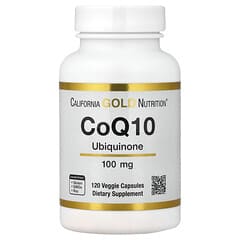 California Gold Nutrition CoQ10 | Ubiquinone | 100 mg | 1 vegetarian capsule, 120 servings | 100 mg USP-grade ubiquinone; vegetarian capsule; no soy ingredients. |
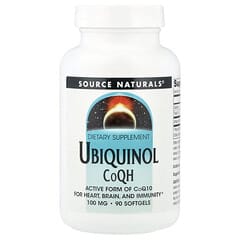 Source Naturals Ubiquinol CoQH | Ubiquinol | 100 mg | 1 softgel, 90 servings | 100 mg Kaneka QH™ ubiquinol; rice-bran-oil softgel; soy and beeswax. |
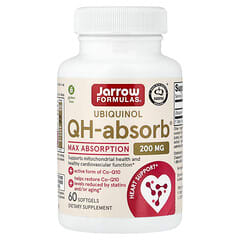 Jarrow Formulas QH-Absorb | Ubiquinol | 200 mg | 1 softgel, 60 servings | 200 mg Kaneka ubiquinol; MCT oil and sunflower lecithin; gelatin and beeswax. |
The first two products let you compare the forms at the same labelled weight. The second and third let you compare two amounts of ubiquinol, both in softgels. If you have a specific dietary restriction, use the ingredient list to narrow the choices before looking at the bottle price.
California Gold Nutrition CoQ10, 100 mg, 120 capsules
California Gold Nutrition CoQ10 uses USP-grade ubiquinone, the oxidized form, at 100 mg per vegetarian capsule rather than an oil-based gelatin softgel. The 120-count bottle offers an option for shoppers seeking ubiquinone while avoiding soy and animal capsule shells.
Directions are one capsule daily with food, giving roughly a four-month supply. USP-grade raw material and a finished product bearing the USP Verified mark are different statements and should not be treated interchangeably.
View California Gold Nutrition CoQ10, 100 mg, 120 capsules details and price
Source Naturals Ubiquinol CoQH, 100 mg, 90 softgels
Source Naturals Ubiquinol CoQH supplies 100 mg Kaneka QH™ reduced-form CoQ10 in a rice-bran-oil softgel. The 90-count bottle is taken once daily with a meal and offers a 100 mg ubiquinol unit to compare with Jarrow’s 200 mg option.
It contains soy, gelatin and beeswax. Whether reduced- or oxidized-form CoQ10 is suitable depends on the purpose, amount and medicines involved, rather than the brand’s absorption claim alone.
View Source Naturals Ubiquinol CoQH, 100 mg, 90 softgels details and price
Jarrow Formulas QH-Absorb, 200 mg, 60 softgels
Jarrow Formulas QH-Absorb supplies 200 mg Kaneka ubiquinol per softgel with medium-chain triglycerides and sunflower lecithin. Its 60-count pack has fewer capsules than Source Naturals’ 90-count pack but twice the amount per unit.
- It contains bovine gelatin and beeswax, with adult directions of one softgel with food.
- A higher unit can match a professionally specified 200 mg amount without two 100 mg capsules, but it cannot be treated as two separable doses.
View Jarrow Formulas QH-Absorb, 200 mg, 60 softgels details and price
Match the formula to the requirement
| Requirement | Relevant product | Limitation |
|---|---|---|
| Ubiquinone 100 mg in a vegetarian capsule | California Gold Nutrition | Not ubiquinol; USP-grade material is different from finished-product USP Verified certification |
| Ubiquinol 100 mg | Source Naturals | Rice-bran-oil softgel contains soy, gelatin and beeswax |
| A specified 200 mg ubiquinol amount | Jarrow QH-Absorb | One 200 mg unit contains bovine gelatin and beeswax, not two separable 100 mg doses |
Formulation affects absorption, so 100 mg ubiquinol cannot be converted into a universal ubiquinone amount. None of these three simultaneously meets a ubiquinol and animal-gelatin-free requirement; seek a clearly labeled alternative if both matter.
Cost and medicines
The packs contain 120, 90 and 60 labeled servings respectively. Divide actual prices by those counts for cost per use. Price per 100 mg compares content by weight without establishing clinical equivalence or a reason to increase intake.
CoQ10 may interact with warfarin, insulin and some cancer treatments. Digestive upset and insomnia can occur. Have the specific formula and amount reviewed where relevant, without independently changing prescribed medicines to accommodate a supplement.
What the shell and carrier differences mean in practice
CGN uses a modified-cellulose vegetarian capsule with rice-based supporting ingredients. It fits a comparison seeking ubiquinone without a gelatin shell. The absence of an oil softgel alone does not establish inferior absorption for the complete product.
Source Naturals combines its reduced-form ingredient with rice-bran oil but still includes gelatin and beeswax and explicitly declares soy. A plant-derived oil does not make the whole capsule vegetarian. Someone avoiding soy should use the allergen declaration rather than infer suitability from the oil name.
Jarrow uses medium-chain triglycerides and sunflower lecithin while retaining bovine gelatin and beeswax. Sunflower and soy lecithin should not be treated as the same source; the animal-shell restriction is a separate question. If both ubiquinol and avoidance of animal capsules are required, none of the three is a match. There is no need to force a choice from the table.
These ingredients describe how the capsule is made and whether it fits a restriction. They do not independently identify the best product for a symptom. Keep formulation preferences separate from the clinical reason for using CoQ10, especially when comparing a plain capsule with a more complex oil-based softgel.
A cost example for pack size and amount
Suppose 120 servings cost 240: each costs 2. Ninety servings at 270 cost 3 each; 60 servings at 240 cost 4. These figures demonstrate the calculation, not the featured products’ current prices. Two bottles priced at 240 produce different costs per use when their serving counts differ.
An illustrative 100 mg serving at 2 and 200 mg serving at 4 have the same cost per 100 mg. If the original arrangement needs a 100 mg unit, the higher amount does not automatically save money. Where a clinician has specified another amount, compare that actual arrangement. Nor should an unproven absorption multiplier be used to turn prices across forms into an equivalent clinical cost.
Delivery, applicable discounts, storage after opening and finishing the pack affect spending too. Use comparable purchase conditions rather than put an introductory subscription offer beside another bottle’s ordinary price. Servings are inventory, not a required treatment course. Record the cost of the order and routine you would actually follow, rather than the cheapest theoretical price from an arrangement you do not intend to use.
Follow the complete preparation and storage directions
All three direct use with food: CGN one daily, Source Naturals one daily with a meal, and Jarrow one daily for adults or as professionally directed. A meal already eaten can make the routine manageable. Oil inside a capsule does not independently cancel the directions, and no additional oil product is automatically required.
The products specify cool, dry storage and intact seals. Jarrow also notes that particles can form inside its softgels. A stated appearance characteristic does not replace expiry and storage checks or let someone judge potency by sight.
If swallowing is difficult, a website photograph cannot establish which unit will be easy to swallow. Do not independently cut capsules or alter their directions. Ask about dimensions or available formats, then check alternatives against the intended ingredient and amount. We have not measured these physical units or conducted swallowing tests. A practical format comparison should acknowledge that limit rather than invent a comfortable texture, easy swallow or first-hand experience from an image.
Information to bring to the healthcare team
With warfarin, insulin or cancer treatment, provide more than a brand name. Include the ingredients, amount per unit, actual daily units and other supplements so the team can assess whether adding CoQ10 is appropriate. The NCCIH interaction warning is not automatically resolved by changing brands or moving intake to bedtime.
Source Naturals separately cautions that bee products can cause reactions in some people; beeswax matters where that restriction applies. Pregnancy, plans for pregnancy, nursing, younger age or medical conditions call for the individual warnings. A report without serious adverse reactions cannot guarantee that every person will remain symptom-free.
For persistent digestive discomfort or a sleep change after starting, retain the package and use history for discussion. Do not independently stop prescribed medication to accommodate a supplement. The final purchasing question is whether this exact bottle fits the existing need, not whether a larger number provides a reason to add another product.