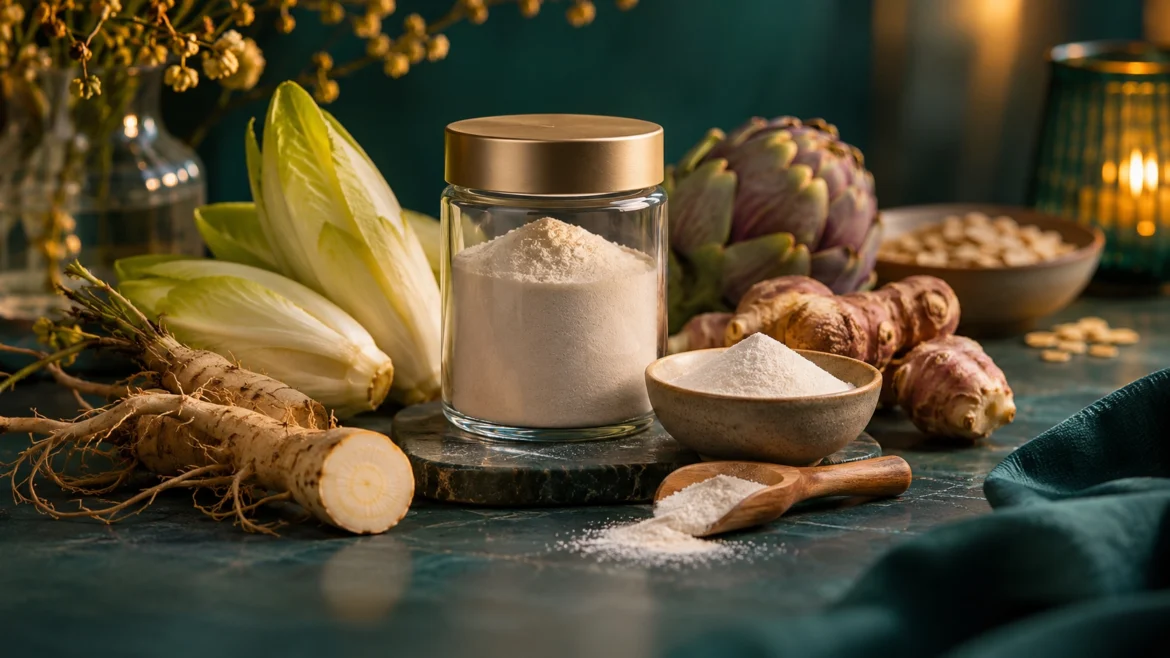
Prebiotics are substrates selectively used by microorganisms in a way that benefits the host. Inulin and fructooligosaccharides, or FOS, are common examples; they are different from live-culture probiotics. Certain inulin preparations have improved bowel outcomes in some adults with constipation. More fermentable fiber can also worsen gas or bloating.
Soluble, fermentable and prebiotic describe different properties
Soluble describes a fiber’s relationship with water. Fermentable means microbes can break down and use it. Prebiotic additionally requires evidence of selective microbial utilization and a health benefit. The terms can apply to the same ingredient, but they are not interchangeable. A powder that mixes easily has not thereby demonstrated relief of the digestive symptom that matters most to you. (Source)
Inulin and FOS can provide substrates for gut microbes, unlike a probiotic that supplies living organisms. Some microbial breakdown produces metabolites and gas. Demonstrating fermentation in a laboratory vessel, however, does not establish a health improvement in people taking a particular amount. Check whether the population, ingredient and measured outcome match the benefit being claimed.
ISAPP’s scientific recommendations emphasize observing microbial utilization and a benefit in the target host within the same efficacy study. This explains why a statement about supporting bacterial growth cannot automatically become a claim to resolve every digestive problem. The ingredient name provides a clue; its actual application still needs relevant evidence. A clinical finding for one preparation should be distinguished from a mechanistic explanation of what another preparation might do, especially when the people, amount or intended outcome differs.
What bowel benefits are supported?
A 2025 double-blind crossover trial in 39 adults with functional constipation compared 12 g daily chicory inulin with placebo over four-week periods. Bowel and some symptom outcomes improved, but the authors could not exclude carryover from one phase to the next, and the sample was small. This does not guarantee the same effects from every inulin or FOS product. Trial
Stool frequency, consistency and straining are different outcomes. A claim about feeding beneficial bacteria does not establish weight loss, immune improvement or treatment of every digestive problem. Benefits need to match the particular ingredient and research. ISAPP consensus
What does carryover mean in a crossover trial?
A crossover design gives the same participant one intervention and later the other, allowing comparison across periods. The inulin study included a four-week wash-out between periods to reduce effects from the preceding intervention. If a change has not fully returned toward baseline, however, the second period may still be influenced by the first. It cannot then be treated as a completely fresh starting point. (Source)
The authors also analyzed the first period alone as a parallel comparison, which supported a positive inulin effect. That provides additional information without eliminating the original carryover concern or the small sample. The result is supportive evidence that needs appropriate interpretation, rather than a guarantee attached to every package bearing the word inulin.
The trial used a specified chicory ingredient over four-week periods, with an initial amount adjustment and follow-up. Changing breakfast, adding several powders and altering constipation medicines together at home creates different conditions. Describe the actual ingredient and concurrent changes when reviewing a personal response. A better week does not establish that the trial has been reproduced or identify which change caused it. Conversely, an uncertain individual response does not by itself invalidate the research; it is a reason to examine whether the preparation, setting and intended outcome were comparable.
Inulin versus FOS
Both are fructans, with FOS generally referring to shorter chains. Sources and compositions vary. These differences can affect microbial use and tolerance, but the names alone do not establish a universal winner. Compare the actual formula, portion and outcome you want to address.
For constipation, review frequency, straining and emptying separately
More bowel movements need not mean the original problem has improved. One person may go daily but pass hard stool, strain each time or feel incompletely emptied. Another may mainly have several days between movements. Describing both as poor regularity makes it difficult to identify the next clinical question. (Source)
Record a consistent set of observations before and after a change: approximate weekly frequency, stool consistency, straining, incomplete emptying and bloating. Include the amount actually used and other constipation treatment. This can support a review; it is not a requirement to keep trying for four weeks despite severe symptoms. Persistent problems or interference with daily life warrant assessment of the cause.
Difficulty evacuating is not necessarily resolved by another spoonful of fiber. An established digestive diagnosis also needs to be considered alongside existing treatment and dietary arrangements. Increasing a bacterial measurement alone is not an adequate way to judge whether the intended problem improved. Choose an outcome that matters to the person and matches the evidence being discussed. The record should make the remaining difficulty easier to explain, not turn into a score that substitutes for assessment or demands continual increases in the supplement amount.
When is a powder relevant?
- A plain single-ingredient powder can add a measured fiber to food, but does not replace dietary variety from produce, legumes and whole grains.
- Persistent constipation calls for assessment of bowel pattern, medicines and warning signs before selecting fiber. The trial’s 12 g is not a self-prescribed scoop target.
- Existing bloating, diarrhea or known fructan sensitivity may make added inulin unsuitable. Check with the dietitian if following a low-FODMAP plan.
Three powders: source, measure and trade-offs
This article contains affiliate links. ToBeHealthy may earn a commission from purchases through them. Comparisons are based on product information and research, without hands-on testing.
| Product | Label per serving | Formula features and practical considerations |
|---|---|---|
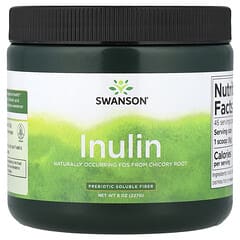 Swanson Vitamins Chicory Inulin Powder, 227 g | 5 g powder, 4 g dietary fiber | Chicory-root inulin with scoop; smaller 227 g pack; sweetens and thickens foods. |
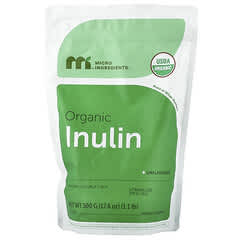 Micro Ingredients Organic Inulin Powder, 500 g | 2.6 g organic inulin powder per scoop | Unflavored organic inulin; 500 g, 192 servings; Proposition 65 warning listed. |
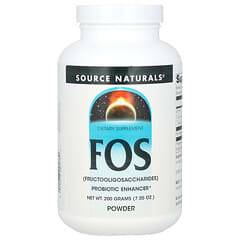 Source Naturals FOS Powder, 200 g | 3.3 g FOS and 3 g fiber per serving | FOS alone, without added flavors; 3 g fiber per rounded teaspoon. |
Swanson Vitamins Chicory Inulin Powder, 227 g
Swanson Inulin uses chicory-root inulin as its only ingredient and includes a scoop. A 5 g scoop supplies 4 g dietary fiber. Its sweetening and thickening properties make it useful in yogurt, oats or drinks for shoppers who prefer adding fiber to food over taking capsules.
The 227 g pack has 45 servings, a manageable size for someone avoiding a large bulk bag. It is a soluble prebiotic fiber rather than a live-culture probiotic. People prone to gas or bloating with inulin should consider the amount used alongside other inulin-containing foods.
View Swanson Vitamins Chicory Inulin Powder, 227 g details and price
Micro Ingredients Organic Inulin Powder, 500 g
Micro Ingredients Organic Inulin is an unflavored single-ingredient powder labeled free of soy, dairy and gluten. Each included 2.6 g scoop supplies 2.6 g inulin and 2.6 g fiber. The 500 g bag contains 192 servings, making it a bulk option for someone already comfortable using the ingredient.
The larger pack needs dry, well-sealed storage. Its listing includes a California Proposition 65 lead-exposure warning, and the label advises a healthcare check during pregnancy, breastfeeding or medication use. Shoppers who specifically want a named plant source should confirm that detail with the brand rather than assuming chicory root.
View Micro Ingredients Organic Inulin Powder, 500 g details and price
Source Naturals FOS Powder, 200 g
Source Naturals FOS is a single-ingredient fructooligosaccharide powder labeled suitable for vegetarians and free of dairy, egg, gluten, soy and wheat, without preservatives or artificial colors and flavors. The 200 g version offers a plainly stated FOS amount for shoppers avoiding extra flavoring ingredients.
One rounded teaspoon, about 3.3 g, provides 3.3 g FOS and 3 g fiber, with 60 servings per container. It is mixed into water or juice using this product’s rounded-teaspoon measure. FOS is a prebiotic used by gut microorganisms, with gastrointestinal tolerance varying by person.
View Source Naturals FOS Powder, 200 g details and price
Must you tolerate bloating for it to work?
Fermentation can produce gas, but more discomfort does not mean a greater benefit. Do not keep increasing the amount despite pronounced symptoms. Include recently added bars or drinks containing inulin or chicory-root fiber when reviewing overlapping sources.
Recurrent pain, blood in stool, unintended weight loss or marked bowel changes warrants care. Constipation with severe pain, vomiting or inability to pass gas should not be managed by simply adding fiber.
When does a bulk bag make sense?
A larger pack is more defensible when you already tolerate that product and have dry, sealed storage. A smaller pack leaves less unused if it does not suit you. Cost per gram or serving helps compare purchases, but cannot replace the ingredient and tolerance decision.
Powder weight, ingredient amount and fiber are not additive
Swanson lists 5 g powder and 4 g dietary fiber within one scoop. Those figures do not add up to 9 g consumed. Micro Ingredients lists 2.6 g inulin and 2.6 g fiber in the same scoop, not a combined 5.2 g. Source Naturals similarly describes one serving with 3.3 g FOS and 3 g fiber.
Use the new product’s measure and directions when changing containers. Swanson includes a scoop, as does Micro Ingredients. Source Naturals specifies a rounded teaspoon rather than a level teaspoon. Similar-looking utensils do not establish equal weights, and ordinary cutlery may not supply the labelled amount.
For a professional reviewing total fiber, bring the dietary-fiber panel and the number of servings actually used. Matching a research ingredient requires the ingredient name, source and ingredient quantity as separate information. These are different questions, which is another reason not to turn a study’s 12 g into directions by dividing by the fiber-per-scoop figure. The measurement method should describe what was consumed accurately, while suitability and any clinical amount remain a separate discussion. A larger serving on a label does not show that it is the better-tolerated or more effective option for that individual.
Which differences matter when choosing between these powders?
- A specifically named chicory-root source: Swanson identifies the plant and offers a smaller 227 g container. The same plant source does not establish that its preparation is identical to the research ingredient or guarantees the same effect.
- Fewer repeat purchases after tolerating the formula: Micro Ingredients supplies 192 servings in a 500 g bag, includes a scoop and has no other ingredients. Confirm the plant source with the brand if that is essential rather than inferring it from the word inulin.
- A clearly stated FOS-only preparation: Source Naturals lists 3.3 g FOS and 3 g fiber per serving, with about 60 servings in 200 g. Its water-or-juice preparation and rounded-teaspoon measure differ from the included-scoop products.
The Proposition 65 lead-exposure warning on the Micro Ingredients listing is relevant product information, not a numerical measurement from which a lead concentration can be calculated. Ask the brand about batch testing and an appropriate professional about individual concerns; an unpublished quantity should not be filled in as zero.
Follow storage instructions for each preparation. A large bag is not automatically a better first purchase. Clear formulation, manageable measurement, tolerance and fiber already added to food provide more useful purchasing criteria than total package weight alone. None of those features establishes a treatment ranking across the three products.
Check sources already added to foods before adding a powder
Cereal bars, protein powders, meal drinks and sugar-free snacks may already contain inulin, chicory-root fiber or FOS. Changing several foods while adding a scoop can increase multiple sources without making that obvious. Review the ingredient lists of recently introduced products together and record the quantities eaten, rather than examining only the supplement container. (Source)
In some people with IBS, fermentation of inulin and FOS can make gas-related symptoms more troublesome. Monash University identifies these tolerance limitations. A low-FODMAP plan is not a reason to independently add large amounts of fructans under a prebiotic label, nor does intolerance imply that all fiber-containing foods must be avoided indefinitely.
If the goal is simply dietary variety, work with familiar whole grains, legumes, fruit and vegetables rather than assuming a powder is compulsory. Describe the amount, timing and other dietary changes if discomfort develops. Continuing to increase intake while enduring symptoms is not a necessary test of effectiveness. The whole arrangement may need review, not only the fiber number. A suitable approach should remain possible to measure and tolerate while addressing the actual reason for considering the ingredient; a general gut-health label cannot establish those conditions on its own.
Related reading and sources
- guide to probiotics and prebiotics
- guide to prebiotic foods
- Probiotic Benefits and Side Effects by Strain
- The Gut Microbiome and Health: Diet and Evidence