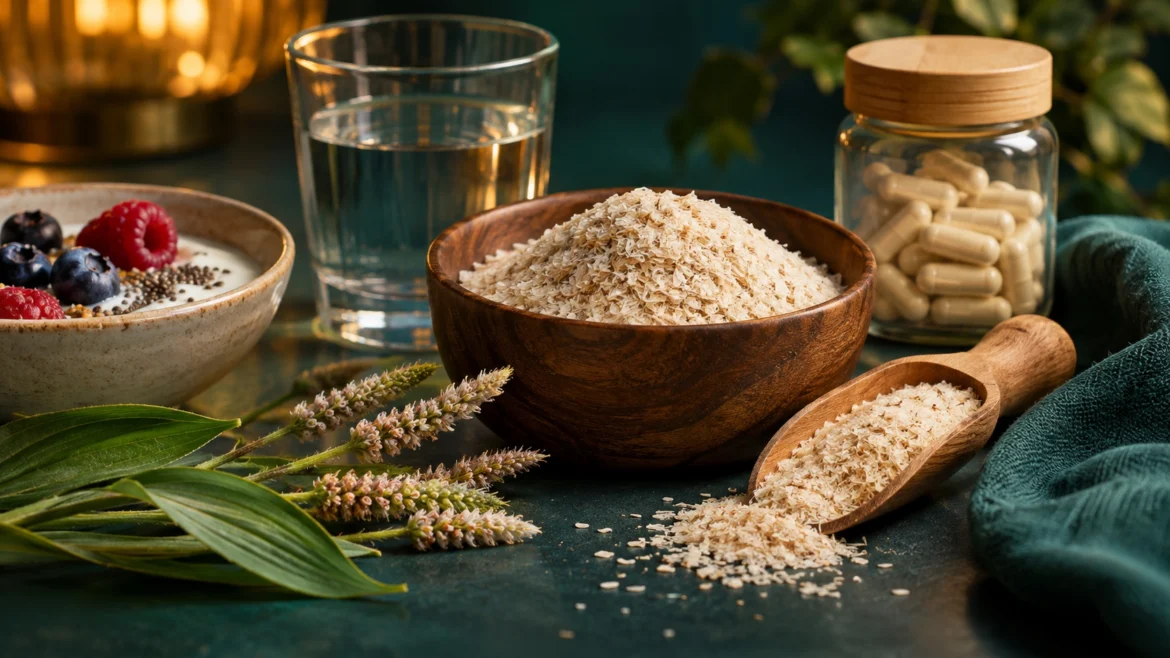
Psyllium husk supplies soluble fiber and thickens when mixed with liquid. Some adult constipation guidelines discuss it as an option for increasing fiber intake. Before comparing powders and capsules, check how much fiber the label gives per serving and whether you can take it with the stated amount of liquid. The capsule version still has a liquid requirement.
Ask a healthcare professional before using psyllium if you have difficulty swallowing or have been told to restrict fluids. Seek immediate medical attention for trouble swallowing or breathing, or chest pain, after taking it. Do not swallow dry psyllium powder.
Husk weight and fiber weight answer different questions
One label lists 1.4 g of psyllium husk and 1 g of dietary fiber for the same serving. The first figure is the weight of the ingredient; the second is the dietary fiber that the panel attributes to that serving. Use the dietary fiber line when comparing fiber amounts. Then look at the number of capsules, how you would measure a loose product, and the liquid directions.
| Format | Example from three NOW Foods labels | What to check |
|---|---|---|
| Capsules | Two per serving, 1.4 g husk and 1 g dietary fiber | Directions specify a glass with about 237 mL of liquid |
| Whole husks | Two level tablespoons per labeled serving, about 10 g, with 7 g fiber | Directions require at least about 355 mL of liquid, then immediate consumption |
| Powder | One level tablespoon per labeled serving, about 9 g, with 7 g fiber | Same labeled liquid minimum as the whole-husk example, different spoon measurement |
A spoonful of whole husks and a spoonful of powder do not necessarily weigh the same. The table compares labeled servings. Use the directions on the version you have, and ask a pharmacist to check whether a medicine you take has any relevant timing instructions.
What constipation guidelines say about psyllium
A joint American Gastroenterological Association and American College of Gastroenterology guideline suggests fiber supplementation as an option for adults with chronic idiopathic constipation. The recommendation is conditional and the certainty of the evidence is low. Of the fiber supplements it evaluated, psyllium had the most support, while the evidence for bran and inulin was limited. The guideline also notes the importance of adequate hydration and identifies flatulence as a common side effect.
Those conclusions help you decide what question to ask next. A healthcare professional can help assess your usual intake, whether the recommendation applies to your symptoms, and whether a different evaluation would be more useful. If you are tracking a change, write down how often you went, how hard the stool was to pass, and whether you strained. Improvements in frequency and ease of passing stool can happen at different times. See our guide to prebiotic foods for examples of fiber-containing foods that can fit into breakfast or lunch.
Guideline: AGA/ACG adult chronic idiopathic constipation guideline
What about cholesterol?
A meta-analysis of 28 randomized trials and 1,924 participants used a median psyllium amount of about 10.2 g/day and found LDL cholesterol 0.33 mmol/L lower than control on average. That is a lipid marker, not direct evidence of fewer heart attacks. The research amount is not a personal instruction and cannot be replaced by total capsule weight. Do not stop prescribed lipid treatment yourself.
This article contains affiliate links. ToBeHealthy may earn a commission from purchases through them. Comparisons are based on product information and research, without hands-on testing.
| Product | Label per serving | Formula features and practical considerations |
|---|---|---|
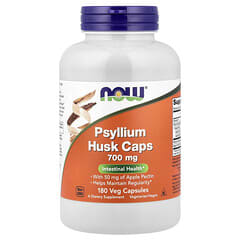 NOW Foods Psyllium Husk Caps, 180 veggie capsules | Two capsules: 1 g fiber | Psyllium plus apple pectin; 1 g fiber per two capsules; portable but requires ample liquid. |
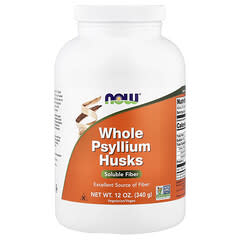 NOW Foods Whole Psyllium Husks, 340 g | Two level tablespoons: 7 g fiber | Whole husks alone; 7 g fiber per two level tablespoons; mix and drink immediately. |
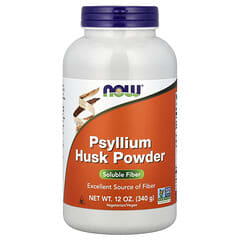 NOW Foods Psyllium Husk Powder, 340 g | One level tablespoon: 7 g fiber | Fine powder; 7 g fiber per level tablespoon; about 38 servings; adequate liquid required. |
NOW Foods Psyllium Husk Caps, 180 veggie capsules
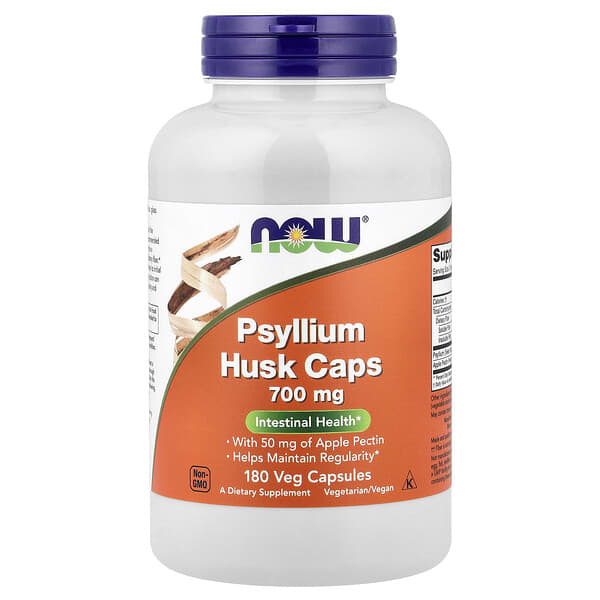
NOW Foods Psyllium Husk capsules remove the measuring and mixing step. Two capsules contain 1.4 g of psyllium husk plus 100 mg of apple pectin, supplying 1 g of dietary fiber. This is a psyllium-and-pectin blend, and the 180-capsule bottle contains 90 two-capsule servings.
- The plant-based capsules carry vegan, kosher and halal labeling.
- They suit shoppers who can swallow capsules comfortably and want something portable, although each serving supplies less fiber than the powders compared here.
- They must still be taken with at least a full glass, about 237 mL, of liquid.
- The label says not to use them if swallowing is difficult.
View NOW Foods Psyllium Husk Caps, 180 veggie capsules details and price
NOW Foods Whole Psyllium Husks, 340 g
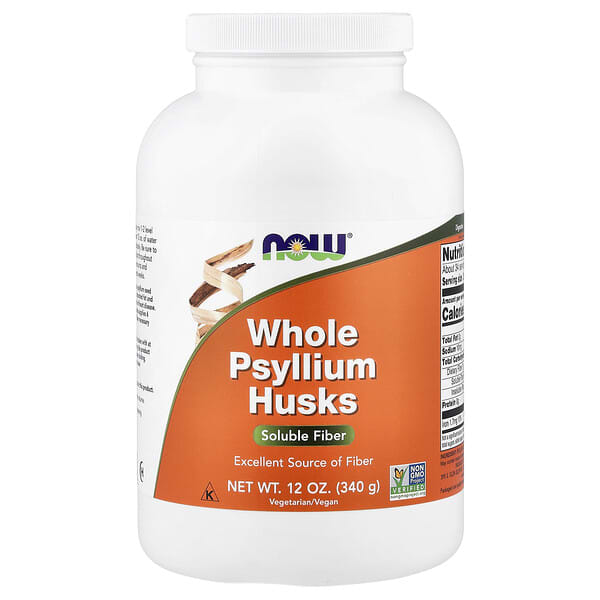
NOW Foods Whole Psyllium Husks contain a single ingredient, without added pectin. Two level tablespoons, 10 g, provide 7 g dietary fiber, including 6 g soluble fiber. It offers a food-format option for shoppers who want more fiber per labeled serving without taking multiple capsules.
The 340 g container holds about 34 facts-panel servings. Whole husks retain a coarser texture. Directions call for one to two level tablespoons mixed vigorously into at least 12 fl oz, about 355 mL, water or juice and consumed immediately. A measuring spoon and a large enough glass are needed. Do not swallow it dry or use it if you have difficulty swallowing.
View NOW Foods Whole Psyllium Husks, 340 g details and price
NOW Foods Psyllium Husk Powder, 340 g
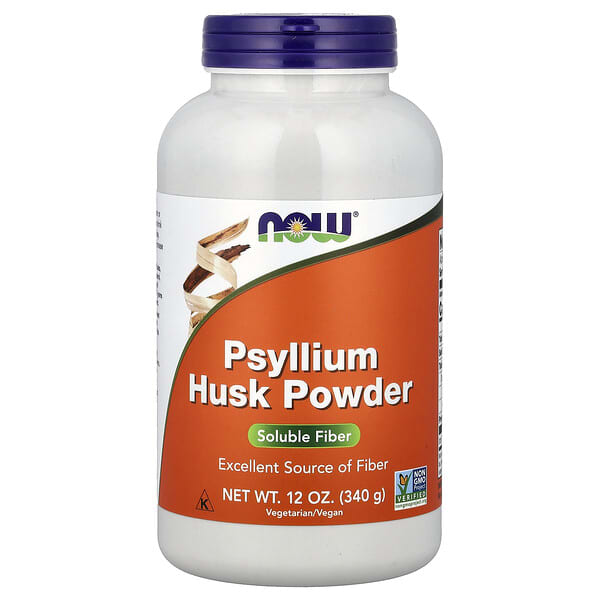
NOW Foods Psyllium Husk Powder mills the husks into a finer form. One level tablespoon, 9 g, supplies 7 g dietary fiber, including 6 g soluble fiber. It matches the whole-husk version’s labeled fiber amount using fewer spoonfuls. Psyllium husk is the only ingredient, with no added pectin or sweetening sugar.
- The 340 g container provides about 38 servings and is practical where you can measure and mix at home.
- Each level tablespoon needs at least 12 fl oz, about 355 mL, water or juice and should be consumed immediately after mixing.
- Follow the gradual-start directions.
- The powdered form still requires adequate liquid and must not be used by people who have difficulty swallowing.
View NOW Foods Psyllium Husk Powder, 340 g details and price
Which format fits the setting?
| Situation | Practical choice and constraint |
|---|---|
| No powder measuring away from home | Capsules avoid mixing but give 1 g fibre per two and still need at least about 237 mL liquid |
| Measuring spoon and large glass available | Whole husks and powder each give 7 g fibre per labelled serving, using two versus one level tablespoon; measures are not interchangeable |
| Swallowing difficulty or insufficient permitted fluid | Do not independently try any of these three; ask about alternatives |
All three labels warn of possible sesame traces. Cost per gram of fibre can aid shopping, but do not increase capsules simply to match another product’s 7 g.
Safety matters beyond format
Mix loose products with the specified liquid and drink immediately. Do not swallow dry powder or first make a concentrated drink with the remaining water later. Medicines and fluid restrictions need review of the exact label and prescription without changing medicines yourself.
Gas can occur with increased fibre; persistent discomfort needs advice. Swallowing or breathing difficulty or chest pain after use needs immediate care. Blood, persistent abdominal pain, vomiting or inability to pass gas also takes priority over a fibre trial.
Prepare the liquid and measure before mixing
The NOW loose husks and powder here specify at least 12 fl oz, approximately 355 mL, of water or juice and immediate consumption after mixing. Check that the glass has capacity for the specified liquid and room for stirring, then use an appropriate measure. Do not reduce the liquid to fit a small cup or treat a large drink later that evening as meeting the requirement at the time of use. (Source)
Distinguish a level tablespoon from a heaped one. The appearance of ordinary cutlery does not verify its capacity. Check the packaging against the measuring utensil and ask the manufacturer or pharmacist if unclear. Avoid inhaling airborne powder during preparation rather than bringing the face close to the container opening.
Do not mix a serving and leave it through a meeting or journey for later consumption; the directions call for immediate use. That instruction does not mean forcing the mixture down if swallowing becomes difficult. Seek immediate medical care for swallowing or breathing difficulty or chest pain after use. Switching to capsules when away from home does not remove the need for adequate liquid.
Recheck the amount when changing formats
Two level tablespoons of whole husks weigh approximately 10 g, while one level tablespoon of powder weighs approximately 9 g. Both labelled servings supply 7 g fiber. Their individual spoonfuls are therefore not interchangeable. Reusing an old spoon count after changing containers can change both the ingredient weight and fiber amount, so read the new version’s directions. (Source)
Two capsules instead supply 1 g fiber with 100 mg apple pectin. They remove measuring and stirring, but do not compress the loose product’s entire serving into two capsules. If a clinician has arranged a daily amount, bring both panels for review rather than increasing capsules to match another product’s 7 g.
Use the same quantity for cost comparisons as well. Cost per gram of dietary fiber can be useful; raw ingredient weight, total capsule weight and fiber weight are different measures. A lower price per gram does not resolve a lack of suitable measuring equipment or permitted liquid. Decide whether the actual setting allows the instructions to be followed before allowing price alone to determine the format. This prevents a convenient package from being mistaken for an equivalent serving.
Check medicine spacing by the actual drug name
MedlinePlus identifies digoxin, salicylates including aspirin, and nitrofurantoin as medicines that should not be taken within three hours of psyllium. This is information about the named medicines, not a universal three-hour rule for every prescription or permission to copy another person’s breakfast schedule. (Source)
Bring complete names, amounts and existing times for prescriptions, nonprescription medicines and supplements, alongside the fiber product’s directions and practical meal times. Ask the pharmacist to check suitability and arrangement. Saying only that a stomach medicine is taken in the morning may not identify the drug at all.
Several daily prescription doses can create several relevant occasions. Moving fiber to bedtime does not automatically resolve every interval. Do not skip, delay or stop a medicine to create space for a supplement. If packaging and medicine instructions seem difficult to reconcile, clarify them with the pharmacist rather than compensating with more fiber. A written schedule can distinguish frequency, meal requirements and separation without treating them as the same instruction. It should preserve the prescribed treatment while explaining whether and where this particular product fits.
Review more than the number of toilet visits
Record frequency, hardness, straining and the sense of emptying separately. Include the actual fiber amount, whether liquid directions were followed, and any concurrent change in food or constipation treatment. More frequent stools with the same severe difficulty passing them is different from meaningful relief of the original problem. (Source)
If gas follows an increase, report its timing and the amount rather than assuming the answer is still more fiber. Persistent pain, vomiting, inability to pass gas or blood requires assessment instead of being automatically labelled an adjustment phase. Swallowing or breathing difficulty and chest pain need immediate attention.
Record other fiber powders, mixed supplements and laxatives too. The new bottle’s name alone can conceal the full daily amount and additional ingredients. These observations help the care professional decide what to review next; they are not a requirement to continue a trial for a fixed number of days despite severe symptoms. A useful review should establish which problem improved, which remains and whether the original assumption about the cause still fits. It can then inform further assessment without relying only on a change in stool count.
Short self-directed use differs from an ongoing clinical plan
MedlinePlus advises against taking psyllium for longer than one week unless directed by a doctor. An existing clinician-managed plan for chronic constipation is different: follow its amount and review arrangements rather than independently stopping because of that short-use warning. (Source)
State the intended purpose before purchase: recent constipation, supplementing usual fiber intake, or a clinician’s lipid-management plan. The relevant review outcomes differ. An average cholesterol change in research does not predict the same personal reduction and does not justify stopping lipid-lowering medicine.
Bring the start date, usual diet, actual administration, symptoms and other medicines to the review. Ask what to observe and when to follow up if an adjustment is made. The amount must remain compatible with the product’s liquid requirements and the person’s health rather than simply target the grams used in a study. Fluid restrictions, swallowing problems or allergy can make a different arrangement necessary. This is a reason for a product-specific discussion before buying, not for trying to force every fiber goal into the same powder or capsule format.
Related reading and sources
- Probiotics for Constipation: What the Evidence Shows
- Foods for Constipation: Kiwifruit, Prunes and Whole Grains