
Fibre supplement choices differ by source and use. Psyllium capsules avoid mixing but need ample liquid; inulin can go into food; acacia offers another single soluble-fibre source; Fiber-3 adds flax and inulin together. This comparison groups practical formulas rather than ranking efficacy by fibre grams.
Decide whether the source or the format matters more
If you are shopping for a particular ingredient, start with the ingredient list. For someone avoiding inulin, the single-source acacia powder and Fiber-3 represent different choices: the blend also lists inulin. If your aim is to raise your overall intake, review the meals you already eat before deciding what role a supplement might play. Adding beans at lunch, making oatmeal for breakfast, and mixing a separate drink fit different routines.
If you are shopping because constipation has persisted, ask whether a supplement is appropriate. An adult chronic idiopathic constipation guideline found more support for psyllium than the other fibers it examined, but the overall certainty of the evidence was low. A product marketed as prebiotic does not inherit findings from trials of psyllium. The amount of fiber on a product label is useful for comparing packages. It does not show that each fiber source has the same effect.
Adult constipation fibre guideline
This article contains affiliate links. ToBeHealthy may earn a commission from purchases through them. Comparisons are based on product information and research, without hands-on testing.
The inulin serving and cost calculations use the pictured label: approximately 4 g per level teaspoon, 4 g fiber and 114 servings. The iHerb text panel instead lists approximately 2.8 g per teaspoon, 2.5 g fiber and 162 servings. Do not combine these versions. Confirm the supplied version before purchase if serving quantities matter, and use the received package for administration.
| Product | Label per serving | Formula features and practical considerations |
|---|---|---|
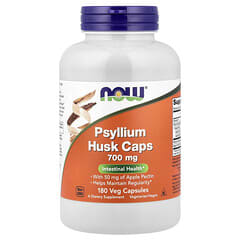 NOW Foods Psyllium Husk Caps, 180 capsules | Two capsules: 1 g fiber | Psyllium plus apple pectin; 1 g fiber per two capsules; portable but requires ample liquid. |
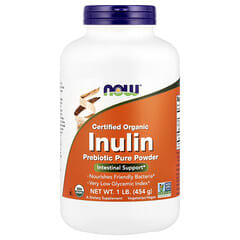 NOW Foods Organic Inulin, 454 g | Level teaspoon: 4 g fiber | Single-ingredient inulin with mild sweetness; mixes into food; gas and bloating tolerance matters. |
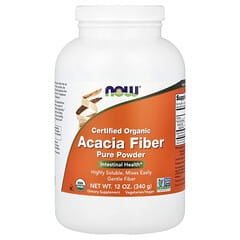 NOW Foods Organic Acacia Fiber Powder, 340 g | Level tablespoon: 6 g fiber | Acacia gum alone; 6 g soluble fiber per serving; easily mixed powder without added inulin. |
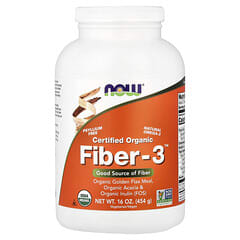 NOW Foods Fiber-3, 454 g | 2.5 tablespoons: 4 g fiber | Flax, acacia and inulin blend; 80 calories per serving; refrigerate after opening. |
NOW Foods Psyllium Husk Caps, 180 capsules
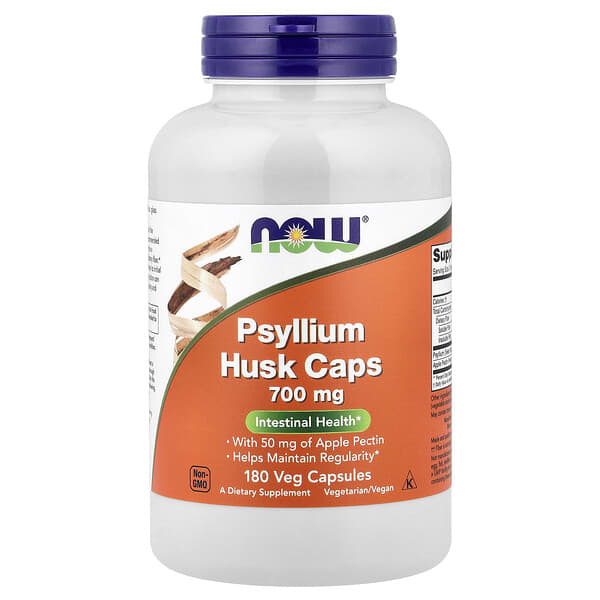
NOW Foods Psyllium Husk capsules remove the measuring and mixing step. Two capsules contain 1.4 g of psyllium husk plus 100 mg of apple pectin, supplying 1 g of dietary fiber. This is a psyllium-and-pectin blend, and the 180-capsule bottle contains 90 two-capsule servings.
- The plant-based capsules carry vegan, kosher and halal labeling.
- They suit shoppers who can swallow capsules comfortably and want something portable, although each serving supplies less fiber than the powders compared here.
- They must still be taken with at least a full glass, about 237 mL, of liquid.
- The label says not to use them if swallowing is difficult.
View NOW Foods Psyllium Husk Caps, 180 capsules details and price
NOW Foods Organic Inulin, 454 g
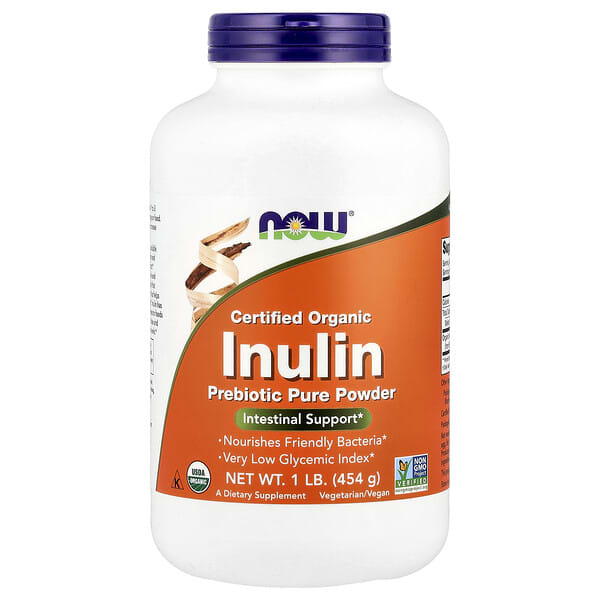
NOW Foods Organic Inulin has no additional ingredients. One level teaspoon, about 4 g, supplies 4 g dietary fiber, with 3.3 g inulin separately listed within that serving. Its mild sweetness makes it useful in yogurt, oats or drinks for shoppers who prefer to add fiber to food they already eat.
The 454 g container provides about 114 servings and carries USDA Organic, vegan and Non-GMO Project Verified labeling. This soluble prebiotic fiber can also cause gas or bloating. The manufacturer recommends starting with one teaspoon daily and increasing slowly, taking other inulin-containing foods into account.
View NOW Foods Organic Inulin, 454 g details and price
NOW Foods Organic Acacia Fiber Powder, 340 g
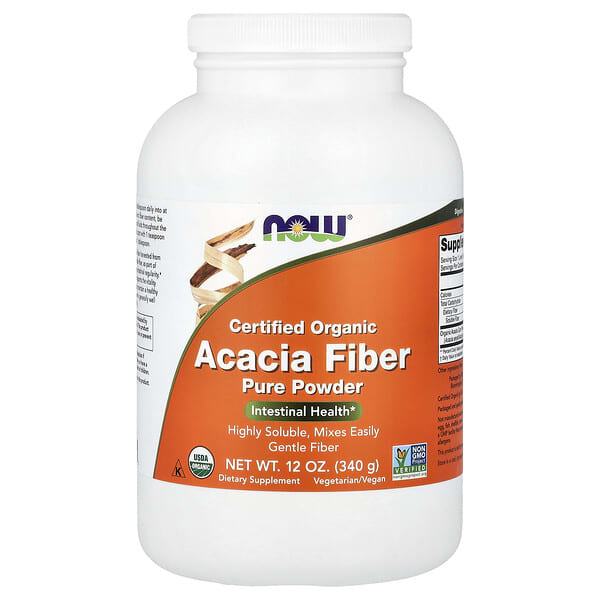
NOW Foods Organic Acacia Fiber uses acacia gum alone. A level tablespoon, 6.5 g, provides 6 g soluble fiber without added inulin. For shoppers comparing a single-ingredient fiber powder without psyllium, it has a clearly different ingredient profile from both inulin and Fiber-3.
- The manufacturer highlights easy mixing.
- Directions use at least 8 fl oz, about 237 mL, water or juice, with a one-teaspoon starting amount for sensitive individuals.
- The 340 g container provides about 52 servings and carries USDA Organic, vegan, kosher and halal labeling.
View NOW Foods Organic Acacia Fiber Powder, 340 g details and price
NOW Foods Fiber-3, 454 g
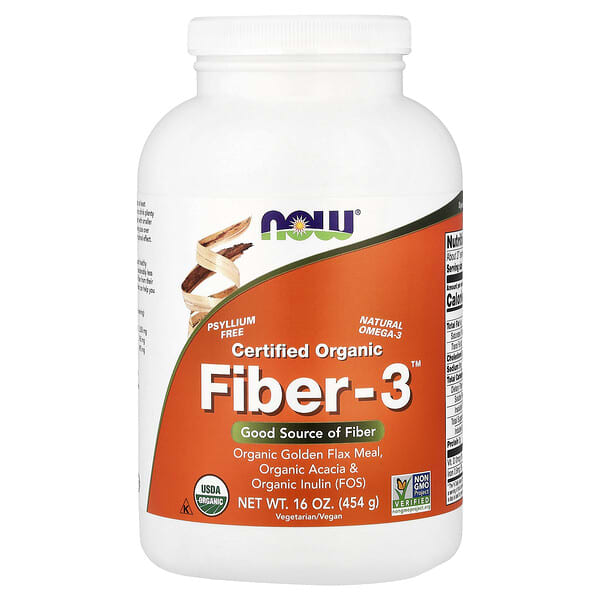
Fiber-3 combines cold-milled organic golden flax meal, organic acacia and inulin, without psyllium. A 2½-tablespoon, 17 g serving supplies 4 g fiber—2 g soluble and 2 g insoluble—plus 3 g protein and plant-source ALA omega-3. It is a mixed-ingredient nutritional powder rather than a single soluble-fiber ingredient.
- The flax-containing blend is useful to compare if you want those ingredients together.
- Shoppers avoiding inulin or wanting a smaller powder serving may prefer another format.
- Each serving has 80 calories and needs at least 12 fl oz, about 355 mL, water or juice.
- The 454 g pack has about 27 servings and must be refrigerated after opening.
View NOW Foods Fiber-3, 454 g details and price
Four needs, different choices
- Portable without mixing: psyllium capsules give 1 g fibre per two and need at least about 237 mL liquid. Do not use with swallowing difficulty.
- A familiar yoghurt or oat breakfast: inulin mixes into food with mild sweetness. Existing inulin-containing foods add the same source, relevant to bloating tolerance.
- One source without inulin: acacia has no added inulin and gives 6 g soluble fibre per serving, with mixing and gradual adjustment still needed.
- Flax in the same powder: Fiber-3 combines flax, acacia and inulin, with 80 calories and 4 g fibre per serving and refrigeration after opening. Its whole serving weight is not all fibre.
Psyllium constipation findings cannot be transferred to inulin or acacia. Actual price divided by total labelled fibre can compare costs, while fluid access, tolerance and refrigeration may exclude an option before price matters.
Persistent symptoms, medicines and fluid restrictions
Persistent constipation or bloating needs assessment. Medicines, pregnancy, breastfeeding, illness or fluid restrictions call for review of the full label. Swallowing or breathing difficulty or chest pain after psyllium needs immediate care rather than being dismissed as gas.
What does a spoonful actually supply?
Ingredient weight and dietary fiber are different measurements. A serving of acacia contains 6.5 g powder and supplies 6 g fiber. A 17 g serving of Fiber-3 supplies 4 g fiber, with other components of the flax-containing mixture accounting for part of the remaining weight. A heavier scoop therefore need not supply more fiber. A higher fiber concentration also does not establish a greater constipation benefit. (Source)
The inulin panel lists both 4 g dietary fiber and 3.3 g inulin within the same serving. These figures should not be added together to make 7.3 g. Similarly, the capsules’ 1.4 g husk and 100 mg apple pectin should not be added to their 1 g dietary fiber. For a food record, use the dietary-fiber line instead of counting the ingredient again.
A level teaspoon and a level tablespoon are different measures, and equal spoon volumes of different powders need not weigh the same. Recheck directions when moving from inulin to acacia or from powder to capsules. Keeping the old number of spoonfuls or capsules could change the amount considerably. In particular, do not multiply the capsule count independently to match the fiber grams in a powder serving. A clinical plan specifying an amount needs review against the new preparation, not an improvised conversion based only on the front of the bottle.
Compare both serving cost and fiber cost
Cost per serving is straightforward when comparing different pack sizes of the same formula at the same amount. It is less informative across these four preparations, whose labelled servings supply between 1 g and 6 g fiber. Dividing the actual price by approximate total fiber offers another view of package cost. It does not rank clinical effectiveness or prescribe a daily amount. (Source)
| Product | Labelled servings | Approximate fiber in the container |
|---|---|---|
| Psyllium capsules, 180 count | 90 | 90 g |
| Inulin, 454 g | 114 | 456 g |
| Acacia, 340 g | 52 | 312 g |
| Fiber-3, 454 g | 27 | 108 g |
These estimates multiply labelled fiber per serving by labelled servings and inherit rounding. Inulin’s calculated 456 g does not mean a 454 g container physically contains two extra grams. Use the approximation to compare costs rather than as a laboratory measurement of the contents.
Keep the currency consistent and distinguish delivery costs, regional availability and the discount actually applied at checkout. Without current prices, there is no defensible cheapest-product ranking. A bottle that costs less per serving may still cost more per gram of fiber; conversely, a blend can be chosen for its flax-containing composition rather than its fiber concentration. Decide which quantity answers your purchasing question before comparing the numbers. Cost cannot resolve swallowing difficulty, an unsuitable ingredient or a lack of refrigeration.
If bloating is already a problem, inulin may be a poor starting choice
Solubility describes a fiber’s relationship with water; it does not specify how rapidly gut bacteria ferment it. Inulin can be fermented, a feature relevant to its role as a prebiotic. For some people with irritable bowel syndrome, however, gas and bloating can become more troublesome. Monash University specifically identifies this limitation of inulin and FOS. All soluble fibers should therefore not be assumed to have identical effects on symptoms. (Source)
If a dietitian has asked you to avoid inulin temporarily, reconsider both the single inulin powder and Fiber-3, since the blend also contains it. The single-source acacia has no added inulin, but its ingredient list alone does not establish low-FODMAP certification or guarantee freedom from gas. Show the complete label and intended amount to the dietitian alongside the existing food plan.
If discomfort follows a change, record the source, amount and timing. Changing three products together makes the cause harder to interpret. Continuing to increase the amount is not the only response, and symptoms should not be dismissed merely because the product is described as prebiotic. Persistent severe pain, vomiting, blood or inability to pass gas calls for assessment rather than an assumption that adaptation is necessary. Someone following a restricted diet also needs enough suitable food sources; simply excluding every fermentable ingredient can make the original dietary problem harder to manage.
Match the preparation to the place where you will use it
- A small pill box for travel: capsules avoid measuring powder, but a proper amount of liquid must still be available. A small sip is not an adequate substitute. Their 1 g fiber per two capsules also matters when deciding whether the format fits the intended purpose.
- An established yogurt or oatmeal breakfast: inulin can be added to existing food. If a particular plant source is important, confirm the package being supplied rather than relying only on the product name.
- A suitable glass and measure at home: acacia directions use at least approximately 237 mL water or juice. A single-source powder also makes the ingredient source easier to identify when avoiding a mixture.
- Flax in the same preparation: Fiber-3 needs at least approximately 355 mL liquid and refrigeration after opening. A dormitory without a refrigerator or frequent travel can make that storage requirement inconvenient. (Source)
Use the specified level measure for powders, keep the utensil dry and follow preparation instructions. Permission to mix one product into yogurt does not establish that the same approach is appropriate for every powder. Medical fluid restrictions, swallowing problems or inability to meet storage instructions can determine suitability before a large-pack discount becomes relevant. Repackaging a whole supply without its label also makes directions and expiry information harder to retrieve; retain the original information when discussing the product with a pharmacist or clinician.
Your daily fiber total includes food
NIDDK gives an adult daily reference range of 22–34 g, varying with age and sex. That refers to the total from food and supplements, not an instruction to add that amount of powder on top of meals. Someone already eating oats, beans, vegetables and fruit has a different starting point from someone whose meals contain little plant food. (Source)
A few days of food records can identify what the supplement is intended to add. Food also contributes other nutrients and dietary variety; a convenient scoop is not a reason to remove established grains, vegetables or fruit. Increase fiber gradually and arrange liquid intake around health, activity and clinical requirements. People with fluid restrictions should not independently apply a general instruction to drink more.
If constipation is the reason for purchase, review frequency, hardness, straining and the sense of emptying separately. One extra bowel movement does not necessarily resolve the symptom that matters most. Continued symptoms call for assessment of the cause rather than repeated switches between packages displaying gut-health language. Bring the product, actual amount, medicines and any concurrent dietary change to that review so the professional can understand what was tried.
Related reading and sources
- guide to prebiotic foods
- Foods for Constipation: Kiwifruit, Prunes and Whole Grains
- Psyllium Benefits and How to Take It Safely