
Gut microbes help break down food components and produce metabolites, including short-chain fatty acids. A stool report’s diversity score or proportion of “good bacteria” cannot establish health on its own or identify the probiotic you should buy.
A practical dietary approach includes a tolerable variety of whole grains, legumes, fruits and vegetables. Fermented foods can be part of that pattern. Persistent pain, diarrhea or constipation needs assessment of the actual symptoms.
A microbiome change is not automatically symptom relief
Some carbohydrates escape small-intestinal digestion and reach colonic microbes. Stool composition, microbial genes and metabolites are measurable outcomes, but easier bowel movements or less pain require separate evidence. A rise in one genus cannot be converted into a percentage improvement in health.
A 2021 Cell study compared high-fiber and high-fermented-food diets in 36 adults completing the trial. Diversity increased and some inflammatory markers fell in the fermented-food group. Diversity did not rise overall with the higher-fiber diet, although carbohydrate-degrading enzyme measures changed. Each group had 18 people; two high-fiber participants were allocated by request rather than randomized. The study did not establish a treatment effect for a named yogurt, miso or supplement. Original study
A larger percentage does not necessarily mean more of a microbe
Imagine a simplified sample with only two groups: A contributes 10 units and B contributes 90, so A represents 10%. Later, A still contributes 10 units while B falls to 40. A now represents 20%. This is an arithmetic illustration of a changing denominator, not a person’s test result. The percentage increased even though the quantity of A did not. (Source)
Distinguish relative proportions, absolute quantities, diversity and functional information when reading a report. They answer different questions, and an increase in one cannot be converted directly into a percentage improvement in health. Scores generated by different methods, databases or comparison populations are not necessarily interchangeable either.
A not-detected result also needs interpretation in light of the method; it does not by itself establish complete absence from the body. If a report marks a microbe as low, ask how the reference range was constructed, whether it applies to you and whether treatment based on it has demonstrated clinical value. Buying a product bearing a similar bacterial name does not answer those questions. Keep the laboratory method and the clinical meaning separate: a technically detailed measurement can still lack a validated way to guide an individual treatment decision.
The 2021 diet study was not a contest that declared fiber useless
The study included a three-week baseline, four-week dietary ramp-up, six-week maintenance period and four-week choice period. It did not assess an extra bowl of miso soup today against a microbiome score tomorrow. Repeated stool and blood samples examined composition, function and immune-related measurements over time. (Source)
The authors reported no statistically significant change in the primary Cytokine Response Score in either group, alongside other microbiome and inflammatory-marker findings. Those observations are scientifically relevant, but do not establish fewer cases of a disease, constipation relief for every participant or a superior retail product. Participants were healthy adults, so the findings also cannot automatically predict responses in people with chronic disease or persistent digestive symptoms.
A lack of an overall diversity increase in the fiber group does not mean fiber had no value: functional measures were also being investigated. An everyday diet need not choose between whole grains and legumes on one side and fermented foods on the other. Nor should a study’s dietary increase be copied without considering existing intake, tolerance or clinical restrictions. Read the outcome actually measured before deciding what the result implies for a meal. A change in a biological marker and an improvement that a patient can feel are distinct findings, and evidence for one should not silently become evidence for the other.
Dietary changes beyond a test score
| Food group | Practical use | Limitation |
|---|---|---|
| Whole grains | Use plain oats in an existing cereal breakfast | Whole grain does not guarantee gluten-free; preparation and storage matter |
| Legumes | Add a tolerable portion to rice, soup or salad | Rapid increases can cause gas; dry legumes need cooking |
| Fruit and vegetables | Rotate accessible foods you enjoy | Do not restrict variety to feed one supposedly ideal microbe |
| Fermented foods | Use yogurt or miso in existing meals | Consider sugar, sodium and allergens; fermentation does not guarantee live cultures |
Three ingredients with different jobs
These foods are not ranked by microbiome effects. Oats can be a breakfast staple, lentils add legumes and protein, and miso is mainly a seasoning. Their roles and usual portion sizes differ substantially.
This article contains affiliate links. ToBeHealthy may earn a commission from purchases through them. Comparisons are based on product information and research, without hands-on testing.
| Product | Label per serving | Formula features and practical considerations |
|---|---|---|
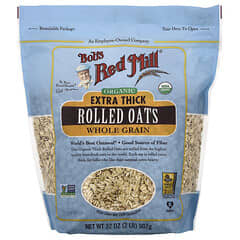 Bob’s Red Mill Organic Extra Thick Rolled Oats, 907 g | 4 g fiber per 50 g dry | Organic extra-thick texture; no added sugar; stovetop or microwave. Hong Kong listing showed out of stock when checked. |
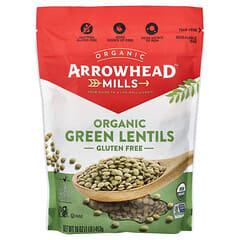 Arrowhead Mills Organic Green Lentils, 453 g | 5 g fiber per 44 g dry | Organic, certified gluten-free; 11 g protein and 5 g fiber per 44 g dry. |
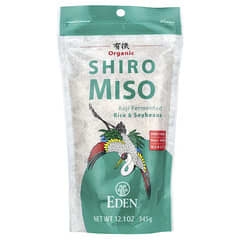 Eden Foods Organic Shiro Miso, 345 g | Fermented rice and soy seasoning. Check sodium by amount used. | Mellow rice-and-soy fermented condiment; 125 mg sodium per teaspoon; refrigerate. |
Bob’s Red Mill Organic Extra Thick Rolled Oats, 907 g
Bob’s Red Mill Organic Extra Thick Rolled Oats are deliberately rolled thicker for a more substantial oat texture. Organic whole-grain oats are the only ingredient. A 50 g half-cup serving supplies 4 g fiber and 6 g protein with no added sugar, leaving you free to choose fruit, nuts or milk rather than buying a preflavored cereal. The Hong Kong listing showed out of stock with no arrival date when checked; confirm availability before purchase.
The 907 g resealable bag suits regular home breakfasts. The stovetop method takes about ten minutes plus a two-minute rest, with a two-minute microwave method followed by a two-minute rest also listed. Refrigeration or freezing is recommended after opening for best keeping quality.
View Bob’s Red Mill Organic Extra Thick Rolled Oats, 907 g details and price
Arrowhead Mills Organic Green Lentils, 453 g
Arrowhead Mills Organic Green Lentils contain one ingredient and carry certified gluten-free labeling. Each 44 g dry serving lists 11 g plant protein, 5 g fiber and 3 mg iron, so they add both protein and fiber to rice, soups or salads and work well for batch cooking.
- Directions call for about 30–45 minutes of cooking after rinsing and sorting, with the lentils cooked fully before eating.
- The 453 g resealable bag is practical for a dry-food cupboard.
- For a lunch that must be ready to eat, cook portions ahead or compare canned beans.
- Nutrition figures for dry lentils need conversion after cooking and water absorption.
View Arrowhead Mills Organic Green Lentils, 453 g details and price
Eden Foods Organic Shiro Miso, 345 g
Eden Foods Shiro Miso ferments organic rice and soybeans with koji, water and sea salt. The brand describes it as mellow and lightly sweet, useful for light soups, dressings, dips and noodle broths. The 345 g resealable pack works for small amounts of seasoning and requires refrigeration after opening.
A teaspoon, 6 g, has 125 mg sodium, which should be considered alongside salty stock or sauces. This is a soy-containing fermented condiment. Its listing does not give a live-culture count per serving, so it should not be treated as a probiotic supplement with a specified CFU amount.
View Eden Foods Organic Shiro Miso, 345 g details and price
Calculate portions from the form listed on the label
The oats here supply 4 g fiber and 6 g protein per 50 g dry. If 100 g dry oats are cooked into two evenly divided bowls, each contributes approximately 4 g fiber and 6 g protein before milk or nuts are added. Cooking water increases the bowl’s weight, not its fiber content.
The lentils list 5 g fiber and 11 g protein per 44 g dry. Cooking 88 g and dividing it evenly into two portions similarly provides approximately 5 g fiber and 11 g protein per portion. Water absorption changes cooked weight, so applying the dry 44 g panel to 44 g cooked lentils would be misleading. For a cooked-weight food record, note the starting dry quantity and final batch weight, then calculate the proportion served.
Miso serves a different purpose. One teaspoon contains 125 mg sodium; three teaspoons contain 375 mg before stock, soy sauce or other ingredients are counted. It is not a way to match the fiber in oats or lentils. These are label-reading calculations rather than prescribed portions. They help distinguish a staple, a protein-containing legume and a seasoning without pretending that their roles or usual quantities are equivalent. What belongs in an actual meal still depends on the rest of the food and the person’s requirements.
Can a retail microbiome test choose your supplement?
An international consensus notes limited evidence for the routine clinical usefulness of consumer microbiome profiling. Relative proportions depend on sampling, transport, methods and the other microbes measured. There is no universal ideal ratio for everyone, and a detailed score does not validate a supplement purchase based on it. Consensus
A targeted stool test ordered to investigate a pathogen has a different purpose from broad consumer profiling. For ongoing symptoms, describe their nature and duration rather than relying on a microbiome-imbalance label.
Four questions before buying a microbiome profile
- What question should it answer? Exploring food choices differs from investigating persistent diarrhea. Symptoms need a clinical history rather than an assumption that broad profiling replaces assessment.
- How is the measurement made? Ask about collection, storage, transport, analysis and the comparison population. These details affect comparability.
- What would change afterward? An association between a proportion and disease does not establish that choosing a supplement from that proportion improves outcomes.
- Who interprets the result? Medicine changes, restrictive diets and treatment decisions need an appropriate professional reviewing the clinical context, rather than a shopping list alone.
The international consensus discourages reporting the commonly marketed Firmicutes-to-Bacteroidetes ratio and finds insufficient evidence for a dysbiosis index in the report. That does not dismiss microbiome research; it distinguishes research associations from a test that can reliably guide individual care.
If a profile has already been purchased, keep the full report and method information. Explain recent illness, medicines and dietary changes around collection. Do not stop treatment, repeatedly retest or progressively remove foods in pursuit of a better score. A useful discussion should establish which findings are descriptive, which remain uncertain and whether any result changes an evidence-based plan for the actual problem that prompted testing.
Fermented foods, probiotics and prebiotics are different
- Fermented food describes a process; subsequent heating can affect whether live microbes remain.
- Probiotic claims need evidence matching the organisms, amount and benefit, not simply a high strain count.
- Prebiotics are substrates selectively used by microbes with a demonstrated health benefit. Fibers differ in effects and tolerance.
Add a sustainable food choice to a meal you already eat. If a rapid increase in legumes or fiber worsens bloating, the amount and pace of change matter more than pursuing higher bacterial counts. Persistent symptoms still warrant care.
Fermentation, living microbes and a health benefit are separate questions
Microbes used during production need not remain alive in the same quantity when the food is eaten. Heating and processing can change survival, while storage conditions and time can affect numbers. ISAPP distinguishes fermented foods from foods meeting probiotic criteria because a fermentation process and a demonstrated benefit from defined microbes require different evidence. (Source)
For yogurt or another fermented food, read any live-culture information, identified strains and storage instructions. The word fermented alone does not make it a substitute for a probiotic used in a clinical trial. A heated fermented food can still be eaten for its ordinary culinary role; absence of living microbes does not mean it has no nutritional value.
Miso here can be selected for taste and sodium considerations, but its listing does not provide a verifiable live count per serving that could be matched to a supplement. Equally, adding oats or lentils does not require first proving a deficiency of a particular good bacterium. Their nutrition, tolerability and fit within an established meal are directly understandable criteria. This keeps the purchasing decision connected to the food being consumed rather than to an assumed bacterial target that the package has not demonstrated it can correct.
Related reading and sources
- daily eating guide for gut health
- guide to prebiotic foods
- Probiotic Benefits and Side Effects by Strain
- Foods for Constipation: Kiwifruit, Prunes and Whole Grains