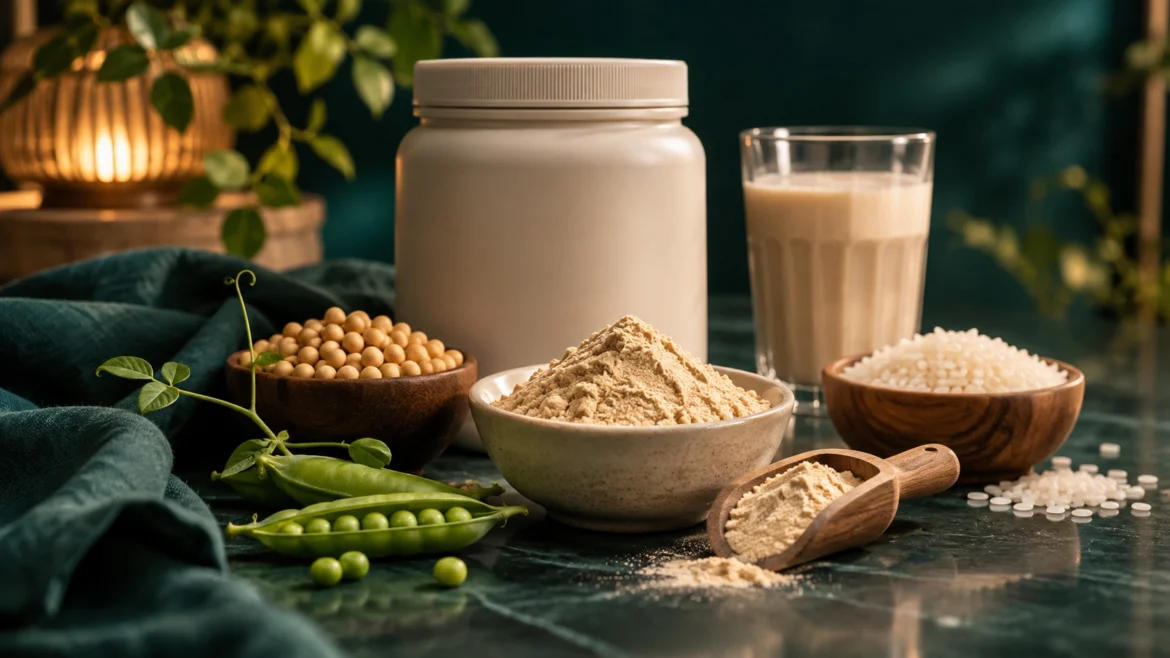
Start by choosing a protein source that fits your diet, then compare the amount you would actually use. The unflavoured NOW pea formula lists 24 g of protein per level scoop, and its soy formula lists 20 g per one-third cup. NutriBiotic plain rice protein lists 12 g per two tablespoons, a smaller powder serving. The three labels use different serving sizes, which helps explain the difference in protein per serving.
This article contains affiliate links. ToBeHealthy may earn a commission from purchases through them. Comparisons are based on product information and research, without hands-on testing.
Pea, soy or rice: useful differences
These are primarily single-source plant proteins. The meaningful choices concern ingredient exclusions, protein per portion and routine use rather than assuming plant-based means suitable for everyone.
- Avoiding soy ingredients: compare NOW pea and NutriBiotic rice. NOW soy isolate is inappropriate for soy allergy. An omitted ingredient does not establish absence of manufacturing cross-contact.
- Seeking 20 g protein with less powder: these labels imply about 24 g soy powder, 25 g rice powder or 27.5 g pea powder. This is portion arithmetic, not an absorption or muscle-growth ranking.
- Watching sodium: NOW pea lists 320 mg per 33 g powder and soy lists 170 mg per 24 g. Sodium changes with the amount actually used.
- Prioritizing sport-testing labels: both featured NOW powders list Informed Sport, which does not guarantee training outcomes.
Which buying conditions favor each option?
You want one ingredient while avoiding soy and whey: NOW pea and NutriBiotic rice are candidates to compare. Pea lists 24 g protein per level scoop; rice starts with a smaller labeled portion, which can be convenient when a smaller contribution is wanted. Actual use still needs to fit the intended amount and package directions.
Soy fits your diet and you want 20 g protein with less powder: NOW soy’s labeled portion provides that amount directly, without borrowing a scoop from another product. It is unsuitable for soy allergy. A higher protein proportion is not an advantage to someone who needs to avoid its source.
You are trying rice protein for the first time: the featured 1.36 kg size is a bulk purchase. Already using plain rice protein regularly differs from buying it without knowing whether it fits the routine. If another size is available, verify that version rather than transferring these figures to a different flavor or package.
These buying conditions can exclude unsuitable choices, but they are not rankings of digestive tolerance or muscle gain. No hands-on tasting was performed. Short ingredient lists and numerous label marks cannot establish whether someone will like a particular texture or flavor. The useful comparison is the formula and portion that fit an actual meal, with uncertainty about sensory qualities left explicit.
Three unflavored plant formulas
| Exact product and pack | Powder per serving | Protein per serving | Listed servings | Formula features and practical considerations |
|---|---|---|---|---|
 NOW Sports Pure Unflavored Pea Protein, 907 g | One level scoop, 33 g | 24 g | About 27 | Yellow pea only, Informed Sport; 320 mg sodium and 8 mg iron/serving. |
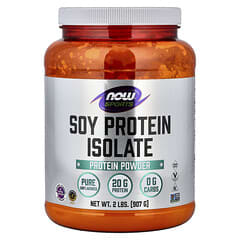 NOW Sports Pure Unflavored Soy Protein Isolate, 907 g | One-third cup, 24 g | 20 g | About 38 | Soy only, Informed Sport; 193 mg calcium and 170 mg sodium/serving. |
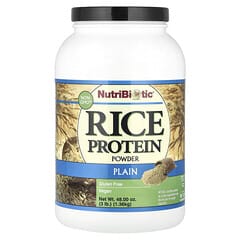 NutriBiotic Plain Rice Protein, 1.36 kg | Two tablespoons, 15 g | 12 g | About 90 | Rice protein alone, 1 g fiber/serving; two-tablespoon portion; 1.36 kg bulk pack. |
If you weigh out 20 g of each powder, the labels imply about 14.5 g of protein from pea, 16.7 g from soy and 16 g from rice. That comparison is useful if you always measure the same powder weight. If you follow each product’s serving size, use the grams of protein per serving instead.
People with soy allergy should avoid the soy formula and check the other products for shared-facility or allergen statements. A plant protein category label describes the broad source. Use the full ingredients and warnings to decide whether the exact product fits your needs.
Which unflavoured powder fits the way you use it?
NOW Sports Pure Unflavored Pea Protein, 907 g
NOW Sports Pea Protein uses yellow pea isolate alone, with 24 g protein per 33 g level scoop and no added dairy, soy or artificial sweeteners. Its unflavored format fits usual drinks or oats for vegans or shoppers avoiding whey.
- The 907 g container carries Informed Sport, Non-GMO Project Verified, kosher and halal labeling.
- Each serving also lists 320 mg sodium, useful when comparing powders on a sodium-conscious diet.
- Check shared-facility warnings for allergies.
The exact label also lists 8 mg iron per serving, not a treatment dose for iron deficiency. Directions use one level scoop daily with about 355 mL cold water, juice or another drink, which matters when choosing a mixing-container size.
View NOW Sports Pure Unflavored Pea Protein, 907 g details and price
NOW Sports Pure Unflavored Soy Protein Isolate, 907 g
NOW Sports Soy Protein Isolate contains soy isolate alone, with 20 g protein and zero listed carbohydrates per 24 g one-third-cup serving. Soy supplies all essential amino acids, offering an unflavored plant protein option for people who can eat soy.
The 907 g version has no artificial sweeteners and carries Informed Sport and Non-GMO Project Verified labeling. Soy is an allergen, and another suitable protein source is needed for soy allergy. Measure by the listed weight rather than borrowing another product’s scoop.
Each serving also lists 193 mg calcium and 170 mg sodium. Directions specify one-third cup daily with about 240 mL beverage. When weighing it, 24 g powder is the listed serving; another powder’s scoop is not equivalent.
View NOW Sports Pure Unflavored Soy Protein Isolate, 907 g details and price
NutriBiotic Plain Rice Protein, 1.36 kg
NutriBiotic Rice Protein uses an enzyme process to separate protein from brown rice. Rice protein is the only ingredient, without added flavors, sweeteners, dairy, soy or nut ingredients. Two tablespoons, 15 g, provide 12 g protein for shoppers avoiding whey and soy.
- The 1.36 kg pack has about 90 servings and is most practical if you already know and use unflavored rice protein regularly.
- For a larger protein contribution, calculate the powder required from its 12 g serving rather than assuming one serving matches another powder.
The product is not intended for children under seven; pregnancy, planned pregnancy and nursing require consultation per its label. The page also carries a California Proposition 65 lead-exposure warning without a per-serving lead amount. Contaminant comparisons require relevant batch-test information.
View NutriBiotic Plain Rice Protein, 1.36 kg details and price
Must plant proteins be mixed to supply every essential amino acid?
Proteins contain different amino acids, including nine essential ones supplied through food. Relatively low in an amino acid is different from containing none. The featured rice label, for example, lists lysine and other essential amino acids. Rice protein should not be reduced to a claim that an entire necessary component is absent.
MedlinePlus emphasizes balance across the day rather than requiring a precise pairing at every meal. Legumes, grains and other protein foods can contribute different profiles over the day. That does not require mixing several tubs at an unknown ratio to construct a supposedly complete shake.
A single-source powder makes the source easier to identify. A blend may combine sources, but proportions, protein per portion and allergens still need attention. Mixing is not a quality guarantee, and a single source is not automatically worse. With a vegan diet or training goal, assess the complete intake and a sustainable meal pattern rather than counting how many protein names appear in the ingredient list.
How far can comparisons with dairy protein take us?
A 2026 meta-analysis included 18 randomized trials lasting at least six months. Overall, it found no clear differences in lean body mass or strength between plant and animal protein supplementation. However, 17 trials used soy, only three included exercise, and studies differed substantially.
It does not prove equal muscle-building results from the three tubs here, or establish that evidence mainly about soy applies identically to pea and rice. Ingredient choice can fit dietary exclusions; whether supplementation is needed, and how much, still depends on meals and training. A pooled finding about protein sources is not a head-to-head test of these retail formulas.
A smaller rice serving does not limit you to 12 g
NutriBiotic labels 15 g powder with 12 g protein; NOW pea labels 33 g powder with 24 g protein. Two rice servings provide 30 g powder and 24 g protein. Consequently, 90 rice servings and 27 pea servings are not equal-protein comparisons.
Label proportions imply approximately 660 g protein in the 907 g pea tub, 756 g in the 907 g soy tub and 1,088 g in the 1.36 kg rice pack. These estimates help compare real prices; they do not establish easier digestion or better results. Once the ingredient and amount fit, assess whether the package can be used under its storage directions and shelf life.
Put sodium on the same protein basis
Pea lists 320 mg sodium with 24 g protein per serving; soy lists 170 mg with 20 g. To compare 20 g protein from each, the label ratios imply about 267 mg sodium from pea and 170 mg from soy. The difference is approximately 97 mg, not the result of simply subtracting 170 from 320.
Whether this affects a purchase depends on the rest of the day and any clinical restriction. One drink’s figure does not describe the whole diet. The nutrition table on this rice-product page does not give a sodium amount, so it cannot be entered as zero or ranked lowest for sodium.
A mixing drink containing sodium adds another contribution. Anyone needing close control can take the exact label and intended amount to the treating clinician or dietitian. Rounded calculations from a shopping guide are not a medical meal plan. Keeping portions consistent makes the comparison informative without pretending that the label supplies laboratory-level precision for every scoop.
Using plain powder in meals
Unflavored does not mean tasteless. No hands-on taste testing was performed, so there is no basis to promise the smoothest option. Fruit, oats and mixing drinks add flexibility as well as their own protein, sugar and energy. Protein powder alone is not a complete meal.
A plant-based diet still needs varied legumes, grains, nuts and other foods. Powder protein grams cannot represent all meal nutrients. Kidney disease or a prescribed diet requires the individual nutrition plan rather than a generic gym portion.
Powder is not a whole serving of peas, soybeans or brown rice
Isolation concentrates protein. The source name does not mean that the whole food’s nutrition is retained. The featured pea and soy labels list zero fiber per serving, while rice lists 1 g per 15 g powder. A scoop should not displace the legumes, whole grains and produce that were supplying the rest of a varied diet.
Suppose breakfast already includes a soy drink supplying 8 g protein and the intention is to add another 12 g. One labeled rice serving fits that arithmetic. Another powder could also be measured using its own composition. This is a portion-planning example, not a rule that everyone needs 20 g at breakfast.
If the soy drink is removed when the 12 g powder serving is added, however, the net increase is only 4 g because the original 8 g has disappeared. Distinguishing an addition from a replacement shows whether the intended gap has actually been filled. It also prevents a higher protein claim from concealing the loss of another useful food within the meal.
Match bulk size to how often it will be used
Using the rice label’s 90 servings as an example, five servings each week would represent about 18 weeks of use. Two servings per occasion would instead mean 45 occasions. These are usage estimates, not an after-opening shelf life or a recommendation to use two servings. The actual package’s storage directions and dates still govern.
A lower displayed cost per serving does not ensure that a large pack will be finished. If only a small amount is needed weekly, or plain rice protein is unfamiliar, pack size may matter more than a small serving-price difference. For travel, dry powder and a clean container can be arranged separately, then mixed according to directions when needed. Refrigeration requirements apply once an appropriate perishable mixing liquid is added.
Budget comparisons should also use equal protein amounts, with delivery and mixing ingredients counted consistently. Without a verified same-day, same-region checkout price, none is called the price winner. Choosing a suitable size is part of the decision, not an afterthought to a price-per-scoop calculation.
Related reading and sources
- protein powder label guide
- Protein Powder Side Effects: Bloating, Lactose and Sweeteners
- Best Whey Isolate Powders in 2026