NOW Foods is an option if you want a label that lists lutein without a separate amount for zeaxanthin. California Gold Nutrition and Jarrow Formulas both list amounts for the two carotenoids. The California Gold Nutrition version uses a vegetarian capsule, while the Jarrow softgel contains bovine gelatin and beeswax. Start with the ingredients and capsule materials you want to compare, then check the cost of each serving.
This article contains affiliate links. ToBeHealthy may earn a commission on purchases through these links.
| Product | Lutein per serving | Zeaxanthin per serving | Serving and bottle size | Formula features and practical considerations | Label directions |
|---|---|---|---|---|---|
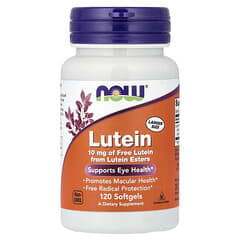 NOW Foods Lutein | 10 mg | Not listed separately | 1 softgel, 120 servings | 10 mg free lutein alone; olive-oil softgel; bovine gelatin. | One daily with a fat-containing meal |
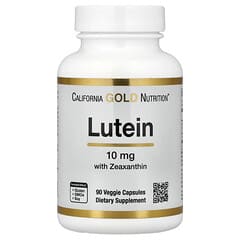 California Gold Nutrition Lutein | 10 mg | 2 mg | 1 vegetarian capsule, 90 servings | 10 mg lutein plus 2 mg zeaxanthin; vegetarian capsule without gelatin. | One daily with food |
 Jarrow Formulas Lutein | 20 mg | 4 mg | 1 softgel, 120 servings | Lutemax® 2020; 20 mg lutein plus 4 mg zeaxanthin; gelatin and beeswax. | Adults: one daily with food |
“Not listed separately” means the nutrition panel provides no separate quantity for that ingredient. It is different from a declaration of zero. If you want to compare products by the amount of both carotenoids, choose labels that give you both figures. The table uses the serving size of each exact pack. For all three products, a labelled serving is one capsule or softgel.
Why these products were selected
The three labels allow a practical comparison of a simpler 10 mg softgel, a 10 mg plus 2 mg vegetarian capsule and a higher-content 20 mg plus 4 mg softgel. Each defines a one-capsule serving, making the ingredients and intended routine easier to compare. They are not ranked by sales, star ratings or invented first-hand testing.
If an eye-care professional has specified complete AREDS2, comparing these three is not a shortcut to choosing the complete formula. Without a defined clinical need, Jarrow’s larger figures also do not make it an upgrade for everyone. Ingredient amounts, shell materials and directions are the differences that can be established here.
A source name or labeled amount can be verified. Whether you will see more clearly or feel less dryness requires applicable clinical evidence rather than an inference from specifications. We have not independently tested taste, ease of swallowing or changes in vision. The useful selection starts with a requirement the label can answer, then checks whether the evidence supports the intended use.
NOW Foods Lutein 10 mg, 120 softgels
NOW Foods Lutein provides 10 mg free lutein from lutein esters per softgel, without a separately declared zeaxanthin amount. Organic extra-virgin olive oil is part of the formula, offering a simpler lutein-only option.
- The 120-count bottle uses a one-softgel serving with a fat-containing meal.
- The softgel contains bovine gelatin, so vegans need a different format.
- The 10 mg free-lutein figure is the relevant amount for like-for-like comparisons.
View NOW Foods Lutein 10 mg, 120 softgels details and price
California Gold Nutrition Lutein, 90 vegetarian capsules
California Gold Nutrition combines marigold-derived lutein, 10 mg, and zeaxanthin, 2 mg, in a vegetarian capsule without a gelatin shell. The 90-count version offers both ingredients for shoppers with a vegetarian preference.
Directions use one capsule with food, protected from heat, moisture and light. The separately listed 10 mg and 2 mg amounts are clear comparison figures, but matching some study amounts does not make the whole formulation or intended use identical.
View California Gold Nutrition Lutein, 90 vegetarian capsules details and price
Jarrow Formulas Lutein 20 mg, 120 softgels
Jarrow Formulas uses Lutemax® 2020 lutein and zeaxanthin, with 20 mg and 4 mg per softgel, double the amounts in the vegetarian capsule above. The 120-count bottle has a one-softgel serving for checking a specified amount with a healthcare professional.
The formula uses sunflower oil, bovine gelatin and beeswax, so it is unsuitable for vegans. Adults take it with food as labeled. The named material and higher amounts are formulation differences, not a guarantee of better vision or relief of eye symptoms.
View Jarrow Formulas Lutein 20 mg, 120 softgels details and price
Lutein esters, free lutein and extract weight
NOW states that lutein esters provide 10 mg free lutein. That is the labeled lutein amount for comparison, rather than the combined weight of oil and capsule. Likewise, marigold extract wording should be read alongside the stated lutein quantity; a plant extract’s total mass is not automatically all lutein.
For an explicitly hypothetical calculation, an extract labeled 50 mg with 20% lutein supplies 10 mg lutein. This is not another hidden specification of the three featured products. It is not a percentage to assume whenever an extract weight is known. Missing information should be checked with the manufacturer rather than borrowed from a different product.
CGN and Jarrow state the two carotenoids separately. Combining 10 and 2 into a total of 12 mg describes the sum, but does not turn all 12 into lutein for comparison with another product’s 20 mg lutein. Keep separate ingredient columns. The arithmetic becomes useful only after identifying which substance each number measures; a larger total printed on the front is not enough.
Fit meal directions and shell materials to the routine
NOW calls for a fat-containing meal, while CGN and Jarrow specify taking the product with food. Place it with a meal already eaten and follow that product’s directions. Oil inside a softgel does not independently cancel the meal instruction. Nor does the label create a requirement to add a spoonful of oil or purchase fish oil as an accessory.
A vegan preference applies to the whole capsule, not just marigold-derived ingredients. CGN uses modified cellulose; NOW and Jarrow use bovine gelatin, with beeswax also present in Jarrow. For someone avoiding animal-derived shells, that is a decisive practical distinction rather than a restriction to overlook for a larger milligram figure.
CGN’s other ingredients include cellulose, starch, magnesium stearate and calcium carbonate. Their presence is not a quantified magnesium or calcium supplement serving. Anyone seeking another mineral should use its relevant nutrition declaration rather than calculate an amount from an ingredient name. Separate the active ingredients being compared from materials used to make the capsule, without assuming that unfamiliar names establish either extra benefit or a safety problem.
Which difference solves your need?
- A gelatin-free vegetarian capsule: California Gold Nutrition uses hypromellose and declares 10 mg lutein with 2 mg zeaxanthin. NOW and Jarrow contain bovine gelatin; Jarrow also contains beeswax.
- Checking 10 mg lutein: NOW supplies 10 mg free lutein per softgel across 120 servings. An undeclared zeaxanthin quantity is not an established zero.
- A higher amount specified by a clinician: Jarrow provides 20 mg plus 4 mg per softgel for checking those instructions, without evidence that double the amount means double the eye benefit.
Each uses a one-capsule serving. Divide actual checkout prices by 120, 90 and 120 for serving cost once ingredient and shell requirements fit. A lower price per milligram does not justify changing clinical advice or cutting softgels.
Cost per serving and cost per milligram answer different questions
Imagine a 120-capsule pack costing 300: each capsule costs 2.50. A 90-capsule pack costing 240 gives approximately 2.67, while another 120-capsule pack at 360 gives 3. These are arithmetic examples, not the current prices of the featured products. A lower box price does not necessarily produce a cheaper use. Compare actual portions, delivery and equivalent purchase conditions.
If an illustrative 10 mg capsule costs 2.50, its cost is 0.25 per milligram. A 20 mg capsule costing 3 gives 0.15 per milligram. The second figure is lower per milligram but higher by 0.50 per use, with a different intake. Without a need for that larger amount, a lower cost per milligram does not automatically make it a better purchase.
At one capsule per serving, 120 and 90 capsules mean 120 and 90 portions. That is not a fixed treatment course everyone should complete. A different agreed clinical arrangement needs its own calculation, rather than changing intake to finish a bottle neatly. Do not cut softgels to pursue half the price: even division of their contents is not assured. The relevant budget is the cost of following the appropriate arrangement, not the largest amount of ingredient obtained for a headline price.
Similar ingredient names are not the same product trial
Jarrow names Lutemax® 2020. The six-month screen-user trial discussed in our benefits article used Lute-gen®. These are different ingredient names. Sharing lutein and zeaxanthin does not make that experiment a first-hand trial of the Jarrow bottle. Six-month trial source
The same applies when CGN’s 10 mg and 2 mg figures resemble those used in a study. Matching two amounts does not establish that the finished retail product underwent the same testing. Compare the full recipe, intake, population and measured outcomes. A convenient product can still be selected from verified specifications without turning those specifications into a guaranteed personal result.
For dryness, discomfort with lenses or new visual changes, arrange appropriate assessment rather than treat a move from 10 to 20 mg as the solution. Shopping information identifies what would be purchased; it cannot diagnose why an eye is uncomfortable. This distinction is especially relevant when a recommendation is shared with someone else whose symptoms, existing medicines or eye diagnosis may differ from the original shopper’s.
Checks before purchase and use
The warnings address adult use or consultation for people younger than 18. Pregnancy, nursing, medication and illness need the individual label and clinical arrangements. CGN specifically mentions consultation when using medicines such as blood thinners. That is a product warning, not a basis for this article to declare a particular medicine definitely incompatible or definitely safe.
CGN and Jarrow call for cool, dry storage and an intact seal; CGN also specifies protection from heat, light and moisture. Keep enough product identification when traveling to distinguish capsules, rather than mixing similar-looking products into an unlabeled container and later guessing their amounts.
NOW and Jarrow also note that natural color variation can occur. A darker capsule is not a measurement of a higher ingredient amount or better effectiveness. That note does not replace checking the seal, expiry and storage conditions. If an unexpected package condition is unclear, retain the lot details for the manufacturer instead of testing the contents by taking a capsule. Product identification helps distinguish a normal labeled characteristic from a question that has not yet been resolved.
Where a formula has been specifically recommended, compare the listing, the delivered nutrition panel and the daily capsule count together. Website and package versions may differ. The actual label is more dependable than remembering the brand alone. Resolve an unclear ingredient or serving before choosing the nearest-looking number. A correct comparison should leave you knowing which contents, shell and routine were selected, as well as which clinical questions still need the eye-care team.
Does 10 mg of lutein and 2 mg of zeaxanthin make it AREDS2?
The full AREDS2 formula includes lutein and zeaxanthin alongside vitamin C, vitamin E, zinc and copper. The California Gold Nutrition product matches the two carotenoid figures, but does not contain the other ingredients of the full formula. If an eye care professional advised AREDS2 for a particular stage of age-related macular degeneration, ask them which formula and serving to look for. Compare each ingredient on the actual pack. Lutein and zeaxanthin evidence and who may benefit from AREDS2
If you are already taking a multivitamin or another eye supplement, write down what you actually take. Include the serving size and your number of capsules per day. Ingredients that occur in more than one product need to be counted together. It is easier for a pharmacist or eye care professional to check the combined amounts if you bring the full labels and say how you use each product. The shopping table helps you identify a label. It cannot tell you the stage of an eye condition or which formula you need.
A reader who wants more leafy vegetables in their meals and a patient who has been advised to take a clinical formula are making different decisions. For the patient, the clinical instructions are the place to start. For the shopper who wants to understand a supplement label, start with what the product contains and what evidence applies to the use they have in mind.