
Before comparing prices, check what the milligrams refer to. Nutricost lists 250 mg in one capsule. Its labelled serving is two capsules, or 500 mg. The 30 g ProHealth Longevity powder lists 1,000 mg in one scoop, which is its labelled serving. A capsule gives you a premeasured amount. A powder needs a scoop and enough liquid to mix it. Once you know how you would use each product, compare the serving count, storage requirements and checkout price.
This article contains affiliate links. ToBeHealthy may earn a commission if you buy through one of these links.
| Product | Per capsule or scoop | Per labelled serving | Servings per container | Formula features and practical considerations |
|---|---|---|---|---|
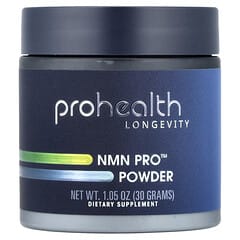 ProHealth Longevity NMN Pro powder | 1,000 mg per scoop | 1,000 mg | 30 | Uthever® powder alone; 1,000 mg scoop; measure and mix; no established daily recommendation. |
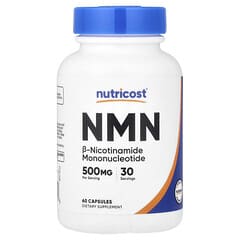 Nutricost NMN capsules | 250 mg per capsule | 500 mg per two capsules | 30 | 500 mg per two vegetarian capsules; brand states third-party testing; current listing specifies cool, dry storage. |
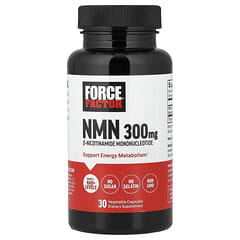 Force Factor NMN vegetable capsules | 300 mg per capsule | 300 mg per capsule | 30 | 300 mg in one capsule; no sugar or gelatin; cool, dry storage and food. |
Each label identifies beta-nicotinamide mononucleotide, or β-NMN. The figures describe the contents. They do not establish how much reaches the bloodstream or which product would have a greater effect. The three packs happen to have the same number of labelled servings, even though a serving is measured differently in each case.
ProHealth Longevity NMN Pro powder, 30 g
ProHealth Longevity NMN Pro uses Uthever® beta-NMN powder without other ingredients. A 1 g scoop supplies 1,000 mg NMN, with 30 servings in the 30 g container. It offers a named-material powder for shoppers avoiding capsules.
The current listing directs a scoop under the tongue to dissolve before swallowing, or mixing into water, with cool, dry storage away from direct sunlight. It does not specify 237–355 mL here: that water quantity belongs to Nutricost’s directions below. The sublingual instruction is a product direction, not our confirmation of superior effectiveness. The 1,000 mg serving is a product amount rather than an established adult daily recommendation. NMN has not been shown to extend human lifespan, a limitation that remains relevant when comparing materials and formats.
View ProHealth Longevity NMN Pro powder, 30 g details and price
Nutricost NMN, 250 mg per capsule, 60 capsules
Nutricost NMN provides 250 mg per vegetarian capsule, with 500 mg per two-capsule serving and 30 servings in the 60-count bottle. It removes scooping and mixing and carries gluten-free, non-GMO and third-party-tested labeling.
- The current listing specifies cool, dry storage without requiring refrigeration. Its directions state two capsules daily with 8–12 ounces of water, or as directed by a clinician. If the delivered bottle differs, confirm the requirements for that version with the supplier.
- A cellulose capsule shell and other excipients distinguish it from ProHealth’s powder without other ingredients. Check the delivered package for the precise ingredient list because versions can differ.
- The two products’ 500 mg and 1,000 mg servings also represent different amounts.
View Nutricost NMN, 250 mg per capsule, 60 capsules details and price
Force Factor NMN, 300 mg, 30 vegetable capsules
Force Factor NMN supplies 300 mg in a single vegetarian capsule, with 30 servings per bottle. It has no sugar or gelatin and is labeled non-GMO, offering a one-capsule format for shoppers avoiding powder.
Directions use food and cool, dry storage protected from heat, light and moisture. The Nutricost listing checked here also specifies cool, dry storage, so refrigeration is not a defensible distinction between these two current listings. These convenience features do not establish anti-aging or lifespan benefits.
View Force Factor NMN, 300 mg, 30 vegetable capsules details and price
Powder and capsules: what changes in everyday use?
| Practical condition | Relevant formula | Trade-off |
|---|---|---|
| Avoiding capsules, with mixing possible at home | ProHealth Uthever® powder alone | Needs measuring; listing describes dissolving under the tongue then swallowing, or mixing with water; 1,000 mg is not an established daily requirement |
| Avoiding scoops, accepting two capsules per serving | Nutricost vegetarian capsules | Two capsules supply 500 mg; 60 capsules give 30 servings; current listing specifies cool, dry storage |
| One capsule with cool dry storage | Force Factor | 300 mg per serving with food; convenience does not establish lifespan benefit or universal suitability |
All three provide 30 labeled servings. Divide actual pack prices by 30 for cost per use. Cost per 100 mg then divides by the serving’s NMN milligrams and multiplies by 100, without deciding an appropriate intake.
A product amount is not efficacy or safety certification
EFSA’s 2026 opinion assessed a specific chemically synthesized beta-NMN for proposed use up to 300 mg daily in adults, excluding pregnant and lactating women. It cannot certify all materials here or establish equivalent long-term safety support for 500 or 1,000 mg servings.
Some trials raise blood NAD+, without proving longer human lifespan. Fatigue, glucose concerns or other health problems require assessment of the underlying issue. Higher milligrams and a branded material cannot replace clinical evidence for the intended use.
Which format solves a practical problem?
- Avoiding capsules: ProHealth powder. No capsule shell or other ingredients are listed. The trade-off is measuring each use. Its practical distinction is a simple powder format, not demonstrated superiority for slowing aging.
- Wanting a premeasured format: Nutricost capsules. Each capsule supplies 250 mg and the labeled serving is two capsules. Compared with powder, there is no scoop; compared with Force Factor, a full labeled serving means swallowing an additional capsule.
- Wanting one capsule to equal one serving: Force Factor. Each capsule supplies 300 mg and its directions specify food. No measuring or combining two capsules is needed to match the serving panel, while a capsule shell and other ingredients remain part of the formula.
These categories compare use rather than rank anti-aging outcomes. If a clinician has specified an amount different from the package serving, convenience is not a reason to independently change it to a full scoop or full serving. Check whether the intended product and instructions actually match the agreed arrangement.
A vegetarian capsule still has other ingredients
Force Factor lists a hypromellose capsule, microcrystalline cellulose, silica and vegetable magnesium stearate. No sugar and no gelatin are useful distinctions for someone avoiding those ingredients. However, its manufacturing facility processes milk, eggs, soy, wheat, fish, shellfish, tree nuts, peanuts and sesame. It should not be presented as suitable for every food allergy.
For Nutricost, the current listing text and some bottle photographs differ in the other-ingredient list: text describes a rice-extract blend, while a photograph shows rice flour and a longer list. Anyone excluding a particular ingredient needs confirmation of the supplied version rather than assuming either section identifies every bottle available. This discrepancy does not change the two-capsule, 500 mg serving calculation, but it matters when screening ingredients.
ProHealth lists no other ingredients and is relevant when a single-ingredient powder is a firm purchasing condition. That does not establish suitability during pregnancy, in children or with every medicine; the product has its own restrictions. An ingredient preference identifies a format that meets the preference, without settling whether taking NMN is appropriate in the first place.
A gram of powder is not a milligram or an arbitrary spoonful
One gram equals 1,000 mg. ProHealth defines its scoop as 1 g. A kitchen teaspoon, a scoop from another supplement or the weight of a finished drink is not an interchangeable unit. Powder volume and powder weight are different measurements, and a heaped or compressed scoop changes how it is filled. The included measuring instruction belongs to that product, rather than to every powder sold in a similar container.
For a lower-milligram comparison, visually dividing a scoop into three piles does not establish an accurate 300 mg amount. Even an exactly equal third of 1,000 mg would be about 333 mg. This illustrates units and division; it is not advice to adjust a dose independently. If a particular quantity has been agreed with a clinician, choose a workable verified arrangement rather than estimate it from a photograph or a fraction of an unfamiliar spoon.
Capsules are easier to count, but the serving definition still matters. Nutricost’s 60 capsules provide 30 two-capsule servings. Force Factor’s 30 capsules provide 30 one-capsule servings. The number of labeled uses is the same even though the capsule count, NMN total and amount swallowed at each use differ. A larger number printed on the front can refer to container count rather than a longer supply.
Cost per serving and cost per 100 mg answer different questions
Cost per serving divides the actual pack price by the labeled number of servings. Cost per 100 mg divides that price by the total NMN milligrams in the container, then multiplies by 100. The first describes an occasion of labeled use. The second standardizes ingredient weight. Neither calculation establishes a dose or a clinical benefit.
For a hypothetical example, two packs priced at 300 currency units with 30 servings each both cost 10 per serving. At 500 mg versus 300 mg per serving, the respective costs per 100 mg are 2 and approximately 3.33. Those are illustrative figures, not current product prices. They also do not prove that the first pack provides better health value. Apply shipping, taxes and actual checkout discounts consistently if comparing a real order rather than comparing one discounted subtotal with another delivered total.
Shipping weight is not NMN net weight. Bottles, cartons and packaging contribute to shipping weight, while other capsule ingredients are not all NMN. Use the active amount and the actual serving count from the matching panel. If a retailer’s size field and the product label disagree, confirm the pack being supplied before calculating rather than quietly selecting whichever number makes a product look cheaper.
A material name, a laboratory test and a clinical outcome are separate evidence
Uthever® identifies the branded material used in ProHealth’s formula. It helps describe sourcing, but the name itself does not specify a demonstrated clinical outcome. Even where a study uses a named material, interpretation still depends on the participants, quantity, duration, comparison and measured results. A matching name cannot establish that every buyer will obtain the same result or that an unrelated symptom will improve.
Nutricost’s brand website states that ISO-accredited laboratories perform third-party testing. That is a brand statement about testing arrangements, not confirmation that this publication has obtained a report for every supplied lot. When examining a report, distinguish identity, ingredient quantity and contaminants, and check whether its lot matches the bottle. These are useful quality questions, but none is interchangeable with demonstrating longer lifespan. A test can address a narrowly defined quality question without being a clinical trial of the finished product.
An increase in blood NAD+ is a biomarker result. If a trial did not measure fewer illnesses, better daily function or longer life, those outcomes cannot be substituted for the marker. Milligrams in the shopping table describe product contents. They cannot be used to calculate an anti-aging effect, and a larger amount should not be described as proportionally more effective simply because the arithmetic is easy.
A 300 mg assessment is not a certification mark for every bottle
EFSA’s assessment concerns a specific chemically synthesized beta-NMN, with defined specifications, intended users and uses. Force Factor happens to supply 300 mg in one capsule, but that coincidence does not certify this retail product under the assessment. Equally, Nutricost’s 500 mg and ProHealth’s 1,000 mg labeled servings cannot borrow the 300 mg assessment as a guarantee of equivalent long-term safety.
These labels do not establish a recognized adult daily requirement for NMN. An absent requirement does not show a need to supplement, and it does not make every quantity acceptable. For someone taking medicines, living with a diagnosed condition or shopping because of persistent fatigue, whether to use NMN and why the symptom is occurring come before experimenting with increasing capsule counts. Product format can make an agreed routine easier; it cannot supply the missing clinical assessment.
Confirm the supplied version when the order arrives
Match the name, strength per capsule, serving panel, lot and expiry date. For an ingredient exclusion, read the delivered label rather than substituting another NMN from the same brand, a different count or an old photograph. A broken seal, an unresolved ingredient identity or contradictory directions warrants checking with the supplier before use. Retaining the packaging makes the question specific: a product name alone may not identify the formula or batch involved.
The current listing text for all three products specifies cool, dry storage. Avoid treating a humid bathroom, direct sunlight or a hot parked vehicle as equivalent storage conditions. Equally, do not assume every NMN product requires refrigeration. Where the actual supplied package gives different instructions, follow the requirements for that version and resolve uncertainty before use rather than relying on a remembered online summary.
Keep powder with its corresponding scoop and original package, and avoid returning a wet scoop to the container. Keep capsule lot and ingredient information too, rather than combine similar-looking capsules into one unmarked bottle. These practices support identifying the amount and managing storage. They do not guarantee stability under every condition or establish a shelf life beyond the product’s own instructions. The final purchasing choice should rest on a verified format, a usable serving arrangement and clear expectations about the evidence, with any unresolved package discrepancy settled before it becomes part of a daily routine.