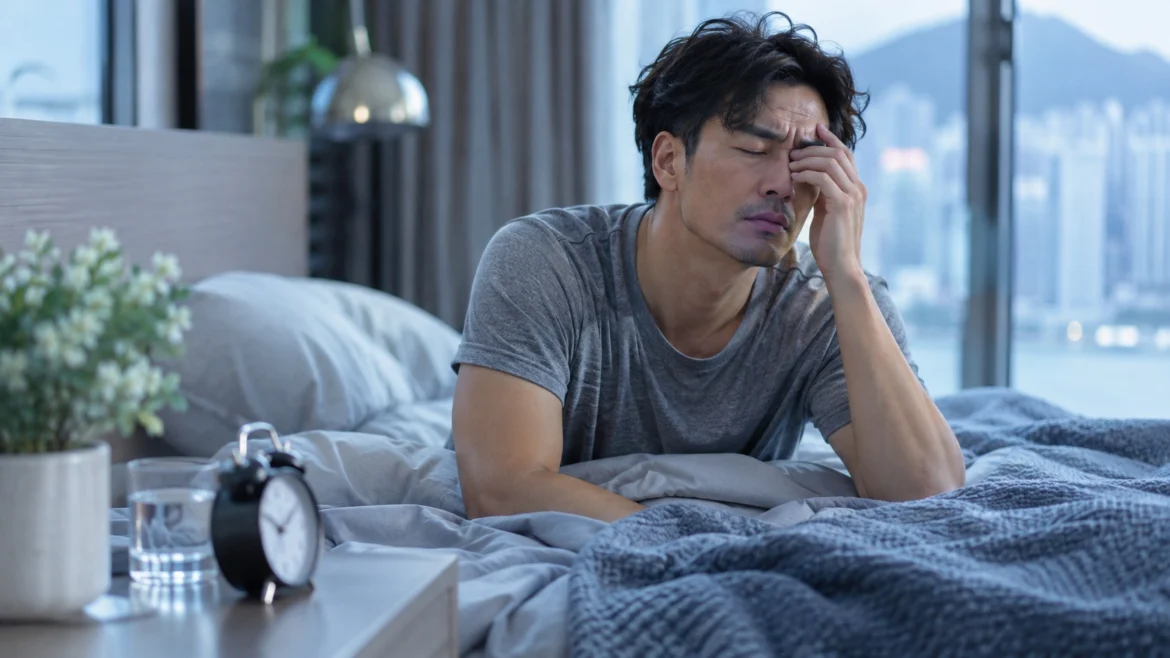
Poor sleep can mean lying awake after lights out, waking in the middle of the night and struggling to get back to sleep, or waking well before your alarm. Start by identifying which pattern happens most often and what it does to your day. If someone has seen pauses in your breathing while you sleep, or you repeatedly wake gasping, arrange an assessment. Sleep apnoea is one possible cause that needs to be checked. National Heart, Lung, and Blood Institute on symptoms of sleep apnoea
What happens when you try to sleep?
| Pattern | What to make a note of |
|---|---|
| It takes a long time to fall asleep | When you went to bed, when you turned out the light, roughly how long you were awake and when you last had caffeine. |
| You wake at night and find it hard to get back to sleep | How many times you remember waking, roughly how long you were awake, and whether you noticed noise, pain, gasping or the need to use the toilet. |
| You wake before you intend to get up | When you woke, when you needed to get up, whether you could go back to sleep and whether it also happens on days off. |
| You sleep but wake without feeling rested | How much time you had available for sleep, whether you doze during the day and whether anyone noticed loud snoring or breathing pauses. |
Several patterns can occur on the same night. A record can help you describe what is happening without deciding in advance what caused it. Difficulty falling asleep, waking during the night and waking too early can all be symptoms of insomnia. An assessment also takes into account your opportunity to sleep and what happens during the day. NHLBI overview of insomnia symptoms
Lying awake at the start of the night
Notice whether it happens after particularly busy days or even when you have had enough time to wind down. You might be thinking about an exam or a deadline. You might also have had coffee, tea, an energy drink or nicotine later than usual. Write down the timing. If you go to bed and get up much later at weekends, note whether falling asleep becomes harder when you try to move back to your weekday schedule. None of these observations alone identifies the cause. Together, they describe the circumstances in which the problem appears. NHLBI on causes and risk factors for insomnia
Some people notice an urge to move their legs when they are trying to rest. If the feeling is worse in the evening and walking brings temporary relief, describe that sequence to a clinician. This pattern can occur with restless legs syndrome. The detail that movement briefly relieved the urge is more useful to the assessment than saying your legs felt uncomfortable. NINDS on restless legs syndrome
Waking during the night or before the alarm
An occasional brief awakening and repeatedly lying awake for an hour after waking can have different effects on the following day. Write down how often you remember waking and whether anything obvious happened. A loud noise, pain, reflux symptoms, a cough or a need to use the toilet are examples worth mentioning if they repeatedly occur. If you woke early, use your planned wake time as the comparison. Waking at six has a different meaning if you normally get up at six than if you planned to sleep until eight.
Check whether the same pattern occurs on days off. You can also mention if the early waking started around the same time as a change in mood or health. Share those observations with a clinician if the problem persists. The same waking time can have different explanations for different people.
Was there enough time available for sleep?
A person who finishes work at one in the morning and gets up at half past six may fall asleep quickly and still have little time for sleep. Another person might turn out the light at eleven, have no reason to get up before seven and still lie awake for much of the night. Both can be tired the next day. In the first example it is useful to ask what cut the night short. In the second it is useful to describe how long the person was awake despite having time to sleep.
Notice what happens when there is a longer opportunity to rest. If you have more time off at the weekend and feel more alert after sleeping longer, the weekday schedule is worth looking at. If you have enough time to sleep but still wake repeatedly or doze throughout the day, describe both the available time and the symptoms. A high or low total on its own gives an incomplete picture.
If you work shifts, label the days in your record. An early shift, a sleep period after working through the night and a day off have different demands. An average bedtime for the week can hide the fact that you struggle most after one shift. Write down the hours you actually had for sleep and whether there were interruptions such as daylight, street noise or caring responsibilities. That makes it easier for a clinician to understand the pattern rather than relying on the weekly average.
Which symptoms deserve an assessment?
Loud snoring together with observed breathing pauses or repeated gasping or choking during sleep can point to sleep apnoea. Morning headaches and daytime sleepiness are also worth reporting if they occur. You may not remember what your breathing was like overnight, so describe what a partner or someone else in the household actually saw. The symptoms warrant an assessment and do not establish the diagnosis by themselves. NHS information on sleep apnoea
If you are struggling to stay awake, avoid driving or operating dangerous equipment and arrange medical advice. Also speak with a clinician if the sleep problem is making it hard to work, study or cope with ordinary tasks. In an assessment of chronic insomnia, clinicians may consider whether difficulty occurs at least three nights a week for at least three months, alongside sleep opportunity and daytime effects. You can seek care sooner if the symptoms are already interfering with your life. NHLBI guidance on diagnosing insomnia
Mention symptoms that appear around the same time as the sleep problem. For example, if a new medication was started before you began waking at night, list the name, amount and timing so the prescriber can review it. Continue taking prescribed medication as directed until you have discussed a change. Repeated pain, coughing or uncomfortable legs also give the clinician something specific to investigate. When you describe an interruption, say what you felt before you got out of bed or checked the clock.
Keep only useful sleep-diary details
One or two weeks can cover ordinary days and days off. Estimate the next morning without repeated clock-watching overnight:
- bed, lights-out and wake times;
- approximate time to sleep, remembered awakenings and time awake;
- caffeine, alcohol, naps and relevant medicine timing;
- daytime dozing, concentration and impact on work or study.
Mark shifts to distinguish insufficient opportunity from difficulty despite enough time available. Breathing pauses, gasping or unsafe sleepiness should not wait for the diary to be completed.
What if a watch says you got very little deep sleep?
A watch can show a trend, but a single sleep-stage estimate cannot establish a sleep disorder. Compare it with the diary and your symptoms. If the device reports an unusual night and you feel well and function normally, that reading alone gives you little reason to buy a supplement. If you keep waking gasping, have unexplained sleepiness or notice a recurring change, describe the symptoms and timing to a clinician. The information that you can observe directly remains useful when a device gives a different impression. American Academy of Sleep Medicine position on consumer sleep technology
A device may show that your bedtime moved between weekdays and weekends. That trend can help you spot a scheduling issue. It does not explain whether a particular stage was affected by pain, noise or a breathing problem. Share any readings you think are relevant, alongside the times you went to bed, woke and got out of bed. An assessment can determine whether a medical sleep test is appropriate.
Fatigue and sleepiness give different clues
Low energy differs from unintentionally falling asleep when seated. Describe both accurately. If sleepiness affects driving or machinery, stop those activities and arrange assessment. Disclose medication changes without independently stopping prescriptions. Continue with NHLBI healthy sleep habits.
Eight hours in bed does not necessarily mean eight hours asleep
Suppose lights go out at eleven and you get up at seven. That creates an eight-hour opportunity. If you estimate an hour before falling asleep and another hour awake during the night, the estimated sleep total is about six hours. These are illustrative times for understanding a record, not a prescribed adult sleep schedule. The distinction helps explain why two people can report the same bedtime and wake time but experience different nights. (Source)
Separate the time reserved for sleep from the time you think you were asleep. An hour watching a film in bed, an hour awake after lights out and an hour asleep are different observations. Recording all three as sleep can conceal whether the problem is insufficient opportunity or difficulty sleeping despite having an opportunity. The distinction is also useful when work ends late: being in the bedroom does not necessarily mean the attempt to sleep has begun.
Do not watch the clock repeatedly to make the arithmetic exact. An approximate morning estimate, with a note about a prolonged awakening, can describe the pattern. Leave a forgotten time unknown rather than replace it with an apparently precise number derived from a device score. Record different observations separately: you may remember one awakening while someone else heard repeated gasping. Neither account needs to be rewritten to match the other before you discuss them with a clinician.
Two different reasons for feeling especially tired on Monday
One person shifts bedtime several hours later over the weekend and struggles to sleep at the earlier required time on Sunday. Another spends the weekend providing care and has little uninterrupted opportunity for rest. Both may feel unwell on Monday. The first history needs the changing clock times; the second needs the commitments and interruptions that reduced rest. Treating both accounts simply as poor discipline would miss information that affects the next step.
Describe whether a free day permits waking without an alarm and whether sleep is more continuous at a naturally later time. That is more specific than saying you catch up at weekends. It does not diagnose insomnia or a circadian disorder from a longer weekend alone. Where shifts or caring responsibilities cannot move, explaining those constraints makes a later discussion of practical arrangements more realistic.
Tests answer particular questions rather than produce one universal sleep score
NHLBI describes assessment through medical history, examination and, where appropriate, sleep testing, activity recording or blood tests. The choice depends on the question being investigated. Snoring with witnessed breathing pauses and a persistently delayed sleep schedule cannot be distinguished simply by looking at the same watch score. Tell the clinician which symptoms led you to seek help so that any proposed investigation has a clear purpose.
- A sleep study can investigate other sleep disorders, including sleep apnoea. The clinician can explain which type of investigation is relevant.
- Activity recording can use a medical wrist sensor to follow periods of rest and activity over several days. That is not interchangeable with a deep-sleep percentage generated by any consumer watch.
- Blood tests may investigate thyroid or other medical problems where the assessment suggests a reason. Poor sleep alone is not a reason to independently buy every available test panel.
Bring medicine and supplement information and, if relevant, the actual shift roster. Follow the testing service’s specific instructions rather than stopping medicine or deliberately staying awake to make the result appear clearer. If a particular test is not arranged, ask what the assessment is currently trying to establish and what would prompt follow-up. Different investigations answer different questions; an appointment can still be useful before anyone decides a test is needed. The history and the daytime effect remain relevant even when a consumer device supplies a reassuring number.