
A useful meal-replacement comparison covers the prepared serving, formula and availability. This page compares Orgain and Garden of Life plant-based powders, retaining the discontinued Fit & Lean entry only to identify the older product. The two current options both list 20 g protein on the illustrated English labels, but differ in sweeteners, mixing volume and servings per pack. Assess a meal with its liquid and accompanying food, not powder alone.
What the comparison is based on
Orgain and Garden of Life are plant-protein blends with different preparation and sweetening choices. Orgain uses a two-scoop serving with erythritol and stevia; the Lightly Sweet Garden of Life version uses one scoop without stevia. Those distinctions can answer an actual preference about sweeteners or preparation. They do not establish a ranking for taste, fullness or weight loss. We have not conducted first-hand product testing.
The original Fit & Lean listing now states discontinued and no longer available. Its older information remains below for identification, rather than as a current purchase recommendation. Another flavor or replacement package from the brand should not be assumed to use the same recipe.
The comparison uses the illustrated English package labels. At review, Orgain’s label image showed 200 calories while the Hong Kong Chinese text panel showed 230. Garden of Life’s image showed about 38 g, 150 calories and 6 g fiber; the Chinese text panel showed about 37 g, 140 calories and 2 g fiber. Confirm the actual supplied label before purchasing. A shared product URL does not guarantee identical figures across every package, and these discrepancies should not be silently averaged into a new figure.
Compare the nutrition for the exact flavour and pack
Product links may include affiliate tracking. ToBeHealthy may earn a commission if you buy through them.
| Product and pack | Powder per serving | Calories | Protein | Fiber | Listed servings | Formula features and practical considerations |
|---|---|---|---|---|---|---|
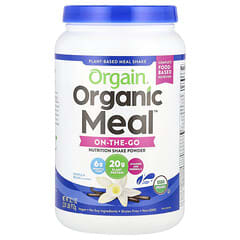 Orgain Organic Meal Vanilla Bean, 912 g | Two scoops, 57 g | 200 | 20 g | 6 g | About 16 | Plant protein with food blends and micronutrients; 6 g fiber; erythritol and sesame. |
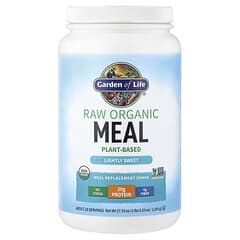 Garden of Life Raw Organic Meal Lightly Sweet, 1,064 g | One scoop, about 38 g | 150 | 20 g | 6 g | About 28 | One-scoop plant formula, no stevia; 5 g added sugars; sesame and inulin. |
| Fit & Lean Chocolate Milkshake, 450 g (discontinued; older label) | Two scoops, 45 g | 150 | 20 g | 10 g | 10 | Whey, pea and casein; 10 g fiber; milk, soy and botanical extracts. |
The figures compare each illustrated English label serving, not equal powder weights. Fit & Lean is an older discontinued entry; its historical fiber figure does not make it an available recommendation. Add the mixing drink separately when using milk or a plant drink.
Two options and a discontinued product reference
Orgain Organic Meal Vanilla Bean, 912 g
Orgain Organic Meal uses pea, brown-rice and chia proteins to provide 20 g plant protein, with grain, fruit and vegetable ingredients plus vitamins and minerals. Its vanilla-flavored two-scoop, 57 g serving supplies 6 g fiber, offering a plant-based all-in-one shake format.
It carries organic, vegan and gluten-free labeling and also contains 5 g erythritol per serving and sprouted sesame. Those details matter for sugar-alcohol tolerance and sesame allergy. Water, milk or soy milk change the finished nutrition, and adequacy as a meal depends on the wider diet.
View Orgain Organic Meal Vanilla Bean, 912 g details and price
Garden of Life Raw Organic Meal Lightly Sweet, 1,064 g
Garden of Life Raw Organic Meal supplies 150 calories, 20 g plant protein and 6 g fiber per approximately 38 g scoop. It combines sprouted grains, fruit and vegetable ingredients, micronutrients and digestive enzymes. The lightly sweet version has no stevia, a specific option for shoppers avoiding that taste.
It carries organic and NSF gluten-free certification and is made without dairy or soy ingredients, but contains sesame and includes inulin in its fiber blend. The powder’s 150 calories do not by themselves establish a complete meal: include the mixing liquid and other food.
View Garden of Life Raw Organic Meal Lightly Sweet, 1,064 g details and price
Fit & Lean Chocolate Milkshake: discontinued
iHerb now labels this item discontinued and no longer available. The following describes the older formula, not a current purchase recommendation.
Fit & Lean Chocolate Milkshake combines whey, pea and casein proteins for 20 g protein and 10 g fiber per serving, with 26 vitamins and minerals, fruit and vegetable ingredients and probiotics. This describes its older chocolate-flavored, higher-fiber formula.
- Its proteins include milk sources and the recipe contains soy lecithin, so it is not plant-only.
- Inulin and polydextrose are part of the fiber blend and may matter for bloating tolerance.
- Brand weight-loss claims do not replace assessment of daily energy intake and diet.
View the discontinued Fit & Lean listing
Preparation volume matters when the drink has to travel
Orgain directs two scoops with about 355 mL water or plant-based milk; Garden of Life directs one level scoop with about 240 mL cold water. Both listed servings provide 20 g protein, but the liquid volume and required container space differ. A shaker carried in a bag needs room for powder and mixing as well as the stated liquid.
Less water does not increase protein in the original serving; it makes the drink more concentrated. More water does not remove the serving’s calories. Someone preferring a thinner drink can consider the permitted preparation rather than add another scoop automatically. Switching to milk, soy drink or another liquid changes nutrition and potentially allergens, which must be counted separately.
Garden of Life directs cool, dry storage and says not to use a package with a broken or missing safety seal. Space in the container does not itself establish missing product: powders settle and are sold by weight. Use the stated net weight and serving measure rather than the height of the contents as a portion guide. Avoid returning a wet scoop to dry powder. A scoop from another container should not be assumed to measure the same grams, even if its shape looks similar. These details matter when a drink is being prepared routinely away from the kitchen.
When refrigeration is unavailable, carrying dry powder and liquid separately until preparation may be more workable than carrying a premixed drink. A powder does not remove the storage requirements of milk. Check whether the bottle can be cleaned between uses, particularly on days with several classes or a long commute. Convenience is the complete sequence of measuring, mixing, drinking and cleaning, not simply whether a scoop is supplied.
Which difference changes the choice?
| Shopping need | Specific difference |
|---|---|
| Plant formula accepting stevia and sugar alcohol | Orgain gives 200 calories, 20 g protein and 6 g fibre, with 5 g erythritol and sesame |
| Avoid stevia taste and prefer one scoop | Garden of Life Lightly Sweet gives 150 calories, with 5 g added sugars and inulin; no stevia is not sugar-free |
| Discontinued; not a current recommendation | Fit & Lean gives 10 g fibre, with milk, soy, inulin and polydextrose plus green coffee, green tea and garcinia extracts; not just protein and fibre |
Fit & Lean’s label excludes infants, children and pregnant or breastfeeding women and warns against unsupervised very-low-calorie weight-loss diets. For protein without these botanical extracts, compare a simpler formula. A meal-replacement name cannot establish that one powder serving meets an individual’s meal needs.
An addition or a replacement?
The listed 150–200 calories describe powder alone. A hypothetical 150-calorie, 20 g protein serving plus a 100-calorie, 7 g protein drink gives 250 calories and 27 g protein. Fruit or bread adds more. That arithmetic is not a personal lunch target.
A shake after an adequate meal adds to intake. A temporary meal during a short break needs consideration of all its food, energy and nutrients. Protein powders mainly add protein, while meal formulas differ; 20 g protein alone cannot make them interchangeable.
Compare actual servings including the mixing liquid without independently increasing amounts to match another powder. Diabetes, kidney disease, pregnancy or an individual meal plan calls for professional review of the complete formula and substitution.
Food blends do not establish full portions of fruit and vegetables
Fruit, vegetables, grains and added micronutrients distinguish a meal blend from a plain protein isolate. A long ingredient list, however, does not show that each named food is present as a full portion. Without quantities, a drink cannot be credited with several servings of vegetables or fruit simply by counting names on the package.
Protein, fiber, sugars and micronutrients are separate entries. Twenty grams of protein does not also mean 20 g fiber. Added vitamins do not establish a full day’s supply of every nutrient. For a specific example, the illustrated Orgain English label lists 0 micrograms vitamin D, so the general vitamins-and-minerals wording is not a reason to count it as a vitamin D source.
List the fruit, vegetables, staple foods and other foods that remain when planning a replacement. Substituting several meals daily with one container is a much larger dietary change than choosing a portable drink. It calls for assessment of the overall diet, not an assumption that multiplying scoops multiplies completeness. A practical comparison considers what the product leaves to be supplied by other foods as well as what it contains.
Meal-replacement evidence concerns an eating program
A 2019 systematic review included 23 studies and 7,884 adults, comparing partial meal-replacement weight-loss interventions with other dietary approaches at one year. Average results favored replacement programs, but comparisons differed in their support and other features. The review did not establish which of the products on this page is more effective. It excluded diets below 800 calories daily and total diet replacement, so it cannot justify independently replacing all food with shakes.
For a shopper, the useful implication is that a defined, manageable eating arrangement may help; buying a container does not reproduce an entire intervention. Meal planning, follow-up and adjustments may be part of what participants received. A group difference cannot be advertised as the outcome of one particular tub.
Assess whether the arrangement leaves recurring hunger, whether the original meal is still eaten and whether ordinary meals remain manageable on days without the drink. Adding a shake to unchanged eating differs from a replacement intervention. These questions help judge the actual routine without treating every scale fluctuation as a product result or assuming that a successful structured program proves independent effectiveness for its individual ingredients.
Compare the cost of the finished eating occasion
Use the same purchase conditions when comparing cost: divide the total by usable servings, without comparing one product’s first subscription promotion against another’s ordinary price. This page does not assign fixed Hong Kong dollar rankings without current applicable prices and delivery costs.
About 16 Orgain servings and about 28 Garden of Life servings refer to their own label portions, not equal container weights. At two uses weekly, 16 servings mathematically cover eight weeks. That does not establish an eight-week shelf life after opening; storage directions and the supplied package still apply.
Include the liquid and accompanying food. If an illustrative powder portion costs 20 dollars, its drink costs 5 and accompanying food costs 10, the eating occasion costs 35. Comparing only the first 20 with a complete purchased lunch understates spending. These numbers are examples, not current product prices. The useful budget question is whether the preparation you would actually consume is affordable and practical often enough to solve the intended meal problem.
Questions worth resolving before checkout
- Which eating occasion will change? Without a defined replacement, the drink may simply become another snack.
- Does the exact recipe include stevia, sugar alcohols or inulin you already know you dislike or tolerate poorly? A brand’s benefit claims do not create an obligation to use an unsuitable ingredient.
- Is this the same flavor, pack and illustrated label version? Vanilla figures should not be transferred to a chocolate formula.
- Are milk, soy, sesame or other allergies relevant? Plant-based and made-without-dairy wording cannot exclude every allergen or cross-contact concern.
- Does the prepared drink plus food fit an existing dietary plan? Clinical nutrition assessment needs the complete recipe, not only a reported protein amount.
A meal replacement is a convenience option, rather than a required daily habit. Someone already managing a suitable portable meal has no automatic reason to add a drink because its packaging says complete nutrition. The choice is useful when it solves a particular eating problem, with an understandable ingredient list and a realistic plan for the rest of the day.