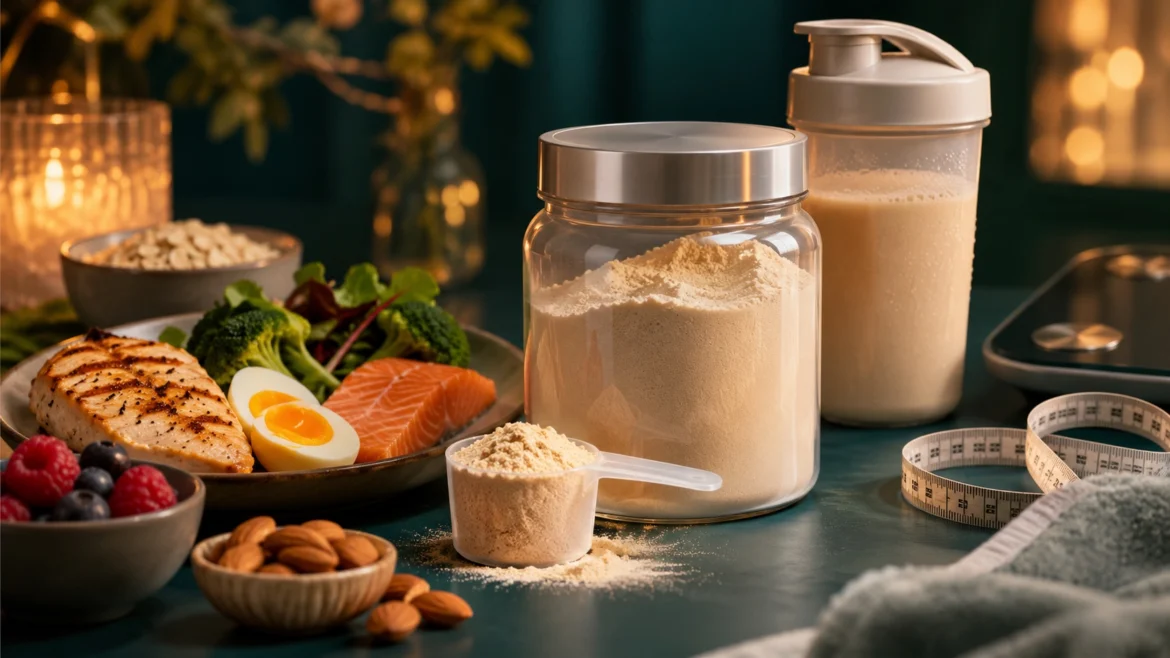
If you usually have an afternoon snack, drinking a protein shake in its place changes what you eat that day. Having the same shake after your usual snack adds another source of energy. Protein powder can supply protein conveniently, and you may feel fuller after drinking it. The effect on your eating pattern depends on what the shake takes the place of, how you prepare it and what you eat afterward.
Start with a familiar situation. Perhaps breakfast is toast and coffee because you leave the house early. Adding protein powder to breakfast serves a different purpose from swapping an afternoon pastry for a protein drink. One adds protein to a meal that contains little of it. The other changes an existing snack. Both uses can make sense, and the calorie calculation for each is different.
Weight loss, maintenance and filling a protein gap differ
A drink added to breakfast can address low protein intake without reducing daily energy intake. Replacing a regular snack asks a different question: what changes between the old eating occasion and the new one? Choosing the smallest calorie figure on a container does not answer both questions.
After weight loss, continued protein supplementation also cannot be assumed to prevent regain. A 2017 randomized double-blind trial used an eight-week weight-loss phase followed by 24 weeks of maintenance, comparing whey, soy and related supplements with an energy-matched control. Of 220 enrolled participants, 151 completed maintenance. Average weight regain did not differ significantly, despite some more favorable appetite sensations and energy-expenditure measures with protein.
Fullness, a metabolic measurement and long-term weight maintenance are therefore separate outcomes. The trial does not remove protein’s nutritional value or guarantee results for any retail powder. Decide which problem the drink is meant to address instead of assigning all three goals to the same bottle. The most relevant comparison may be an ordinary breakfast, a familiar snack or an existing maintenance routine, depending on that purpose.
Calculate the drink you actually make
The number on the container generally applies to a specified serving of powder. Check how many grams or scoops make up that serving. A label might show values for two scoops, even if you usually use one. If you use half the labelled serving, start with half the listed calories and half the listed protein.
Suppose a serving contains 120 calories and 24 grams of protein. Mixed with plain water, the drink still contains approximately 120 calories and 24 grams of protein. If you use a portion of milk with 100 calories, the drink now provides about 220 calories. Add the protein in the milk to the 24 grams from the powder. The same method applies to soy milk, fruit, nut butter or other ingredients. These are examples for doing the arithmetic. Product labels and portions will vary.
- If a 120-calorie shake replaces a 220-calorie snack, this eating occasion provides 100 fewer calories.
- If you have the usual snack and the same shake, you have added 120 calories to the occasion.
- If a shake prepared with milk contains 220 calories and replaces a 220-calorie snack, the energy is the same at that point. Protein, fibre, taste and how full you feel can still differ.
The rest of the day matters. You might drink the lighter shake at three and feel hungry enough to buy another snack at five. You might also find that the version with milk or a piece of fruit carries you comfortably to dinner. Compare the combination you would actually consume with the snack you routinely buy. A calculation based on powder and water is only useful if that is how you plan to drink it.
Measuring your ingredients once may help if you usually pour by eye. The amount of milk in your bottle may be different from the serving printed on the carton. If a label gives nutrition per 100 mL and you use 200 mL, count twice the listed calories and protein. Using the volume you actually pour makes the comparison more informative than choosing the tub with the smallest number on the front.
Per 100 g is not the amount in your bottle
When a panel gives only values per 100 g, convert them to the powder actually measured. Suppose 100 g provides 400 calories and 80 g protein. A 30 g portion supplies 120 calories and 24 g protein: multiply each value by 30 and divide by 100. The 400-calorie figure is not automatically one scoop, and 30 g powder is not automatically 30 g protein.
Products using 25 g and 40 g labeled servings cannot be judged solely by the lower calories per serving. Protein amounts and other ingredients may differ too. Establish the portion you would prepare before comparing the complete drink with its intended use.
Equal protein figures also do not make recipes identical. Plain and flavored powders may differ in sugars, fat and sweeteners. A milk allergy or another ingredient restriction requires the full recipe rather than a protein number. Correct arithmetic makes the comparison usable, but does not replace checking what is in the drink.
How much does protein affect fullness?
A meta-analysis of randomised trials found that people reported less hunger and more fullness after higher protein intake in short-term experiments. Participants used rating scales to describe how they felt. The longer-term trials did not find a clear effect on appetite measures. The analysis looked at protein intake under different conditions, so its average result does not tell you how long a particular shake will keep you full. Meta-analysis of protein intake and appetite
A higher fullness score also does not translate directly into fewer calories at the next meal. Think of the rating as an answer to the question “How full do you feel right now?” A study that tracks food intake over time would answer a different question. Both pieces of information can help, but one cannot stand in for the other.
Consider when you need the snack. If dinner is an hour away, a small drink might fit easily. If you have a morning of classes and no reliable lunch break, a shake with water might leave you hungry well before you can eat again. Pairing a protein source with oats, fruit or wholegrain toast creates a different breakfast from drinking powder on its own. The change adds energy as well as ingredients you can chew and nutrients from the foods you choose. Try the combination that matches the time until your next meal.
Physical comfort matters here. If a shake leaves you feeling bloated or unpleasantly full, that sensation is an important reason to review the ingredients or amount. When comparing two preparations, keep the amount of powder and time of day similar if you can. Changing the milk, serving size and timing together makes it harder to tell which difference mattered.
What does the whey study tell us about body weight?
A 23-week randomised study assigned adults with overweight or obesity to whey protein, soy protein or a carbohydrate supplement with similar energy. At the end of the trial, average body weight in the whey group was 1.8 kg lower than in the carbohydrate group. The difference in body weight between the whey and soy groups did not reach statistical significance. Baer and colleagues’ randomised trial
The 1.8 kg figure compares two groups under the conditions of the trial. It does not describe how much a reader will lose by taking a scoop of whey, and it does not establish that whey works better than soy for weight loss. If you already like a soy powder, tolerate it and use it comfortably with your meals, the study gives you little reason to pay more for whey solely because of the weight result.
Where is there a practical role?
| Problem | Role for powder | Remaining consideration |
|---|---|---|
| Low-protein breakfast with no cooking time | Add a convenient source to breakfast | Added energy does not automatically cause weight loss |
| Replacing an energy-dense afternoon snack | Compare the finished drink and subsequent eating | Having the original snack too makes the shake additional intake |
| Replacing a whole lunch | One component of a meal | Plain powder may omit fiber, sufficient energy and other nutrients |
| Adequate meals with no replacement need | Another shake may be unnecessary | Yogurt, eggs or soy drink may already solve the same need |
Whey contains milk protein and is unsuitable for milk protein allergy. Lactose intolerance is different and depends on the specific formula and mixing liquid. Plant powders may contain soy or other allergens; plant-based wording cannot establish suitability.
Is protein powder a meal replacement?
Powder with water differs from a meal of rice, vegetables and tofu. For portability, a shake could accompany a wholegrain sandwich and fruit. For a formulated meal replacement, compare calories, protein, fiber and micronutrients in the prepared serving rather than protein alone.
Feeling fuller is not proof of fat loss. If the original snack is still eaten or extra ingredients are routinely needed, assess the actual day’s intake again. Follow an existing medical nutrition plan when kidney disease or another condition affects protein intake.
A snack calculation cannot promise kilograms lost
Imagine five weekly 220-calorie snacks replaced by 120-calorie shakes with water. With every other intake unchanged, those occasions total 500 fewer calories. If the original 220-calorie snack is also eaten on two of those days, 440 calories return to the calculation, leaving a difference of only 60 in this simplified example.
Actual dinners, weekend eating and mixing ingredients may change as well. A nominal 100-calorie difference per occasion cannot promise a certain monthly weight loss. These examples reveal omitted intake; they are not individual calorie targets or a demand to calculate every day to the last unit.
A brief comparison of familiar foods may be enough to make a decision. If monitoring produces substantial anxiety, compensatory restriction or disruption of regular eating, return attention to a workable eating pattern and professional support. Completing a numerical target is not a reason to omit a meal that is needed. The purpose of the calculation is to understand a substitution, not to turn every food decision into a score.
Check whether the substitution works outside the calculation
A short record can include the time, mixing ingredients, food being replaced and whether another snack followed. Recurring hunger that makes concentration difficult before the next meal is a reason to revise the eating occasion, even if the powder’s calorie figure looks attractive.
For example, a drink at three followed by another snack at five may reflect a long wait until dinner or a need for a more complete eating occasion. Compare an option containing solid food or review meal timing. This is observation of actual eating, rather than a reason to increase powder until hunger is suppressed.
Changing the powder, liquid and fruit together makes it harder to identify which change affected fullness or digestion. Symptoms do not need to be endured to finish a comparison. Known allergens should not be tested independently in small amounts to establish safety. A routine is useful only if it can be followed comfortably and appropriately, including on days when work or classes run late.
Compare costs for the same job
For a convenient protein source, compare powder with yogurt, eggs, soy drink or another food actually available to you. Use the specific label and portion, without assigning the same protein content to every yogurt or soy drink. Refrigeration, eating opportunities and taste preference affect whether an option is used in practice.
Powder cost is the package price divided by usable portions, plus the mixing drink. A container advertising 30 servings provides only 15 uses if two servings are actually used each time. This is not advice to double the portion; it is a reminder to cost the real preparation.
Without current prices, delivery charges and applicable discounts, a fixed cheapest-option claim is unjustified. Regularly discarding half the prepared bottle also changes the value of a low advertised serving price. Before buying a larger container, establish whether the preparation is one you are willing and able to finish. Saving money on an unused product does not solve a protein gap or an inconvenient snack routine.
Related reading and sources
- guide to reading protein powder labels
- Mayo Clinic on protein shakes and weight loss
- NIH Office of Dietary Supplements
- Protein Powder Benefits: Who Might Need It?
- Daily Protein Needs by Weight and Activity